

I stayed in a 2-story, 100-square-foot tiny home in Germany for 2 nights. It was smaller than any I've seen in the US.
- Last update: 1 hours ago
- 3 min read
- 912 Views
- WORLD
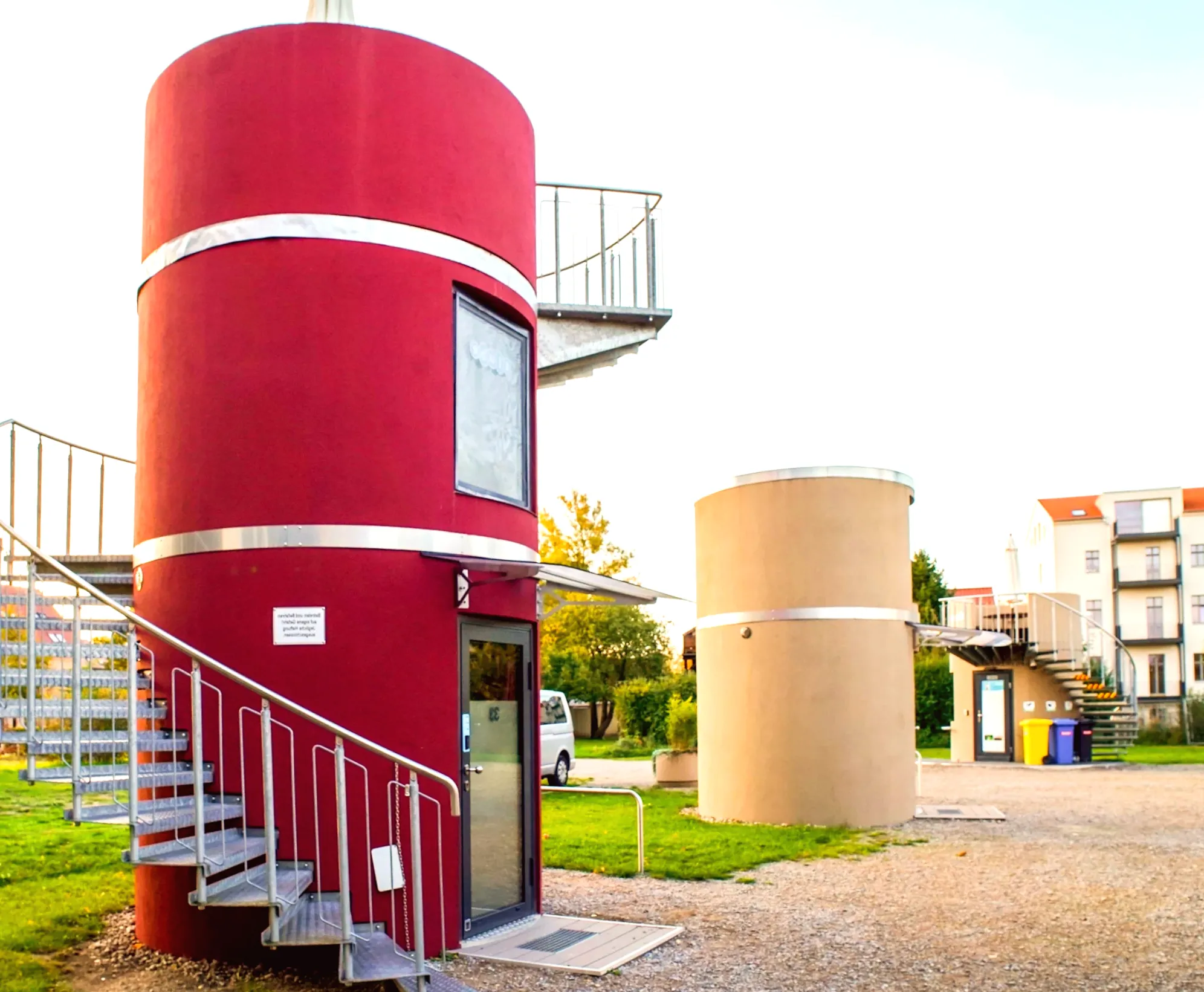
During a European train journey in 2022, I experienced staying in a cylindrical tiny home hotel in Germany. At just 106 square feet, this compact home made far more efficient use of space than any tiny homes I had previously encountered in the United States. Unlike typical U.S. tiny homes, this European version was two stories and less than half the size of those Id rented before.
As someone from New York who has lived in several small apartments, I find tiny homes fascinating. Maximizing minimal space requires creativity, and I often book small accommodations when I travel to discover new ideas for optimizing my own living area.
I have stayed in tiny Airbnbs across North America and Europe, including Florida, Maryland, Canada, and Switzerland. None of them managed indoor space as cleverly as this tiny home hotel in Neustrelitz, Germany, which I found on Airbnb. Its distinctive cylindrical design intrigued me, so I booked it for two nights at $140.
The tiny home was part of a hotel called Slube, which offers minimal concrete "Slubes" for up to two guests. There are three models: the single-story Basic, the two-story Home, and the Tower, which has two floors and a rooftop terrace. I chose the two-story Home.
The 16-foot-tall home featured two levels totaling 106 square feet. Check-in was seamless, using a code sent to my phone instead of a physical key. Upon arrival by train from Berlin, there were no staff present, but my email confirmed that I was staying in room five with instructions for self-check-in.
The first floor measured 53 square feet and included a bathroom on the right, a sitting area on the left, and a ladder leading to the second floor. The sitting area had a foldout table that could be pushed against the wall to save space. Across from it, a bench with cushions replaced a couch, providing storage underneath for luggage. Hooks and cubbies above the bench allowed me to store clothes and toiletries efficiently. In one corner, a small coffee station included a coffee machine, hair dryer, and a few dishes.
The bathroom was compact but functional, with a curtain separating the shower and sink from the toilet and storage area. Even with two windows, privacy was maintained thanks to frosted film. Natural light streamed in without compromising seclusion.
Upstairs, the bedroom occupied the same 53-square-foot footprint as the first floor. A ladder with a safety gate led to a cozy loft with a full-size bed. Pillows were supportive, and a mounted TV offered Netflix and other streaming options. A small platform acted as a nightstand, and outlets were conveniently placed for charging devices. A large window with a blackout curtain allowed fresh air while keeping the room private.
The Slube incorporated smart technology, letting me control lights and temperature for each floor via my phone. The home made remarkable use of vertical space and built-in storage, leaving almost nothing unused. Although I cannot replicate a second story in my own apartment, the stay provided plenty of inspiration for vertical storage solutions and clever space-saving ideas.
Author: Benjamin Carter
Share

German police officer compensates victim following assault in Mallorca
2 minutes ago 2 min read WORLD

E-bike ambulance fleet deployed for half marathon
3 minutes ago 2 min read WORLD

More than 130 people escape unharmed after ship collides with bridge in southern Germany
4 minutes ago 1 min read WORLD

Honduras election on the edge of uncertainty due to technical glitch causing delay in vote count
10 minutes ago 2 min read WORLD

Kate Middleton utilizes 'Mood Boards' for decorating new 'Forever Home' while Prince William finds the move 'Challenging'
15 minutes ago 2 min read WORLD

Western Cuba experiences power outage as government works to modernize energy infrastructure
16 minutes ago 2 min read WORLD

County receives £31 million to enhance bus services
16 minutes ago 1 min read WORLD

Ambitious but necessary: New hospital costing £2.3 billion
18 minutes ago 2 min read WORLD

Acrobat Passes Away 3 Months After Backflip Accident at Zoo Performance
21 minutes ago 1 min read WORLD

Jake Humphrey's 'life lessons' introduced in schools
21 minutes ago 2 min read WORLD