

No, SCOTUS Did Not Create Judicial Review in Marbury v. Madison
- Last update: 3 days ago
- 2 min read
- 39 Views
- POLITICS
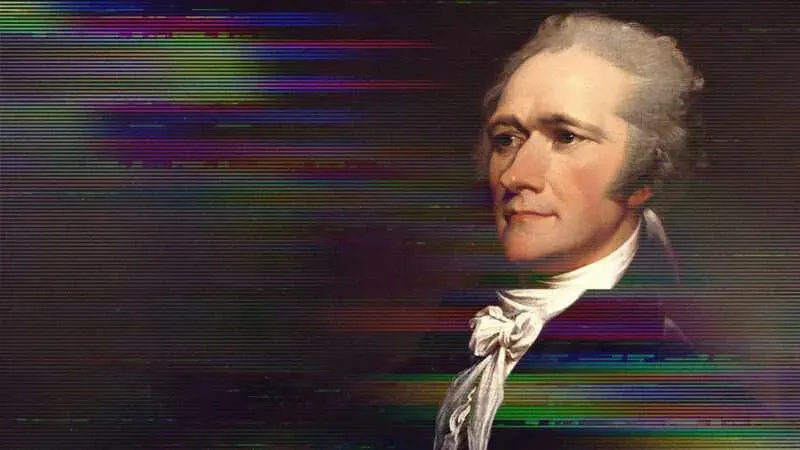
Theres a common misconception that the U.S. Supreme Court created the power of judicial review in the 1803 case Marbury v. Madison. Some commentators on the political left, such as New York Times columnist Jamelle Bouie, have argued that judicial review "wasn't explicitly mentioned in the Constitution and isnt inherent to the Supreme Court as an institution." From Bouies perspective, this implied that eliminating judicial review could be considered a strategy against "judges nominated by [President Donald] Trump." Similarly, on the political right, conservative commentator Mike Cernovich has claimed that judicial review "isnt in the Constitution" and that Marbury v. Madison was essentially fabricated, suggesting that federal judges lack authority over Trump.
Despite their political differences, both Bouie and Cernovich make the same error about the Constitution: judicial review is indeed rooted in the founding document. Article III states, the judicial Power of the United States shall be vested in one supreme Court, and in such inferior Courts as the Congress may from time to time ordain and establish.
The phrase "judicial Power" was understood by the Constitutions framers and ratifiers to encompass the authority of federal courts to invalidate laws or executive actions that violate the Constitutionwhat we now call judicial review.
At the 1788 Connecticut Ratification Convention, Oliver Ellsworth, who had helped draft the Constitution, explained that if Congress exceeded its authority, the judicial branch serves as a check, declaring unconstitutional laws void. Alexander Hamilton made the same argument in Federalist No. 78, emphasizing that the judiciary's duty is to nullify acts that conflict with the Constitution. Even Thomas Jefferson acknowledged that judicial review was inherent in the Constitution, noting in an 1789 letter to Madison that the judiciary would use the Bill of Rights as a check on legislative and executive power.
James Madison also described the federal courts as an impenetrable bulwark against every assumption of power in the legislative or executive
, reinforcing the concept of judicial review. Rather than relying on mistaken claims by modern commentators, the historical record is clear: Ellsworth, Hamilton, Jefferson, and Madison all recognized judicial review as a fundamental part of the Constitution.
Author: Sophia Brooks
Share

HHS replaces transgender admiral’s official portrait with deadname in an act of 'pettiness and bigotry'
27 minutes ago 3 min read POLITICS

Unprecedented Alarm: Concern over memo from top US vaccine official
30 minutes ago 4 min read POLITICS

Marjorie Taylor Greene Reveals Trump's Warning About Releasing Epstein Files and Potential Harm
31 minutes ago 2 min read POLITICS

Arrest made in connection with pipe bombs planted before Capitol riot on January 6th
35 minutes ago 1 min read POLITICS

Ilhan Omar criticizes Trump's 'creepy and unhealthy obsession' as raids increase
41 minutes ago 3 min read POLITICS

Minneapolis to Disprove Trump's Negative Stereotype of Somalis
44 minutes ago 3 min read POLITICS

Investigation reveals Afghanistan mission as "a twenty-year endeavor filled with inefficiency"
48 minutes ago 2 min read POLITICS

Trapped in a van as the president focuses on Kennedy Center drapes: A look inside Trump's day of boosting his ego amid looming crises
49 minutes ago 3 min read POLITICS

USTR Greer tells Politico that Trump may withdraw from USMCA trade deal next year
55 minutes ago 1 min read POLITICS

Joe Biden accuses MAGA Republicans of demonizing LGBTQ+ individuals
1 hours ago 4 min read POLITICS