

New Policy by Trump Administration: Countries Sheltering Drug Cartels Could Face Military Action
- Last update: 2 days ago
- 3 min read
- 25 Views
- POLITICS
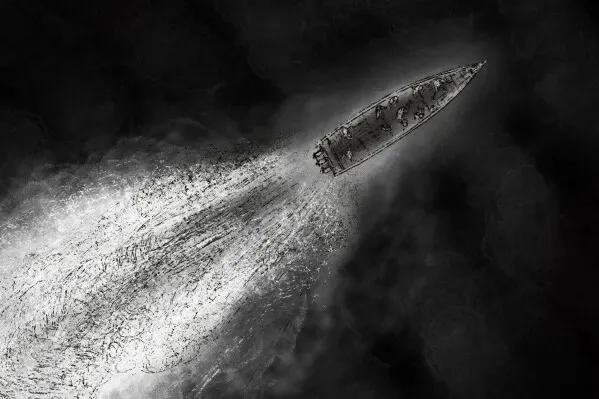
During the final Cabinet meeting of the year, President Trump significantly extended his policy for the Western Hemisphere, declaring that any country producing and shipping drugs to U.S. streets "is subject to attack." The president delivered this declaration casually but with serious implications, initially mentioning Venezuela, then Colombia, before generalizing the threat.
"I want those boats taken out, and if necessary, we will strike on land as well, just like we strike at sea," Trump said, referring to ongoing operations against alleged drug shipments off Venezuelas coast. He continued, "If drugs come through any country, or if there are manufacturing operations for fentanyl or cocaine, we will respond. Colombia, for example, produces cocaine and exports it to us. We appreciate that very much," he said sarcastically, adding, "Anyone doing this and selling drugs to the U.S. is subject to attack."
Although spoken informally, the warning reflects a serious shift. Trump had previously campaigned on using military force against cartels, and as president, he dispatched the Gerald R. Ford Carrier Strike Group to the Caribbean. Unlike prior administrations that treated drugs as a policing matter, Trumps approach has involved direct military action, reportedly sinking 22 vessels and killing at least 83 suspected traffickers.
White House spokeswoman Anna Kelly emphasized that recent history shows it is unwise for foreign leaders to challenge Trump. She noted that these operations target "narco-terrorists bringing deadly poison to our shores," and the president will continue to employ all elements of U.S. power to halt the drug flow.
The drug trade in Central and South America is extensive. The State Departments International Narcotics Control Strategy Report identifies more than a dozen countries involved, from Belize to Mexico. The Trump administration clarified that cooperation with some nations, like Mexico, El Salvador, and Ecuador, differentiates them from countries where the U.S. has no collaboration, such as Venezuela, which has allegedly facilitated transshipment of drugs.
The new policy can be summarized as: cooperate with the U.S. or risk military action. Some Republicans, including Senator Eric Schmitt, support prioritizing the Americas over global policing. Vice President JD Vance and Deputy Chief of Staff Stephen Miller have also advocated for focusing U.S. attention closer to home.
Former National Security Council official Alexander Gray noted that Trump is among the first in recent decades to link domestic security directly to the security of the hemisphere, including countries like Colombia.
While the doctrine has supporters, some right-wing critics worry about potential interventions or regime change in the Americas. The administration has so far avoided seeking congressional authorization, even as reports emerged of follow-up strikes against surviving drug boat crews. Secretary of War Pete Hegseth defended the actions as "fog of war," confirming that the military made the decisions on the ground.
The Trump administration has entered a standoff with Venezuelan President Nicols Maduro, whom the U.S. labels a narco-terrorist. Despite phone conversations, neither side has shown willingness to de-escalate. U.S. forces continue to intercept drug shipments off Venezuela.
Experts like Rebeccah Heinrichs from the Hudson Institute argue that air strikes could significantly disrupt the operations. She emphasized the importance of Congress being informed about strategy and objectives.
Trumps foreign policy blends a self-styled "peace president" image with assertive military actions when national interests are at stake. Alexander Gray compared it to Jacksonian principles: cautious abroad but fiercely protective of U.S. interests. For now, Venezuela remains the focal point of military force aimed at curbing cartel operations, which the administration openly labels as a war to protect American security.
Philip Wegmann is White House correspondent for RealClearPolitics.
Author: Sophia Brooks
Share
HHS replaces transgender admiral’s official portrait with deadname in an act of 'pettiness and bigotry'
15 minutes ago 3 min read POLITICS

Unprecedented Alarm: Concern over memo from top US vaccine official
19 minutes ago 4 min read POLITICS

Marjorie Taylor Greene Reveals Trump's Warning About Releasing Epstein Files and Potential Harm
19 minutes ago 2 min read POLITICS

Arrest made in connection with pipe bombs planted before Capitol riot on January 6th
24 minutes ago 1 min read POLITICS

Ilhan Omar criticizes Trump's 'creepy and unhealthy obsession' as raids increase
30 minutes ago 3 min read POLITICS
Minneapolis to Disprove Trump's Negative Stereotype of Somalis
32 minutes ago 3 min read POLITICS

Investigation reveals Afghanistan mission as "a twenty-year endeavor filled with inefficiency"
36 minutes ago 2 min read POLITICS
Trapped in a van as the president focuses on Kennedy Center drapes: A look inside Trump's day of boosting his ego amid looming crises
37 minutes ago 3 min read POLITICS
USTR Greer tells Politico that Trump may withdraw from USMCA trade deal next year
44 minutes ago 1 min read POLITICS
Joe Biden accuses MAGA Republicans of demonizing LGBTQ+ individuals
52 minutes ago 4 min read POLITICS