
First health aid deal signed by US with Kenya under Trump
- Last update: 19 hours ago
- 2 min read
- 474 Views
- POLITICS
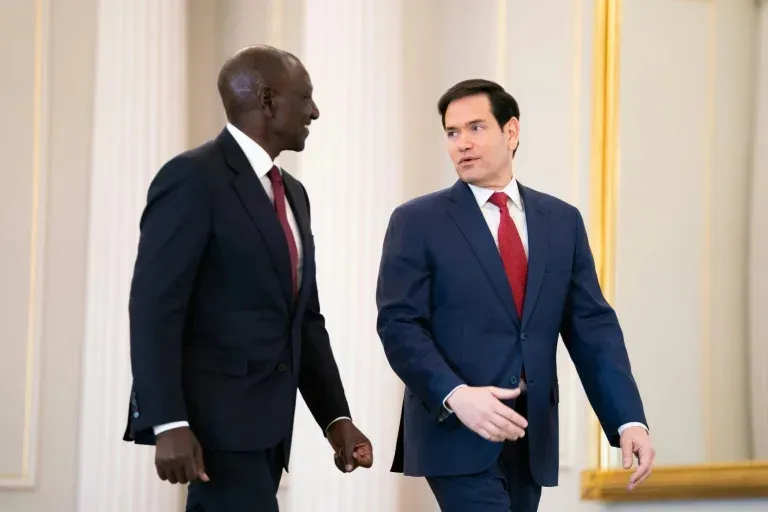
On Thursday, the United States finalized a $2.5 billion health assistance pact with Kenya, marking the first bilateral deal following the Trump administration's dismantling of the traditional US aid agency and reduction of NGO involvement. Officials indicated that this agreement could serve as a model for future collaborations with other developing nations, which will be expected to contribute financially and coordinate on shared objectives with Washington.
Secretary of State Marco Rubio signed the agreement in Washington alongside Kenyan President William Ruto. Rubio commended Kenya for its longstanding support in international missions, including its role in stabilizing Haiti.
"If several nations followed Kenya's lead even halfway, it would represent a remarkable achievement," Rubio stated. Kenya has actively led security initiatives in Haiti amid ongoing unrest.
The agreement allocates $1.6 billion over five years from the United States to address health priorities in Kenya, including HIV/AIDS, malaria, and polio prevention. Kenya will supplement this with $850 million, gradually assuming greater responsibility for the programs. President Ruto emphasized that the deal will support Kenya's health goals, such as upgrading hospital equipment and expanding the healthcare workforce.
"This framework strengthens our pursuit of universal health coverage," Ruto remarked.
The deal comes after President Trump, upon returning to the White House this year, closed the US Agency for International Development, pursuing an "America First" strategy. Critics have warned that aid reductions could contribute to preventable deaths, particularly among children, yet the agreement with Kenya has been praised by international health organizations.
UNAIDS hailed the pact as a key step in global health collaboration, aligning with its goal to cut new HIV infections and AIDS-related deaths by 90% by 2030 compared to 2010 figures.
Jeremy Lewin, head of foreign assistance at the State Department under Trump, stated that future aid agreements will prioritize countries that align with US interests and may increasingly involve religious organizations. He addressed concerns that this approach might overlook marginalized communities, asserting that the structure is designed to reduce health risks for all vulnerable groups.
Author: Riley Thompson
Share
HHS replaces transgender admiral’s official portrait with deadname in an act of 'pettiness and bigotry'
31 minutes ago 3 min read POLITICS

Unprecedented Alarm: Concern over memo from top US vaccine official
35 minutes ago 4 min read POLITICS
Marjorie Taylor Greene Reveals Trump's Warning About Releasing Epstein Files and Potential Harm
35 minutes ago 2 min read POLITICS

Arrest made in connection with pipe bombs planted before Capitol riot on January 6th
40 minutes ago 1 min read POLITICS
Ilhan Omar criticizes Trump's 'creepy and unhealthy obsession' as raids increase
46 minutes ago 3 min read POLITICS
Minneapolis to Disprove Trump's Negative Stereotype of Somalis
48 minutes ago 3 min read POLITICS

Investigation reveals Afghanistan mission as "a twenty-year endeavor filled with inefficiency"
52 minutes ago 2 min read POLITICS
Trapped in a van as the president focuses on Kennedy Center drapes: A look inside Trump's day of boosting his ego amid looming crises
53 minutes ago 3 min read POLITICS
USTR Greer tells Politico that Trump may withdraw from USMCA trade deal next year
1 hours ago 1 min read POLITICS
Joe Biden accuses MAGA Republicans of demonizing LGBTQ+ individuals
1 hours ago 4 min read POLITICS