

Wetlands captured toxic metals as world's largest battery power plant caught fire
- Last update: 3 days ago
- 4 min read
- 131 Views
- WORLD
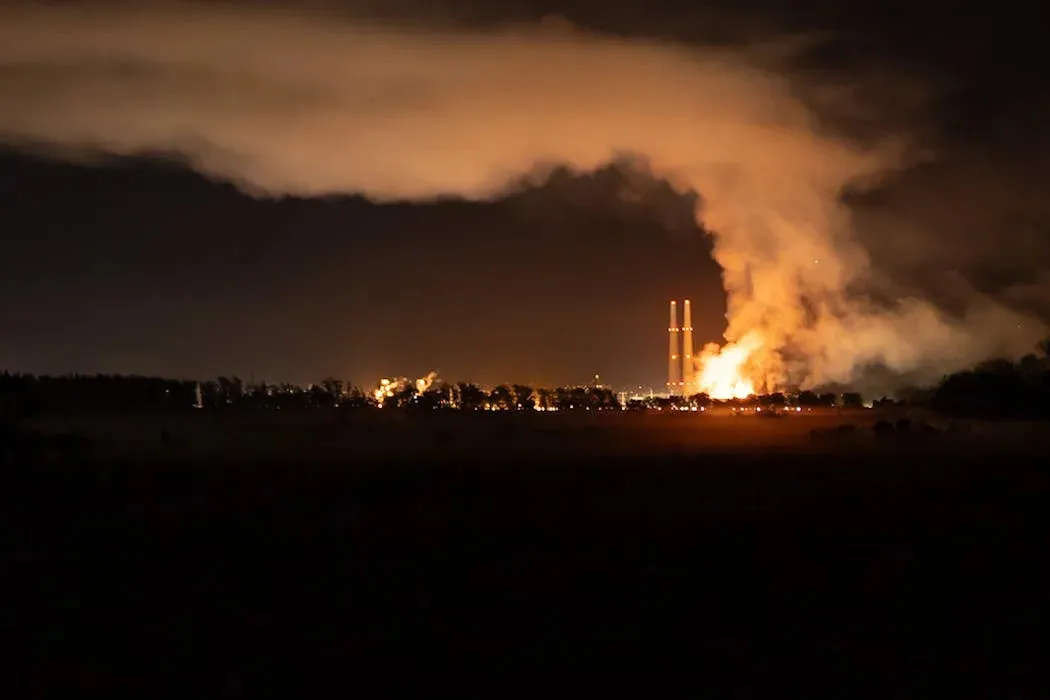
In January 2025, a massive fire erupted at the worlds largest battery energy storage facility on Californias central coast, sending thick smoke over wetlands, farmland, and nearby communities. Authorities closed highways, evacuated residents, and watched helplessly as debris and ash fell across the region. Locals reported headaches, breathing difficulties, and illnesses in pets and livestock. Despite officials declaring air quality met federal standards two days later, they overlooked a significant threat: heavy metal contamination on the ground.
Near the marshes, a piece of charred battery debris was discovered beside bird tracks, illustrating the spread of material. These wetlands are key stopover sites for migrating seabirds. Scientists found a thin layer of smaller battery fragments scattered across the area.
Battery fires produce chemical fallout whose composition is often uncertain. Lithium-ion batteries, like those used at the Moss Landing facility, contain metals hazardous to humans and wildlife. The fire released not only toxic gases such as hydrogen fluoride but also soot and charred battery fragments that traveled miles.
As a marine geologist studying nearby marshes for over a decade, I conducted detailed before-and-after sampling to assess the fires impact. Our study, published in Scientific Reports, showed that tiny metal fragments did not vanish; they continue to circulate in the environment.
The Vistra facility, located near Monterey Bay and surrounded by farmland and wetlands, occupies a former gas power plant site. Its conversion into the worlds largest lithium-ion battery installation was initially seen as a clean energy milestone. Phase 1 alone contained 300 megawatts of battery capacity, enough to power approximately 225,000 homes for four hours.
The batteries cathodes contained nickel, manganese, and cobalt. While these metals provide high energy density and cost efficiency, they are prone to thermal runaway. Lab studies have shown that burning such batteries can disperse metal particles widely.
Three days after the fire, ash and debris covered marshes, and charred fragments clung to plants for weeks. Using portable X-ray fluorescence, we recorded sharp spikes in nickel, manganese, and cobalt compared to pre-fire levels. We alerted officials in four counties about the contamination risks. Approximately 25 metric tons (55,000 pounds) of heavy metals were deposited across half a square mile (1.2 km) of wetland, representing only a small fraction of the material released from the facility.
Sampling hundreds of locations and examining thin soil layers under a scanning electron microscope revealed metallic particles smaller than one-tenth the width of a human hair. The nickel-to-cobalt ratio matched the battery cathodes, confirming the fire as the contamination source. Surface metal concentrations dropped after rain and tidal events but persisted, migrating into estuary channels and potentially entering the ocean and food chain.
Wildlife in the wetlandsincluding sea otters, harbor seals, pelicans, and heronsare at risk of exposure. Tiny metal particles were also found on vegetation and croplands, showing how far the fallout spread.
Improving Battery Safety
The Moss Landing fire highlights the need for improved safety in battery storage as demand for renewable energy storage grows. Emergency responders must be informed of chemical hazards during fires. California legislation now mandates enhanced containment, monitoring, and consultations with local fire authorities before new battery facilities open. Newer lithium-ion batteries using iron phosphate cathodes offer reduced fire risk but store less energy.
Proper soil testing is critical. Early government samples likely underestimated contamination due to sampling methods that mixed surface deposits with deeper soil layers. Metals from the Moss Landing fire persist in sediments and food webs, bioaccumulating in worms, small invertebrates, fish, crabs, shorebirds, and top predators like sea otters and harbor seals. Our team continues to monitor this bioaccumulation in local shellfish, crabs, and fish, though ecological effects may take months or years to fully appear.
This research underscores the ongoing environmental impact of lithium-ion battery fires and the importance of proactive monitoring and safer battery designs for future energy storage projects.
Author: Sophia Brooks
Share

Cosmic rays from another galaxy can impact air travel, as shown by NJ plane incident: planetary defense expert
1 minutes ago 2 min read WORLD
Researchers raise alarm as disease-carrying threat spreads throughout US region, surviving an additional 100 days
2 minutes ago 2 min read WORLD

Afghan and Pakistani troops engage in intense firefight amid escalating tensions
7 minutes ago 2 min read WORLD

Canadian official detained for asserting that menacing voicemail was created by AI
8 minutes ago 2 min read WORLD

Canada removes Syria from list of countries labeled as supporters of 'terrorism'
9 minutes ago 2 min read WORLD

A Universe Speed Camera
10 minutes ago 2 min read WORLD

Palestinian organizations express serious worries about Marwan Barghouti’s safety
10 minutes ago 3 min read WORLD

Myanmar nationals participate in early voting in Bangkok
11 minutes ago 2 min read WORLD

39-year-old man killed by pickup truck while sleeping in his apartment
12 minutes ago 2 min read WORLD

Starvation concerns rise as additional heavy rain threatens flood-affected Indonesia
12 minutes ago 3 min read WORLD