

Trump versus Slaughter: An explanation
- Last update: 48 minutes ago
- 4 min read
- 167 Views
- POLITICS
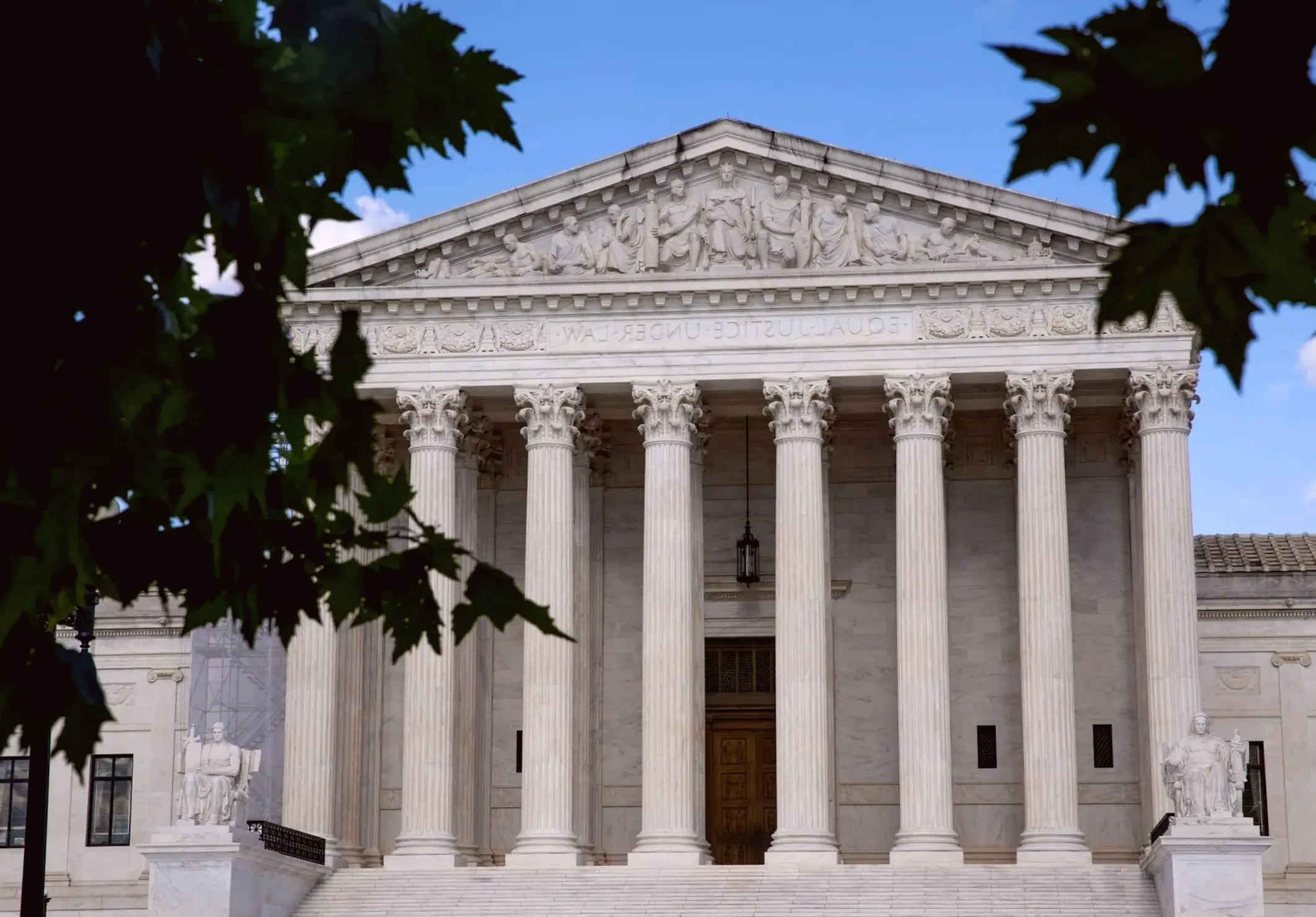
On Monday, December 8, the Supreme Court will hear oral arguments in the case Trump v. Slaughter, a dispute that traces back to the early days of President Donald Trumps administration and has deeper historical roots. At the heart of the case are federal laws that restrict the presidents authority to remove leaders of independent, multi-member agencies such as the Federal Trade Commission (FTC).
Supporters of President Trump argue under the unitary executive theory, which holds that the president should have full control over the executive branch. According to this view, any law that limits the presidents power to remove executive officials infringes on the constitutional separation of powers.
The Agency and the Law in Question
The FTC, created in 1914 by President Woodrow Wilson, is charged with protecting consumers against unfair business practices and promoting fair competition. The commission consists of five commissioners appointed by the president and confirmed by the Senate, serving staggered seven-year terms. By law, no more than three commissioners can belong to the same political party, and the president may only remove a commissioner for inefficiency, neglect of duty, or malfeasance in office.
Origins of the Dispute
The case began in March when President Trump fired Rebecca Slaughter, whom he had originally nominated to the FTC in 2018. She had been renominated by President Biden for a second term ending in 2029. Trumps dismissal cited policy disagreements rather than the statutory reasons for removal. Another Democratic appointee, Alvaro Bedoya, was also fired but later resigned, withdrawing from the legal challenge.
Historical Context
The Supreme Court addressed a similar issue in 1935 in Humphreys Executor v. United States. Then-President Franklin Roosevelt had attempted to remove FTC commissioner William Humphrey without cause. The Court ruled that the law restricting removal was valid, emphasizing that the FTC was an independent body designed to operate without undue executive influence.
Previously, in Myers v. United States (1926), the Court had allowed the president to remove a postmaster without Senate approval. However, the Court in Humphreys Executor distinguished the FTC as a legislative and quasi-judicial agency, not purely executive, and thus subject to removal restrictions.
Arguments from Rebecca Slaughter
Slaughters team argues that independent, multi-member agencies have historically been protected from at-will removal, citing longstanding legislative and judicial support. She contends that overturning Humphreys Executor would destabilize governance structures that have been in place for nearly a century. Slaughter also emphasizes the principle of stare decisis, arguing that the Court should not overturn well-established precedent without compelling reasons.
Arguments from the Government
The Trump administration asserts that Article II vests the president with the executive power, including the authority to remove executive officers at will. While acknowledging the precedent of Humphreys Executor, the government claims that the FTC now exercises significant executive authoritysuch as issuing binding rules and enforcing civil penaltiesbeyond what it did in 1935, and therefore the precedent should be reconsidered or overturned.
Lower Court Rulings
In the D.C. District Court, Judge Loren AliKhan ordered Slaughter reinstated. The D.C. Circuit denied the governments request to pause that order, citing Humphreys Executor as controlling precedent. A dissenting judge argued that reinstatement orders interfere with presidential authority.
Supreme Court Involvement
The Supreme Court agreed to hear the case after the government appealed, temporarily allowing Trump to remove Slaughter pending the outcome. Oral arguments are scheduled for early December 2025, with the court likely to issue a ruling by mid-2026.
Who Will Argue
U.S. Solicitor General D. John Sauer will represent the government, while Amit Agarwal of the Protect Democracy Project represents Slaughter. This will be Agarwals first time arguing before the Supreme Court.
Potential Outcomes
A ruling for the government could either distinguish the modern FTC from its 1935 counterpart or overturn Humphreys Executor entirely, allowing Trumps removal of Slaughter to stand. A ruling for Slaughter would uphold the removal statute and could result in her reinstatement.
Broader Implications
The decision could redefine presidential control over heads of other independent agencies. Previous Trump firings of officials from the NLRB, MSPB, and CPSC highlight the wider stakes. Upcoming cases, including one involving a Federal Reserve Board governor, may also be affected.
Timeline for Decision
While there is no guaranteed schedule, the Court may issue a ruling in early 2026, with a final decision almost certainly by late June or July 2026.
Author: Olivia Parker
Share

Fact Check: Beware of fake photo showing Melania Trump kissing Epstein on cheek
2 minutes ago 2 min read POLITICS

Justice Department files lawsuits against 6 additional states for voter registration lists
9 minutes ago 2 min read POLITICS

Double-tap for a summary: A history of the US' attacks on ‘narco-terrorists'
14 minutes ago 3 min read POLITICS

The Supreme Court's decision boosts Democrats in California and other states reshaping US House districts
30 minutes ago 3 min read POLITICS

Texas Receives a Free Pass for Gerrymandering. Will California Receive the Same Treatment?
36 minutes ago 2 min read POLITICS
Trump stands by controversial new hepatitis B vaccine recommendations for infants
38 minutes ago 2 min read POLITICS
If the Trump administration seems confusing, just think of it as a royal family.
43 minutes ago 4 min read POLITICS

After the push for artificial intelligence, the Trump administration is now exploring the use of robots.
47 minutes ago 3 min read POLITICS

Stefanik claims Johnson is being dishonest about provision in defense bill
48 minutes ago 2 min read POLITICS

Trump versus Slaughter: An explanation
48 minutes ago 4 min read POLITICS