

If the Trump administration seems confusing, just think of it as a royal family.
- Last update: 42 minutes ago
- 4 min read
- 267 Views
- POLITICS
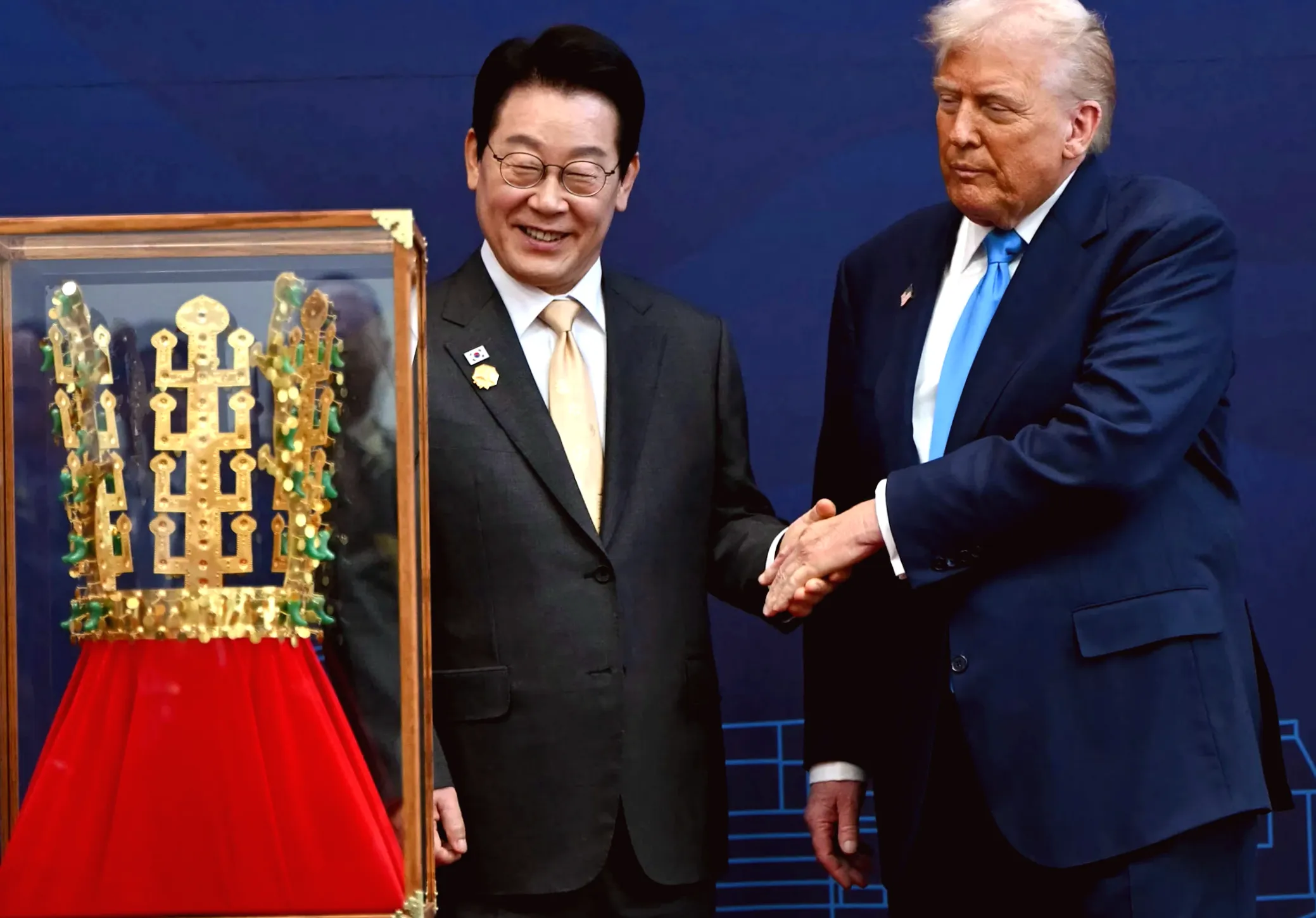
Two political scientists have introduced the concept of neo-royalism to better interpret the foreign policy of Donald Trump. They argue that his administration often resembles a medieval royal household more than a conventional modern state.
Indicators of this approach include the blending of private business and diplomacy, Trumps reliance on family members and longtime business partners for negotiations instead of traditional bureaucrats, and his tendency to assert global dominance by diminishing the sovereignty of weaker nations. While Trump is not the first leader to act this way, the scale of the United States power gives him the ability to influence the global system and potentially normalize this style of governance.
One symbolic example occurred during Trumps visit to South Korea, where he was presented with a jewel-encrusted golden crown, echoing ancient Korean monarchs. This gesture followed widespread domestic protests against his administration. Trump has also publicly referred to himself as the king and shared AI-generated images of himself wearing a crown, highlighting his affinity for monarchical imagery.
Political scientists Stacie Goddard and Abraham Newman argue that traditional frameworks of international relations, which view sovereign nation-states as the main actors, fail to capture the nuances of Trumps approach. His foreign policy can appear erratic, such as applying pressure to allies like Canada and Denmark while pursuing deals with rivals like China and Russia.
Central to Trumps neo-royal style is a tight-knit group of family members, loyalists, and influential business figures. This clique openly merges personal and national interests, a strategy alien to conventional state bureaucracies. Other countries have exploited this, attempting to bypass the usual U.S. security channels to appeal directly to the president through opportunities for investment, energy, or other ventures.
Goddard and Newman emphasize that this pattern is not merely corruption or a variant of neoliberalism; it represents a fundamentally different distribution of power, reminiscent of pre-Enlightenment royal households rather than modern states.
The Historical Context
Trumps challenge to the liberal international order has been widely discussed, but understanding his methods benefits from examining older forms of political organization. Pre-modern Europe saw overlapping authorities and alliances reinforced by marriage, creating a complex hierarchy of influence. Similar structures still exist today in regions like the Persian Gulf, where ruling families combine private business and state authority.
Characteristics of Neo-Royalism
- Family-Centric Diplomacy: Key negotiations often involve family members or close business associates rather than traditional officials.
- Blurring Private and Public Interests: Business ventures are directly linked to foreign policy decisions, from real estate projects abroad to trade negotiations.
- Selective Sovereignty: Trump treats some nations as more important than others, emphasizing dominance over equality among states.
- Symbolic Displays: Lavish gifts from foreign governments reinforce hierarchical relationships, echoing royal customs.
- Tariffs and Economic Leverage: Trade measures serve to reinforce the U.S.s position in global pecking orders, often benefiting the administrations inner circle.
Recent examples include foreign investments connected to U.S. projects, high-profile tech CEOs accompanying Trump on diplomatic trips, and negotiations for deals that bypass traditional governmental channels. These practices, once established, create lasting infrastructure and influence, making them difficult to reverse.
Global Implications
Comparisons have been made to other leaders who rely on personal networks, such as Silvio Berlusconi in Italy or the inner circles surrounding Vladimir Putin. What sets Trump apart is the global reach of the United States economic and military power, giving his clique the ability to shape international norms and practices in lasting ways.
Political scientists warn that even after Trump leaves office, the effects of this neo-royalist system could persist, potentially causing instability in the international order. Understanding this approach may require revisiting lessons from history and political theory, particularly those of Machiavelli, to grasp the full consequences of a family-driven, hierarchical style of governance on the global stage.
Author: Benjamin Carter
Share
Trump could potentially withdraw support from both Russia and Ukraine
2 hours ago 3 min read POLITICS

‘Just a Second…’: Kimmel Burns Trumpworld with Highly Sarcastic Wake-Up Call
7 hours ago 1 min read ENTERTAINMENT
Trump awarded peace prize by Fifa – will there be a VAR review?
17 hours ago 3 min read SPORT
Donald Trump receives FIFA Peace Prize instead of Nobel Prize.
17 hours ago 2 min read POLITICS
FIFA Awards Trump a Peace Prize Specifically Designed for Him
19 hours ago 2 min read POLITICS
Trump receives first ever Fifa peace prize during World Cup draw in Washington
20 hours ago 3 min read POLITICS

The 8 wars that President Trump claims to have ended
20 hours ago 3 min read POLITICS
Trump criticizes European allies in national security strategy
22 hours ago 2 min read POLITICS
Democratic Leaders Continue to Misunderstand Populism
1 days ago 2 min read POLITICS
Trump administration warns Europe of 'civilizational erasure'
1 days ago 3 min read WORLD