

Switching Brain's Defenses to Protect Against Alzheimer's
- Last update: 5 days ago
- 2 min read
- 13 Views
- HEALTH
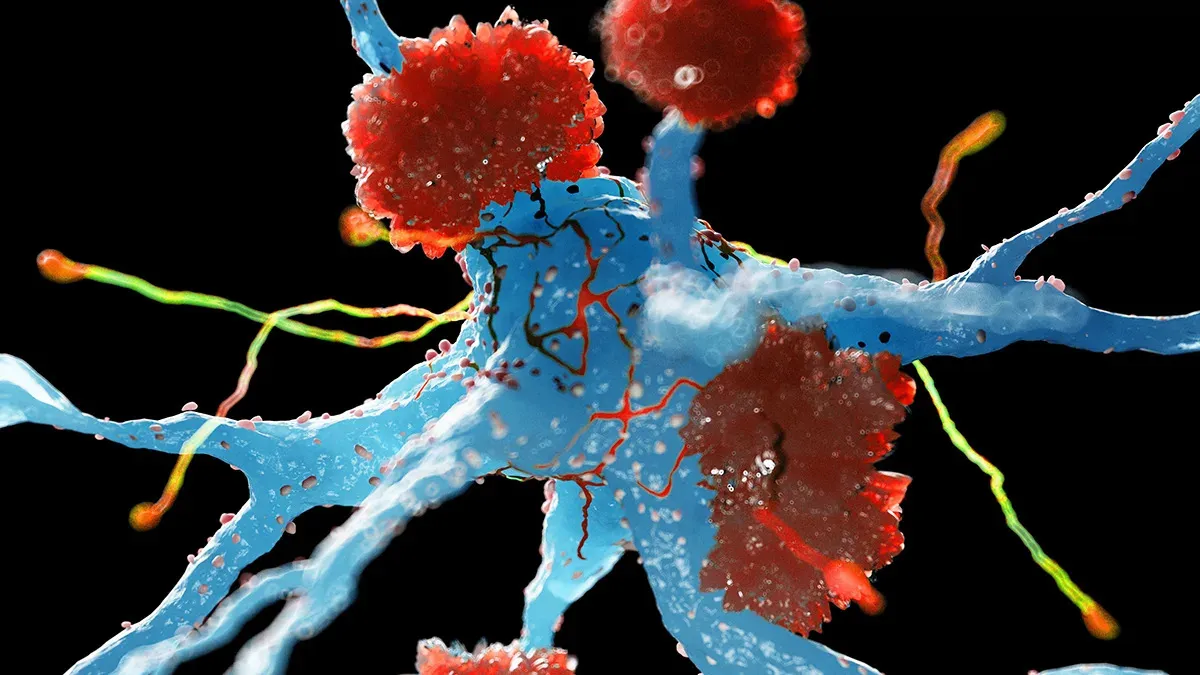
New research suggests that certain immune cells in the brain may be vital in protecting against Alzheimer's disease, opening possibilities for treatments aimed at encouraging these cells into a defensive state.
Previous studies indicated that microglia, a type of immune cell in the brain, can both combat and exacerbate Alzheimer's symptoms due to their inflammatory responses. In this study, an international team explored how microglia switch between these helpful and harmful roles.
Using mouse models, neuroscientist Pinar Ayata from the Icahn School of Medicine and colleagues discovered that when microglia encounter amyloid-beta protein clumpshallmarks of Alzheimer'sthey enter a specialized neuroprotective state.
"Microglia are not merely destructive agents in Alzheimer'sthey can act as protectors of the brain," says Anne Schaefer, neuroscientist at Icahn School of Medicine in New York. "This expands our understanding of the adaptability of microglia and their diverse roles in brain function."
Researchers identified two key traits of this microglia subtype: reduced levels of PU.1, a protein linked to Alzheimer's, and increased expression of CD28, a protein critical to immune function. Microglia exhibiting this profile were more effective at slowing amyloid-beta accumulation and limiting tau protein clumps, another toxic factor in Alzheimer's.
When CD28 production was blocked in mice, harmful, inflammation-causing microglia became more prevalent, and amyloid-beta plaques increased.
These findings align with previous research showing that individuals genetically predisposed to lower PU.1 expression tend to develop Alzheimer's later in life. "This offers a mechanistic explanation for why reduced PU.1 is associated with lower Alzheimer's risk," says geneticist Alison Goate from Icahn School of Medicine.
While this natural protective mechanism exists, it is insufficient to fully prevent disease progression. Researchers hope that therapies could one day boost this microglia subtype, though confirmation in humans is required.
Alzheimer's is highly complex, involving multiple risk factors, suggesting that effective treatment may need to target several mechanisms simultaneously. One approach may be to convert microglia into their neuroprotective state.
The study also highlights broader connections between Alzheimer's and the immune system. Modified microglia in mice act similarly to T cells found elsewhere in the nervous system. "This discovery coincides with growing recognition of regulatory T cells as key immune regulators, emphasizing a shared principle of immune control," explains epigeneticist Alexander Tarakhovsky of Rockefeller University. "It also opens doors for immunotherapy approaches to Alzheimer's."
The research has been published in Nature.
Author: Sophia Brooks
Share

Researchers Discover That This Basic Diet Improves Digestion and Enhances Gut Health
48 minutes ago 3 min read HEALTH

Concerns arise over US childhood vaccine schedule following hepatitis B guideline revision
1 hours ago 3 min read HEALTH

The benefits of smelling your own farts according to science
1 hours ago 2 min read HEALTH

FDA approves Francis Medical's water vapor ablation treatment for prostate cancer
2 hours ago 2 min read HEALTH

Study finds bird flu gene enhances its ability to survive human fever defences
3 hours ago 4 min read HEALTH

Many lifters are making painful mistakes with the seemingly simple front rack position
4 hours ago 2 min read HEALTH

Singing along improves lung health and supports a charitable cause
6 hours ago 2 min read HEALTH

CDC Changes Hepatitis B Vaccine Recommendation for Children Despite Opposition from Academy of Pediatrics
7 hours ago 2 min read HEALTH

CDC Panel Votes Against Recommending Hepatitis B Vaccine for Newborns, Experts Warn of Impact on Children’s Health
11 hours ago 4 min read HEALTH

Experiencing stress in life is not a disease - GPs discuss mental health over-diagnosis
13 hours ago 4 min read HEALTH