

Study finds bird flu gene enhances its ability to survive human fever defences
- Last update: 57 minutes ago
- 4 min read
- 311 Views
- HEALTH
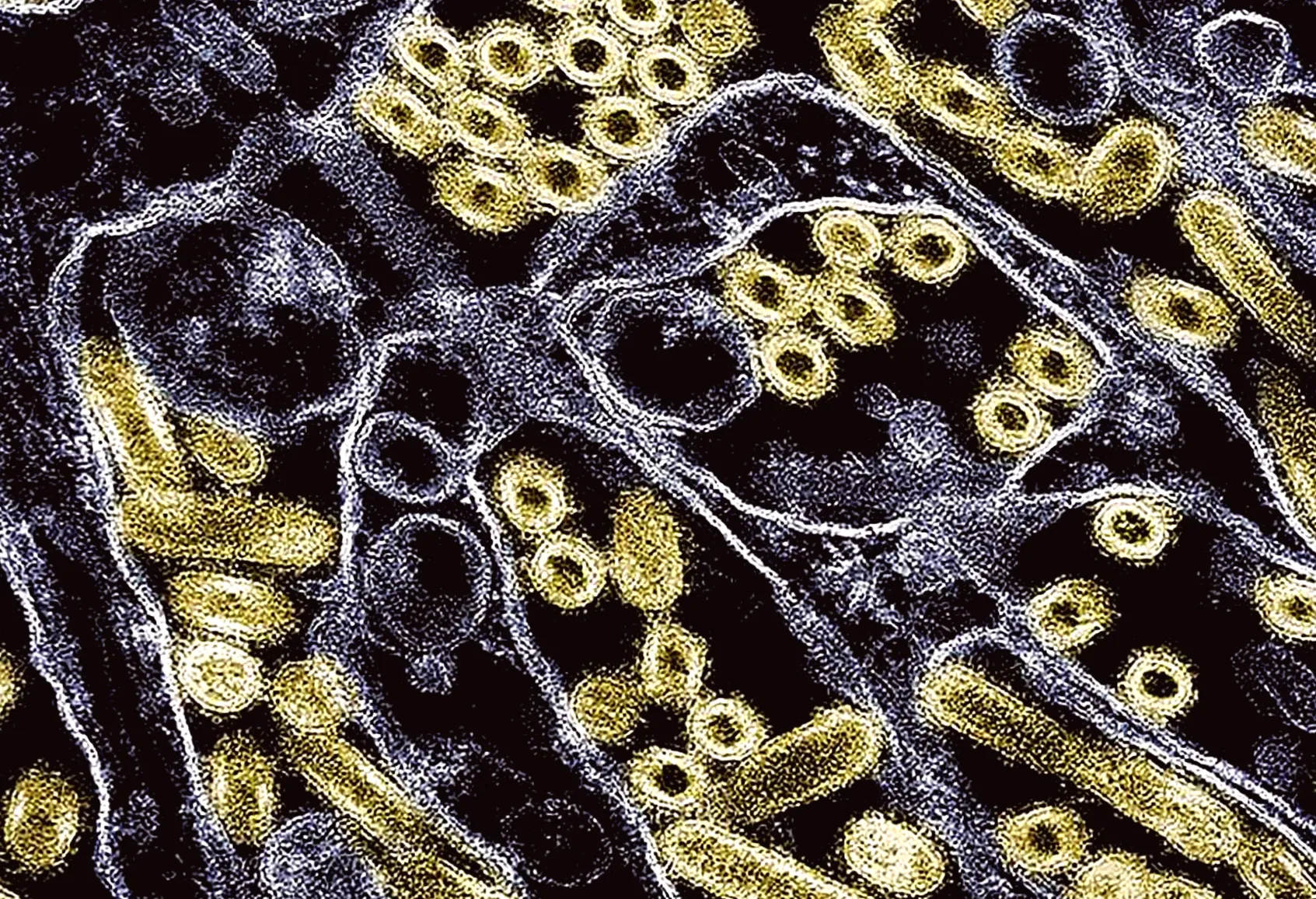
Research has revealed that bird flu viruses possess a unique gene that allows them to endure heat and resist the human body's fever response. These viruses, such as H5N1, which have infected millions of animals and pose a significant risk to human health, can continue replicating even when the bodys temperature rises to levels that would hinder human flu viruses.
Scientists from the University of Cambridge and the University of Glasgow discovered a gene, named PB1, which enables avian flu viruses to survive at higher temperatures than the human-adapted seasonal flu viruses. Unlike human flu strains that thrive in cooler temperatures, avian flu viruses are more resilient to heat.
Seasonal human flu viruses, which circulate in the colder months, are adapted to live in the cool environment of the human respiratory system. These viruses struggle to replicate at temperatures above 40C, which is why the human body increases its temperature to fight off infections. In contrast, bird flu viruses are accustomed to hotter environments, such as the gastrointestinal systems of ducks and geese, where temperatures range from 40C to 42C. This adaptation allows H5N1 to replicate and thrive even under heat stress.
To better understand this, researchers created two different flu strainsone containing PB1 from an avian flu virus, and the other from a human-adapted strain. They then tested these strains in both cell cultures and mice. Both strains caused severe illness at normal temperatures, but when the researchers raised the temperature of the mice to simulate a fever, the human-adapted strain failed to replicate effectively. The avian flu virus, however, continued to thrive despite the elevated body temperature.
Professor Wendy Barclay, Chair of the Medical Research Council (MRC) Infections and Immunity Board, noted, "This elegant study builds on the simple observation that different animals have different body temperatures, and it shows how this could influence how viruses replicate when they cross species barriers."
The study, published in the journal Science, may provide insights into why H5N1 is much more lethal to humans compared to seasonal flu viruses. Since the late 1990s, over 1,000 human cases of H5N1 have been reported globally, with around half of those infected dying from the disease. The flu strains behind the pandemics of 1957 and 1968, which each caused at least one million deaths worldwide, also carried the avian-derived PB1 gene, researchers pointed out.
"Understanding why bird flu viruses are so deadly to humans is critical for improving surveillance and preparing for potential pandemics. This is especially urgent due to the pandemic threat posed by avian H5N1 viruses," said Professor Sam Wilson, one of the study authors from the Cambridge Institute of Therapeutic Immunology and Infectious Disease.
One of the key concerns highlighted by the study is the potential for the PB1 gene from bird flu viruses to be transferred to human flu strains, making them more dangerous and able to spread more easily among humans. This genetic exchange, known as reassortment, can occur when a person is infected by both an animal flu and a human flu at the same time, allowing them to swap genes and create new, more potent strains.
Dr. Matt Turnbull, the lead author of the study from the Medical Research Council Centre for Virus Research at the University of Glasgow, explained, "The ability of viruses to swap genes is a constant threat in the emergence of new flu strains. Weve seen this process before during previous pandemics."
Dr. Turnbull emphasized the importance of monitoring bird flu strains to better prepare for potential outbreaks. "Testing bird flu strains for their resistance to fever could help us identify more virulent strains before they pose a major threat," he added.
Author: Olivia Parker
Share

Study finds bird flu gene enhances its ability to survive human fever defences
57 minutes ago 4 min read HEALTH

Many lifters are making painful mistakes with the seemingly simple front rack position
1 hours ago 2 min read HEALTH

Singing along improves lung health and supports a charitable cause
4 hours ago 2 min read HEALTH

CDC Changes Hepatitis B Vaccine Recommendation for Children Despite Opposition from Academy of Pediatrics
4 hours ago 2 min read HEALTH

CDC Panel Votes Against Recommending Hepatitis B Vaccine for Newborns, Experts Warn of Impact on Children’s Health
9 hours ago 4 min read HEALTH

Experiencing stress in life is not a disease - GPs discuss mental health over-diagnosis
10 hours ago 4 min read HEALTH

New Study Suggests that Lack of Common Nutrient Could Increase Your Risk of Alzheimer's
11 hours ago 4 min read HEALTH

Dietitians Recommend the Top High-Protein Bread for Your Diet
11 hours ago 3 min read HEALTH

Outbreak of Legionnaires' disease in Florida possibly connected to gym with 14 reported cases
12 hours ago 2 min read HEALTH

Yes, You Have the Ability to Create Your Own Lifting Routine—This Simple Formula Makes it Easy
12 hours ago 3 min read HEALTH