

Her spouse desired a dignified death. A death cafe assisted them in getting ready.
- HOME
- ENTERTAINMENT
- Her spouse desired a dignified death. A death cafe assisted them in getting ready.
- Last update: 5 hours ago
- 6 min read
- 310 Views
- ENTERTAINMENT
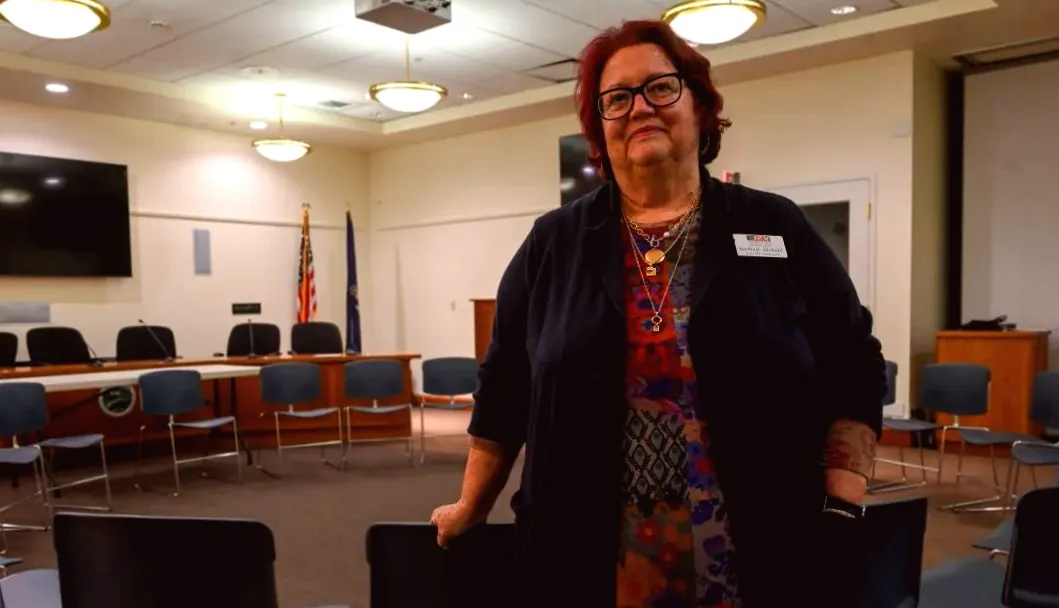
In August, Michelle Surdovals husband chose to end his life under Maines Death with Dignity law after being diagnosed with cancer. Just two weeks of treatment had left him severely weakened, and he did not want to continue suffering or cause further pain for his loved ones. Surdoval supported his choice, but she said the experience still filled her with a complex mix of grief, gratitude, and quiet relief that his passing was peaceful.
A local death cafe in York gave the couple a space to explore their feelings and prepare emotionally. These gatherings are not therapy or support groups. Instead, they offer guided conversations in which participants can openly discuss death, voice fears, ask questions, and consider practical plans for the end of life. The meetings are free and facilitated by a trained death doula, who offers emotional guidance and realworld support to those approaching the final stages of life.
Surdoval, who serves as the executive director of the York Community Service Association, had helped launch the death cafe as a community resource. At first, she attended as part of her job. Over time, as her husband aged and his health declined, the discussions became deeply personal and meaningful to her.
With three decades of experience in public health and training as a grief counselor, Surdoval understood how uncomfortable people can be when the topic of death arises. She noted that many people avoid the subject entirely, even though it is an inescapable part of life.
Similar death cafes have appeared in towns across the state, including Portland, Scarborough, Kennebunkport, Auburn, and Bridgton. While they are not held on fixed dates, information about upcoming meetings is available online for those who wish to attend.
At a recent gathering held in the York Public Library, death doula Leona Oceania welcomed around twenty participants. Chairs were arranged in a circle, and small skullshaped cakes were set out as a reminder of the subject at hand. Some attendees were there for the first time, while others had joined previous sessions. Each person came with a different reason for showing up: fear of dying alone, concern over a serious medical condition, or a desire to support a loved one and eventually start a similar group elsewhere.
Oceania explained to the group that while no one truly wants to die, it is possible to experience a good death. According to her, the most important tools are open communication, honest planning, and emotional preparation.
One woman shared that her doctor had seemed completely unprepared and uncomfortable when she asked about medical aid in dying, highlighting how difficult the topic still iseven for professionals.
Maines Death with Dignity law, passed in 2019, allows eligible residents who are at least 18 years old and have fewer than six months to live to voluntarily take prescribed medication to end their life. The individual must be mentally capable of making the decision and must take the medication without assistance. Two physicians must confirm that all legal requirements have been met.
The process requires two verbal requests made at least 15 days apart, as well as one written request witnessed by two people. At least one witness must be unrelated and cannot benefit from the persons death. Since September, doctors have been allowed to shorten the waiting period if they believe it is appropriate.
According to a recent annual report from Maines Department of Health and Human Services, 66 patients began the death with dignity process last year. At the time the report was issued, five of them were still alive.
Surdoval later shared with the group that her husbands experience with medical aid in dying was peaceful and respectful for everyone involved. He had long believed that, if he ever became seriously ill, this would be the path he would choose.
He was 22 years older than Surdoval, and they both understood that he would likely pass first. The couple had been married for 43 years, blending their families and sharing a life that included six children from previous marriages and five grandchildren. Surdoval remembered him as a brilliant engineer, a devoted partner, and a gentle, quietly charismatic presence.
At the age of 95, and after witnessing his own father endure painful cancer treatments decades earlier, he knew he did not want to put his family through the same ordeal. When he was diagnosed himself, he decided it was time to let go on his own terms.
After setting a date in August, family members gathered at their home in Cape Elizabeth. Some traveled from as far as England to be there. They spent the morning together, sharing final moments, until just minutes before the scheduled time, when he gently signaled that it was time for everyone to step out.
Only Surdoval and their death doula remained with him. Although it can take hours for the medication to take effect, he passed in about ten minutes. Surdoval described the moment as calm, loving, and free of violence or fear.
The conversations she had taken part in at the death cafe helped her anticipate the emotional details that follow a death. She learned, for example, that certain sensory experienceslike the sound of a body bag zippercan later trigger traumatic memories. For that reason, she was relieved when those who arrived to care for her husbands body gently wrapped him in a quilt instead.
Surdoval emphasized that grief does not follow a straight line. While she remains thankful that her husband was able to die with dignity and choice, the pain of losing him has not disappeared.
She explained that even on her calmest days, waves of heartbreak still come, bringing thoughts of how empty life feels without him. But in moments of clarity, she sees meaning in sharing their story so that others can prepare themselves and their families for the end of life with openness and intention.
For her, speaking about the experience is both a way to honor her husband and a way to remind others that, even in death, there can be peace, dignity, and love.
Author: Gavin Porter
Share

Glen Powell & Michelle Randolph's Relationship Is 'Very Fresh' — Source
2 hours ago 2 min read ENTERTAINMENT

'Don Lemon Seeks Revenge on Kathy Griffin for New Year's Eve Show' — Source
2 hours ago 4 min read ENTERTAINMENT

Will Smith and Jada Pinkett Smith Remain a Strong Team despite $3M Lawsuit: 'They Maintain Deep Respect' (Exclusive Source)
2 hours ago 2 min read ENTERTAINMENT

Sabrina Carpenter Moves on from Disney Fame Amid NSFW Lyrics Backlash
2 hours ago 2 min read ENTERTAINMENT

Ex-WWE Star Hornswoggle Shares Insights on Therapy Benefits
2 hours ago 3 min read ENTERTAINMENT

A$AP Rocky Describes Mutual Inspiration with Rihanna
2 hours ago 2 min read ENTERTAINMENT

Country Ever After Star Criscilla Anderson Passes Away at the Age of 45
2 hours ago 2 min read ENTERTAINMENT

Meghan Markle contacts her estranged father following his emergency leg amputation
2 hours ago 3 min read ENTERTAINMENT

Bianca Censori's Race in Dermatology Interrupted by Kanye West's New 'Rules' Resulting in Chaos
2 hours ago 4 min read ENTERTAINMENT
'Motor Neuron Disease claimed our son at 14 - it can affect anyone at any age'
2 hours ago 3 min read ENTERTAINMENT