

Is it Possible for America to Embrace Neoconservatism Again Without Repeating History?
- Last update: 1 hours ago
- 3 min read
- 484 Views
- BUSINESS
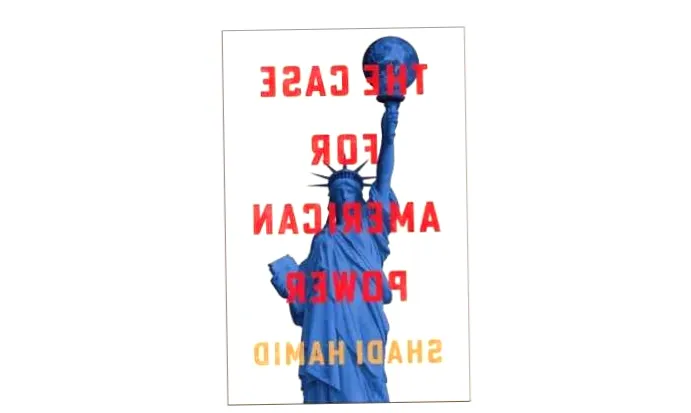
In 2021, I debated Shadi Hamid at the Quincy Institute for Responsible Statecraft. I argued that the U.S. was backing a series of aggressive, expansionist regimes in the Middle East, whose actions were just as harmful as the Iranian influence they claimed to counter. I suggested that Washington adopt a neutral policy toward the region, guided by the principle, First, do no harm. Hamid, identifying as an interventionist, countered that America has a moral duty to prevent atrocities because its adversaries are worse. He cited the Russian-Iranian intervention in Syria, while I highlighted the Saudi-Emirati involvement in Yemen and the Turkish-Kurdish conflict. Since then, the world has produced countless additional examples of conflict and suffering.
Hamids new book, The Case for American Power, argues that power is an unavoidable reality. Someone must wield it, he writes, dismissing the notion of a morally flawless superpower as fantasy. He praises American domestic freedoms and tries to link them to U.S. influence abroad, a connection that often contradicts the very freedoms he celebrates. The book largely attempts to philosophically justify this contradiction, suggesting the possibility of a more humane U.S. empire, even if it remains aspirational rather than realized. Hamid notes that as a democracy, the U.S. has the capacity to improve in ways authoritarian states cannot.
Critics like Nathan Thrall describe this approach as feeling good about feeling bad, where acknowledging wrongdoing becomes a tool to maintain authority rather than rectify past mistakes. For example, while the Iraq invasion is widely recognized as disastrous, Hamid contends that U.S. power remains preferable to alternatives, despite the enduring influence of Iranian-aligned Shiite factions and the ongoing human rights abuses under their rule.
The U.S. is not unique in wielding military power, invading nations, or propping up dictators, but what sets it apart is the global scale of its reach. Hamid correctly observes that a flawless superpower does not exist, and Americas post-World War II dominance was historically contingent. He critiques past missteps, like engaging with China, yet warns against self-imposed limitations, framing the challenge as one of resolve and strategic imagination.
Today, American foreign policy is marked by proxy wars, regime manipulation, and selective interventions. Both the Trump and Biden administrations relied on indirect conflict strategies in regions where direct action was politically or logistically impractical. Hamid rejects a modest approach to power, arguing that the U.S. has the resources to maintain global dominance and should not entertain graceful decline.
Drawing on neoconservative tradition, Hamid emphasizes the need for assertive American leadership, citing Elliott Abramss Cold War-era concerns about global revolutions. Ironically, Hamid both critiques Washingtons longstanding alliances with Middle Eastern autocrats and implicitly validates the principles that produced those alliances. The central question remains whether America can wield power responsibly without replicating the destructive outcomes of its past interventions.
Author: Grace Ellison
Share

Do flies actually regurgitate on your food when they land on it?
27 minutes ago 2 min read BUSINESS

The Coca-Cola's Forgotten Soft Drink from World War II
29 minutes ago 3 min read BUSINESS
'Miraculous' escape as car crashes into pub
36 minutes ago 2 min read BUSINESS

FDA investigation of WHOOP poses difficulties for specialized wearable device manufacturers
39 minutes ago 3 min read BUSINESS

We let down Gen Z on social media – we must not let them down on AI as well
41 minutes ago 4 min read BUSINESS

Investigators from India and the US to hold meeting next week regarding Air India crash, according to Bloomberg News
42 minutes ago 1 min read BUSINESS

Thousands of Crayola Toys Recalled Nationwide Due to Safety Concerns for Children's Lives and Health
43 minutes ago 2 min read BUSINESS

Alarming Study Shows Individuals Addicted to AI Are at Higher Risk of Mental Distress
45 minutes ago 2 min read BUSINESS

Layoffs are a painful and personal reality for small businesses struggling with rising costs.
46 minutes ago 3 min read BUSINESS

Jewellery sellers fined for selling rings without hallmarks
48 minutes ago 2 min read BUSINESS