

At Art Basel, Elon Musk, Andy Warhol and Jeff Bezos transformed into robotic dogs that create picture-pooping art
- Last update: 2 hours ago
- 4 min read
- 771 Views
- BUSINESS
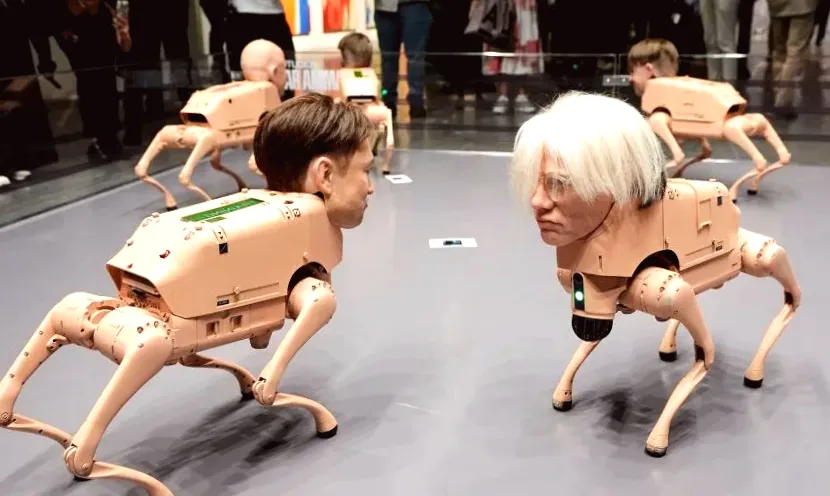
A group of robotic quadrupeds with hyperrealistic silicone faces of renowned tech billionaires and artists move around the floor. One robot, with an eerily lifelike Elon Musk face, puckers its lips as it trots by. Nearby, a robot resembling Andy Warhol and another one modeled after Mark Zuckerberg almost collide. Further back, a Picasso-inspired robot rests on its haunches, staring into the distance. Occasionally, each of these robotic figures tips backward, their heads tilting up to release a printed artwork from their rear end, accompanied by a poop mode message flashing on their screens. These half-humanoid, half-canine creatures resemble something out of a cyberpunk video game or a bizarre dream. However, they aren't part of your nightmaresyet. Instead, theyre part of an art installation at Art Basel in Miami, one of the most prestigious art fairs in the world.
The artwork, titled "Regular Animals," is the latest creation by artist Beeple (Mike Winkelmann), who is warning that we are not ready for the future. On the opening day of the art fair, Beeple stood among the robots, collecting their discarded prints and handing them to curious onlookers. Among the robots on display, some take on Beeples own likeness, sporting his signature glasses and hairstyle, while others resemble famous figures like Musk, Warhol, Zuckerberg, Picasso, and Jeff Bezos.
"Im the odd one out, Ill admit," Beeple said, smiling, as he described his creations. Each robot continuously takes pictures of the world around them, interpreting these images in a style that corresponds with the famous person theyre modeled after. "They are constantly capturing their surroundings and reinterpreting the world through the lens of these different personalities," he explained. He displayed prints generated by the robots, showing how each one reimagines reality through a distinct visual style. This one looks like an Andy Warhol piece, showing how he perceived the world. The Picasso-inspired image reinterprets the world as Picasso would have seen it, Beeple noted.
He continued: When it comes to tech billionaires, were increasingly seeing the world through their lenshow they want us to perceive it. These individuals control powerful algorithms that shape what we see and for many, they are the primary source of news. They have an enormous influence over how we view the world, in a lot of ways.
You may recall Beeple from the NFT (non-fungible token) art boom in 2021, when his 5,000-image digital collage sold for $69.3 million at a Christies auction, making him one of the most expensive living artists in the world. Since then, Beeple has focused on expanding his Charleston, South Carolina-based studio, pushing forward experimental digital art. His works have been exhibited at prominent art venues such as The Shed in New York and LACMA in Los Angeles, while also venturing into political commentary through AI-generated art.
Although NFT art has seen a significant decline, Beeple acknowledges this downturn as inevitable. "I was the one saying right after the big sale that it was a bubble," he admitted in a podcast interview. Despite the NFT crash, Beeple believes there is real innovation emerging in the broader digital art space. According to Art Basels 2025 industry report, digital art has entered a phase of significant growth. This year, Art Basel has embraced this trend, dedicating a section of the fair in MiamiZero 10specifically to digital art, where Beeple's "Regular Animals" installation is showcased.
The printed artworks created by the robots are not just physical prints; they are, in fact, NFTs, perfectly fitting with the controversial nature of NFTs, which have often been dismissed as "nonsense" online. However, Beeple remains optimistic about the future of digital art, even as the NFT market settles down. I think were going to see more work like this, he said, referencing the growing use of dynamic, anthropomorphized sculptures in art. "As robots become more sophisticated, we will increasingly see them being assigned emotional qualities by society." Beeple also noted that these sculptures are designed with a finite lifespan. Their primary functionto capture images and store them on the blockchainwill cease after three years, though they will continue to operate in terms of basic motor skills.
By the first hour of the fair, all of the robots were already sold, with the Musk, Zuckerberg, Warhol, and Beeple editions quickly claimed by new owners, ready to be rehomed.
Author: Zoe Harrison
Share
Plans underway to create new 20mph zones for safer streets
1 minutes ago 2 min read BUSINESS
Shakespeare trust introduces 'adopt a beam' program
4 minutes ago 2 min read BUSINESS
Greek Parliament approves purchase of 36 PULS launchers from Elbit Systems for $758 million
5 minutes ago 2 min read BUSINESS
Gutfeld angrily confronts Fox News colleague for highlighting FIFA's creation of an award specifically for Trump
10 minutes ago 3 min read BUSINESS

EU antitrust chief suggests potential temporary actions against Meta
16 minutes ago 1 min read BUSINESS

Accelerated Regeneration Plan for Liverpool Docklands
17 minutes ago 2 min read BUSINESS
A New CDC Recommendation Could Result in Major Changes for Childhood Vaccines
27 minutes ago 6 min read BUSINESS
US Postal Service reveals impressive new acquisitions despite criticism from government: 'Expected to be cost-effective'
28 minutes ago 3 min read BUSINESS

EU files complaint against Microsoft for sharing Israeli surveillance data
34 minutes ago 2 min read BUSINESS

Actresses Over 50 Achieving Unprecedented Success
46 minutes ago 6 min read BUSINESS