

A New CDC Recommendation Could Result in Major Changes for Childhood Vaccines
- Last update: 14 minutes ago
- 6 min read
- 875 Views
- BUSINESS
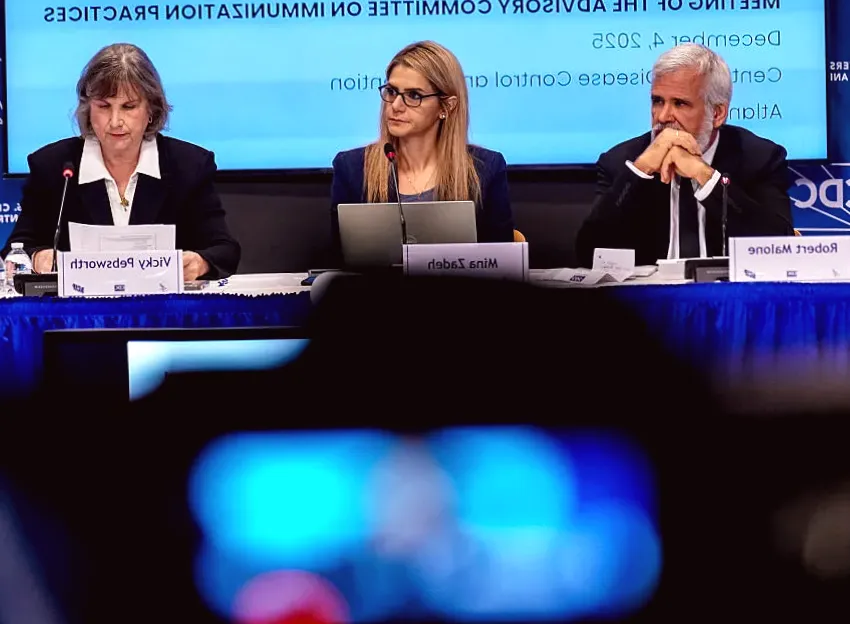
A committee of the U.S. Centers for Disease Control and Prevention (CDC) has voted to revise long-standing guidelines on the hepatitis B vaccine for newborns. On December 5, the CDC's Advisory Committee on Immunization Practices (ACIP) decided to remove the universal recommendation for administering the first dose of the hepatitis B vaccine to newborns, a policy that had been in place since 1991. The new recommendation advises that the birth dose be given only to infants born to mothers who are either positive for hepatitis B or whose hepatitis B status is unknown. In other cases, it leaves the decision to vaccinate up to the parents and healthcare providers.
Additionally, the committee endorsed a more flexible approach regarding the remaining doses of the hepatitis B vaccine, allowing for "shared decision-making" between parents and doctors about whether to administer all three recommended doses. Currently, the CDC recommends the hepatitis B vaccine be given to infants within 24 hours of birth, with follow-up doses at one to two months, and at six to 18 months.
This recommendation has sparked immediate criticism from public health and infectious disease experts. Dr. Tom Frieden, former CDC director and current president of Resolve to Save Lives, expressed concern, stating, This change puts millions of American children at greater risk of liver damage, cancer, and premature death. Many medical organizations, including the American Medical Association and March of Dimes, have joined in opposing the decision, warning that the revised guidelines represent a significant shift from science-based policymaking.
Current Hepatitis B Vaccination Guidelines
The original recommendation for administering a birth dose and two additional doses of the hepatitis B vaccine was based on evidence showing that these three doses offer strong, lifelong protection against hepatitis B and related complications, such as liver failure, cirrhosis, and liver cancer. According to CDC data, if newborns do not receive the vaccine and are later infected with hepatitis B during their first year, up to 90% can develop a chronic infection, which significantly increases the risk of severe liver conditions. In some cases, up to 25% of those with chronic infections may die from related complications. In fact, when mothers are infected with hepatitis B, up to 90% of their infants who do not receive the vaccine at birth will also contract the virus.
Since the U.S. implemented universal hepatitis B vaccination in 1991, the incidence of the disease has dropped by 99%, a significant public health success.
The Reconsideration of Hepatitis B Vaccination Guidelines
Under the leadership of Robert F. Kennedy Jr., who became Secretary of Health and Human Services in June, there has been a dramatic shift in the ACIP. Kennedy removed the previous members of the committee, replacing them with individuals who are more skeptical about the safety and efficacy of vaccines. This shift in perspective was evident during the ACIP's review of the hepatitis B vaccine's safety, despite widespread support from experts in public health and infectious disease.
Dr. Helen Chu, an infectious disease specialist at the University of Washington and former ACIP member, criticized the committee's approach, stating that the discussion was less about scientific evidence and more about promoting misinformation.
Concerns Over Vaccine Safety
Committee members raised concerns about the potential effects of the hepatitis B vaccine on newborns, particularly regarding brain development. However, those who opposed the policy change pointed out that there is no evidence linking the vaccine to any harm, and that removing the birth dose could put newborns at higher risk for dangerous liver conditions. Dr. Cody Meissner, a pediatrician at Dartmouth Geisel School of Medicine, emphasized that the vaccine's effectiveness in reducing disease rates should not be misinterpreted as evidence that the virus is no longer a threat. He argued that changing the immunization schedule based on the current success of the vaccine would be a mistake.
Dr. Joseph Hibbeln, a psychiatrist at the National Institutes of Health, echoed this sentiment, stating that decisions should be based on solid, credible data, rather than on unfounded speculations about potential harms.
Impact on the Hepatitis B Vaccination Schedule
One of the most controversial aspects of the ACIP's decision was the potential for a change in how many doses of the hepatitis B vaccine should be administered. The committee discussed whether infants should receive all three doses or if fewer doses could be sufficient based on antibody levels measured after the initial doses. Some members questioned whether administering fewer doses would still provide adequate protection, but experts, such as Adam Langer, a CDC epidemiologist, cautioned that making such a change could lead to misleading assumptions about long-term protection.
Dr. Jim Campbell, Vice Chair of the Committee on Infectious Diseases at the American Academy of Pediatrics, expressed concern that the new guidelines would create confusion for both healthcare providers and parents. The suggestion that parents could need to test their babies for antibodies after each dose could lead to increased doctor visits and more blood tests, adding to the logistical burden on families.
Global Perspective on Hepatitis B Vaccination
Despite the CDC's new recommendations, the World Health Organization (WHO) continues to recommend the birth dose of the hepatitis B vaccine, a policy followed by more than 100 countries worldwide. However, the ACIP members questioned why some countries, such as Denmark, do not follow this policy, citing differences in healthcare systems and the availability of hepatitis B testing during pregnancy.
Potential Consequences for Other Childhood Vaccines
The broader implications of the ACIP's decision could extend beyond hepatitis B. Kennedy has suggested revising the entire childhood vaccination schedule, giving parents more autonomy in choosing whether to vaccinate their children. This shift has already led to disagreements within the medical community, with some experts arguing that decisions about vaccines should be guided by scientific evidence, not personal beliefs or legal interpretations.
Next Steps
The new recommendations will now be reviewed by CDC Acting Director Jim O'Neill. If implemented, they could lead to confusion among parents and healthcare providers, as well as logistical and financial burdens on families. Senator Bill Cassidy, a Republican physician from Louisiana, has urged O'Neill to reject the committee's decision, emphasizing that the hepatitis B vaccine is safe and effective, and that the current policy allows parents to make informed decisions about their children's health.
Public health experts warn that these changes could result in higher rates of preventable diseases, as the vaccine coverage declines and differing state policies create further confusion. As vaccination policies become more fragmented, experts fear that disease rates may rise once again, undoing years of progress in protecting children from serious diseases like hepatitis B.
Author: Ava Mitchell
Share

Implications of Delaying the Hepatitis B Vaccine for Babies
5 hours ago 3 min read ENTERTAINMENT

CDC panel votes to remove recommendation for hepatitis B vaccine in newborns
6 hours ago 3 min read POLITICS

Cassidy urges CDC director to refuse hepatitis B recommendations from vaccine panel
6 hours ago 2 min read HEALTH

Committee votes to eliminate mandatory hepatitis B vaccinations for newborns despite opposition from children's health experts
7 hours ago 4 min read WORLD

Federal panel decides to discontinue Hepatitis B vaccinations for newborns
7 hours ago 3 min read POLITICS

US panel votes to stop recommending universal hepatitis B vaccine for newborns
7 hours ago 3 min read POLITICS

CDC updates recommendation for newborn hepatitis B vaccination
7 hours ago 2 min read BUSINESS

CDC panel votes to revoke universal recommendation for hepatitis B birth dose vaccine
7 hours ago 2 min read BUSINESS

US expert panel decides to stop recommending hepatitis B vaccination for newborns
8 hours ago 2 min read POLITICS

Panel suggests CDC stop routine hepatitis B vaccinations for newborns
9 hours ago 4 min read HEALTH