

The impact of anti-China disinformation on South Korea's year of crisis
- Last update: 38 minutes ago
- 4 min read
- 193 Views
- WORLD
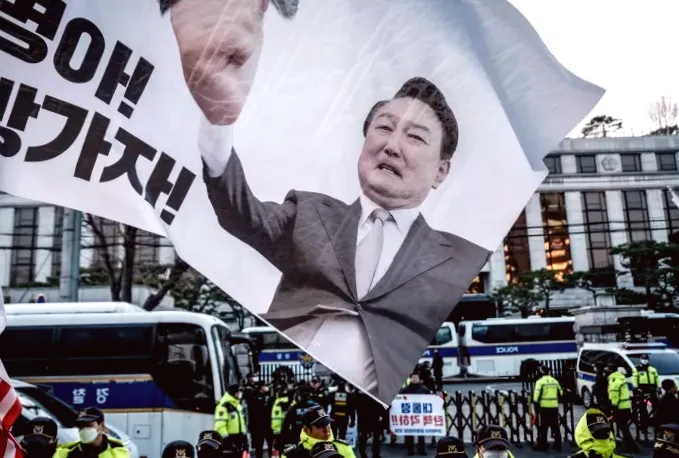
Last year, Yoon Suk Yeol's failed attempt to enforce martial law triggered South Korea's most severe political crisis in decades, creating a fertile environment for disinformation to thrive. A recurring narrative, circulating on conservative forums, amplified by YouTubers, and echoed by politicians, blamed China for the unrest. Yoon's supporters claimed Beijing had infiltrated protests, funded his impeachment campaign, and manipulated online discourse ahead of the snap June election that brought opposition leader Lee Jae Myung to power.
In December, Yoon himself added fuel to these suspicions during a televised defense of his aborted decree, claiming that "forces linked to North Korea and China are threatening our democracy from within." However, a review by AFP Fact Check of widely circulated claimsincluding alleged "spy arrests" and Chinese-backed demonstrationsfound no credible evidence supporting these assertions. Experts argue the narrative primarily reflected domestic political rivalries and longstanding anti-China sentiment.
"There was once a sense of economic partnership and goodwill toward China," explained Ha Nam-suk, a professor at the University of Seoul. "As competition and cultural disputes grew, frustration turned into resentment. Politicians recognized this and sometimes leveraged it as a political tool."
Anger over alleged Chinese interference spilled into Seoul's streets last autumn, where demonstrators waved flags and chanted slogans against "Chinese infiltration." AFP traced the origins of the disinformation campaign. Right after Yoon's impeachment, right-wing YouTubers claimed that "99 Chinese spies" had been detained at the National Election Commission and transported to Okinawa by the US military. Forum users and conservative media spread the story, which AFP traced to a 2016 photograph of Chinese fishermen arrested for illegal fishing. Both the NEC and US Forces Korea labeled the reports "entirely false."
Still, the false narrative persisted in pro-Yoon circles. According to Ha, younger Koreans already harbored strong resentment toward China due to historical and cultural grievances. "After Yoon's impeachment, online influencers exploited that resentment, turning it into political identity," he said. A video depicting multiple social media dashboards later circulated as evidence of a "Chinese AI bot farm," though AFP identified it as a developer demonstration.
During the Constitutional Court proceedings on Yoon's removal, top judge Moon Hyung-bae was targeted by manipulated images falsely showing him pledging allegiance to a Chinese flag; the original photo depicted the South Korean flag. When the Court unanimously voted to oust Yoon in April, the misinformation intensified, feeding public distrust that surveys indicated had exceeded 40 percent. Anti-Yoon protests also became a target, with a Chinese-language poster misrepresented as proof of foreign involvement; AFP geolocated it to Gwanghwamun Gate, where tourists had been informed of ongoing demonstrations.
After Lee Jae Myung won the presidency, anti-China narratives resurfaced. Some posts falsely claimed The Guardian reported that China helped Lee secure victory, misinterpreting an article that merely cited a White House official's concerns about Chinese influence in democracies. Conservative lawmaker Yoo Sang-bum and YouTuber Shin In-kyun also promoted the notion of significant Chinese participation in pro-impeachment rallies. "Once these stories spread, they became symbols of a larger threat," said Kim Hee-gyo, a professor at Kwangwoon University.
The Justice Ministry's visa-free program for Chinese tourists in August further inflamed tensions. Former Prime Minister Hwang Kyo-ahn suggested it was a scheme to enable election fraud. Although the NEC clarified that only foreigners with three years of permanent residency could vote in local elections, false claims that all Chinese nationals could enter South Korea without passports or health checks circulated rapidly. Kim noted that with Yoon no longer central, hard-liners sought a new enemy, converting general anti-China sentiment into ideological sinophobia.
Ha emphasized that this phenomenon is not confined to South Korea. "Across democracies, we're seeing crusade-style politics take root, where one side must be destroyed for the other to prevail," he observed.
Author: Riley Thompson
Share
King Charles and Queen Camilla Reveal Their 2025 Christmas Card with a Picture Captured in Rome
24 seconds ago 2 min read WORLD
Nigeria's president appoints former military chief as defense minister shortly after resignation
1 minutes ago 1 min read WORLD

10 Instances "Kill Bill" Defied Gender Stereotypes in Action Films!
2 minutes ago 3 min read WORLD
£110k worth of cannabis plants discovered following fire
4 minutes ago 1 min read WORLD

Family of deceased Briton calls for a second post-mortem examination
6 minutes ago 2 min read WORLD

Israeli forces fatally shoot two Palestinian teenagers in occupied West Bank
7 minutes ago 2 min read WORLD

The Science Behind Why Certain Names Are More Memorable Than Others
14 minutes ago 3 min read WORLD
This year's royal Christmas card pays tribute to love
17 minutes ago 2 min read WORLD

Mexican flesh-eating worm causing shortage in U.S. beef supply
18 minutes ago 4 min read WORLD

Hong Kong’s deadliest fire in decades raises concerns about the safety of bamboo scaffolding, a centuries-old technique
20 minutes ago 3 min read WORLD