

French Military Responds to Drone Incursion at Nuclear Submarine Base
- Last update: 3 hours ago
- 3 min read
- 586 Views
- WORLD
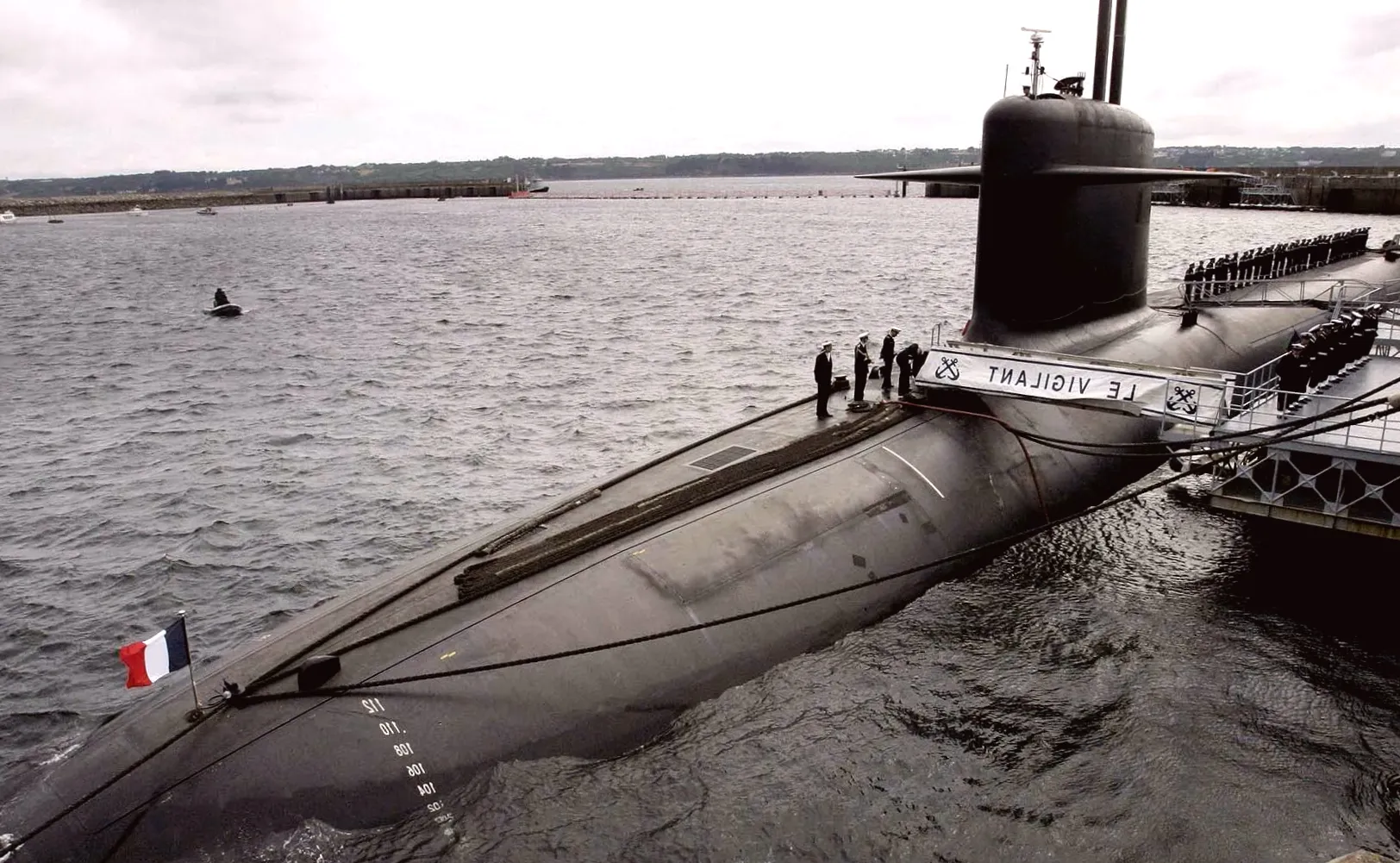
French authorities have taken defensive actions after five drones were spotted flying over a highly sensitive military base that hosts the nations nuclear submarines, a key element of France's second-strike deterrence strategy. This latest event follows a series of similar incursions over military sites and other crucial locations across Europe, some of which have been speculated to involve Russian involvement.
The drones were first detected at approximately 7:30 PM local time on Thursday, hovering over the le Longue submarine base, located on the Crozon Peninsula in the far western part of France, according to AFP. This base serves as the homeport for the French Navy's four nuclear-powered ballistic missile submarines (SSBNs): Le Triomphant, Le Tmraire, Le Vigilant, and Le Terrible.
Upon detecting the drones, the French authorities initiated a counter-drone and search operation, as reported by AFP. The marine rifle battalion, tasked with the protection of the base, conducted several countermeasures against the drones, utilizing jammers rather than firearms, according to Public Prosecutor Frdric Teillet.
Despite these efforts, none of the drones were downed, and the identities of the operators remain unknown. The Rennes prosecutor's office later clarified that no evidence of foreign interference has been established. However, an investigation into the incident was opened, with authorities focusing on confirming the nature of the objects spotted and determining their number and type. The prosecutor emphasized that it is premature to draw conclusions regarding the drones' origin.
Commander Guillaume Le Rasle, spokesperson for the maritime prefecture, expressed that the drones overflight appeared designed to create public alarm, but he reassured that no sensitive infrastructure was threatened by the incident. This was not the first such occurrence in the area; a similar overflight had been reported on the night of November 17-18, AFP added.
The first documented intrusion near the le Longue base occurred in January 2015. On that occasion, a drone was detected as a French nuclear-powered SSBN was preparing to depart, triggering a significant security response on the Crozon Peninsula.
The incident at le Longue comes amid a rise in drone activity across Europe. Earlier this week, a drone incursion was reported in Ireland, as Ukrainian President Volodymyr Zelensky arrived. Four unidentified military-style drones entered a no-fly zone near Dublin Airport, posing a potential risk to Zelenskys plane, though it landed ahead of schedule. Similar drone-related incidents in Europe have prompted military responses and airport closures. For instance, Dutch military forces recently fired at drones over Volkel Air Base, although no wreckage was recovered.
European officials have suggested that Russia may be behind some of these drone incursions. Danish authorities have described such activities as a hybrid attack, with Prime Minister Mette Frederiksen labeling Russia as a significant threat to European security. However, no definitive proof linking these drone activities to Russia has emerged, and the Kremlin has denied involvement.
Despite the uncertainty surrounding the perpetrators, experts argue that these drone intrusions are becoming a growing security concern. As demonstrated by the le Longue incident, the challenges posed by uncrewed aerial systems continue to escalate, posing a complex and evolving threat to critical infrastructure across Europe.
Author: Benjamin Carter
Share
French Military Responds to Drone Incursion at Nuclear Submarine Base
3 hours ago 3 min read WORLD
France implements measures against drones following incident at nuclear submarine base
8 hours ago 3 min read WORLD
French nuclear submarine base targeted by drone attacks
10 hours ago 2 min read WORLD
France implements anti-drone measures following unauthorized flight over nuclear submarine base
11 hours ago 2 min read WORLD
France intercepts unauthorized drone flying over nuclear submarine base
11 hours ago 1 min read WORLD
France thwarts unauthorized drone overflight at nuclear submarine base
11 hours ago 1 min read WORLD
Media reports: Drones spotted flying above French strategic nuclear submarine base
12 hours ago 2 min read WORLD