
Brazilian police investigate the situation of a nearly extinct blue parrot
- Last update: 2 days ago
- 2 min read
- 909 Views
- WORLD
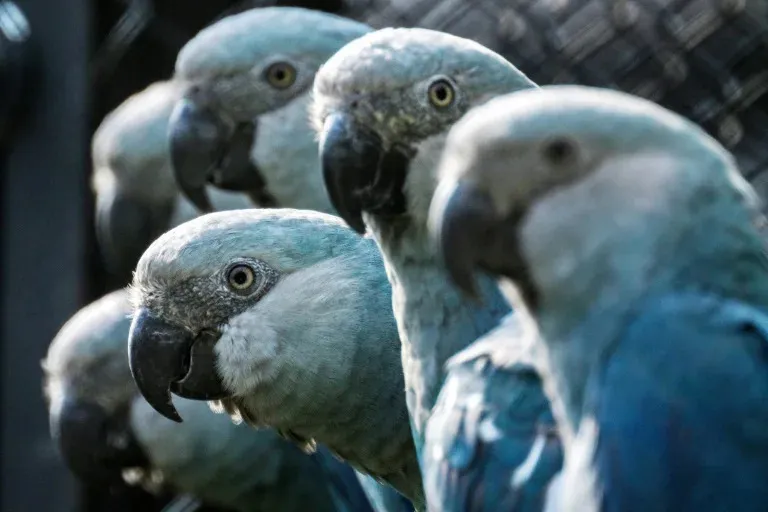
Brazilian authorities announced on Wednesday that they are investigating an outbreak of a fatal virus affecting some of the last remaining Spix's Macaws, one of the rarest birds on the planet and widely recognized as the blue parrot from the 2011 animated movie "Rio."
Efforts to protect the Spix's Macaw have long been contentious, with disputes between private breeders and government agencies. The species has not been seen in the wild for 25 years. In 2020, a number of captive-bred birds were transported from Germany to Brazil as part of a program aimed at reintroducing them to their natural northeastern habitat.
Recently, Brazils conservation agency ICMBio confirmed that all 11 Spix's Macaws released into the wild have tested positive for the incurable circovirus, a disease considered fatal for the species. Additionally, 20 birds in captivity were also found to be infected.
ICMBio fined the breeding facility 1.8 million reais ($336,000) for failing to follow proper biosafety measures designed to prevent the spread of the virus. Police, in turn, have seized computers and mobile phones from the Spix's Macaw Breeding Center under "Operation Blue Hope." Authorities stated that those under investigation could face charges related to the spread of a wildlife disease, the death of wild animals, and obstruction of environmental inspections.
The breeding center had previously resisted a court order from October to recapture the wild macaws. In its statements, the facility claimed that only five of the 103 birds in its care tested positive and denied negligence, asserting that tropical parrots like the Spix's Macaw are particularly resilient to circovirus. The center expressed confidence despite the ongoing investigation.
Circovirus, which causes beak and feather disease in parrots, is not a threat to humans. ICMBio cautioned that interpreting the test results is complex. "A positive result does not automatically mean a Spix's Macaw will die, but a negative result does not guarantee recovery," the agency said.
Claudia Sacramento, leading ICMBio's response to the outbreak, emphasized the importance of accountability. "We are dealing with a bird of exceptional conservation value. Those responsible for this contamination must be held responsible."
The breeding center collaborates with the German Association for the Conservation of Threatened Parrots (ACTP), which manages 75% of the world's registered Spix's Macaws, according to ICMBio. However, Brazil ended its partnership with ACTP in 2024 after the German organization sold 26 birds to a private zoo in India without Brazilian consent.
Author: Logan Reeves