

Ocean-Effect Snow: Important Information on This Weather Phenomenon (And Should You Be Worried?)
- Last update: 1 hours ago
- 2 min read
- 982 Views
- US
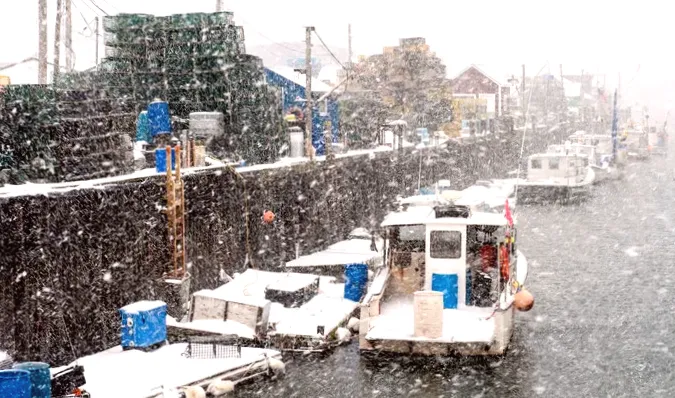
Many people are familiar with the concept of lake-effect snow, especially those living in the Great Lakes region, where this winter weather pattern is common. Yet, fewer may know that a similar phenomenon occurs along certain coastal areas, known as ocean-effect snow. This type of snowfall is essentially the oceanic counterpart to lake-effect snow and develops in much the same way.
Ocean-effect snow occurs when frigid air moves over a warmer body of saltwater. The air slowly warms from the water below, rises, cools, and eventually forms snow. This snowfall can occur over the ocean itself or be carried inland if the wind pushes it toward the shore. However, several factors must align perfectly for the snow to develop, including air temperature and water conditions. When everything lines up, heavy snowfall is possible, though the localized nature of these conditions makes it challenging to forecast.
The likelihood of experiencing ocean-effect snow depends largely on location. While theoretically possible in any ocean, sea, or gulf exposed to sudden cold air, it is most common in select regions. Japan, for example, experiences ocean-effect snow so frequently that its northwest areas are among the snowiest in the world. In the United States, this phenomenon is primarily observed along the Northeast coast and the Mid-Atlantic, with rare occurrences in the Gulf Coast and Southeast, where cold air is less frequent.
Timing also plays a crucial role. For ocean-effect snow to occur, the water must remain relatively warm when the cold air arrives. This often happens during early-season polar vortices or cold fronts that move in before the water cools. Isolated cold air events during unusually mild winters can also trigger this effect. Throughout the winter, ocean water typically stays warm enough to make ocean-effect snow possible.
For residents and visitors in affected regions, ocean-effect snow can create hazardous travel conditions and other disruptions. Awareness of the phenomenon and careful planning are essential during these events to stay safe.
Author: Jackson Miller
Share

Questioning a Meteorologist: Can It Be Too Cold for Snow to Fall?
4 hours ago 2 min read BUSINESS

The onset of December's Arctic air blast
14 hours ago 3 min read US

Get ready: Winter snowstorms will be more severe than ever this year— Here’s the reason.
16 hours ago 6 min read US

Sub-zero temperatures grip central and northeastern US in Arctic blast
17 hours ago 2 min read WORLD
Pacific Northwest preparing for heavy rain and snowfall as December storms approach
1 days ago 3 min read WEATHER
Expert warns of upcoming extreme cold in US region: 'Temperatures dropping sooner than ever'
2 days ago 3 min read WORLD
Government warns of imminent ocean danger: 'No time to waste'
2 days ago 2 min read WORLD
Challenges in Forecasting Northeast Winter Storms
4 days ago 3 min read WEATHER
Scientists issue urgent warning as Arctic cliffs erode rapidly: 'Accelerating at unprecedented speeds'
4 days ago 2 min read WORLD
Weather experts express worries about erratic winter conditions in US area: 'Locals should start getting ready'
4 days ago 3 min read USA