

Top 10: Greatest Italian aircraft of World War 2
- Last update: 5 hours ago
- 4 min read
- 842 Views
- TRAVEL
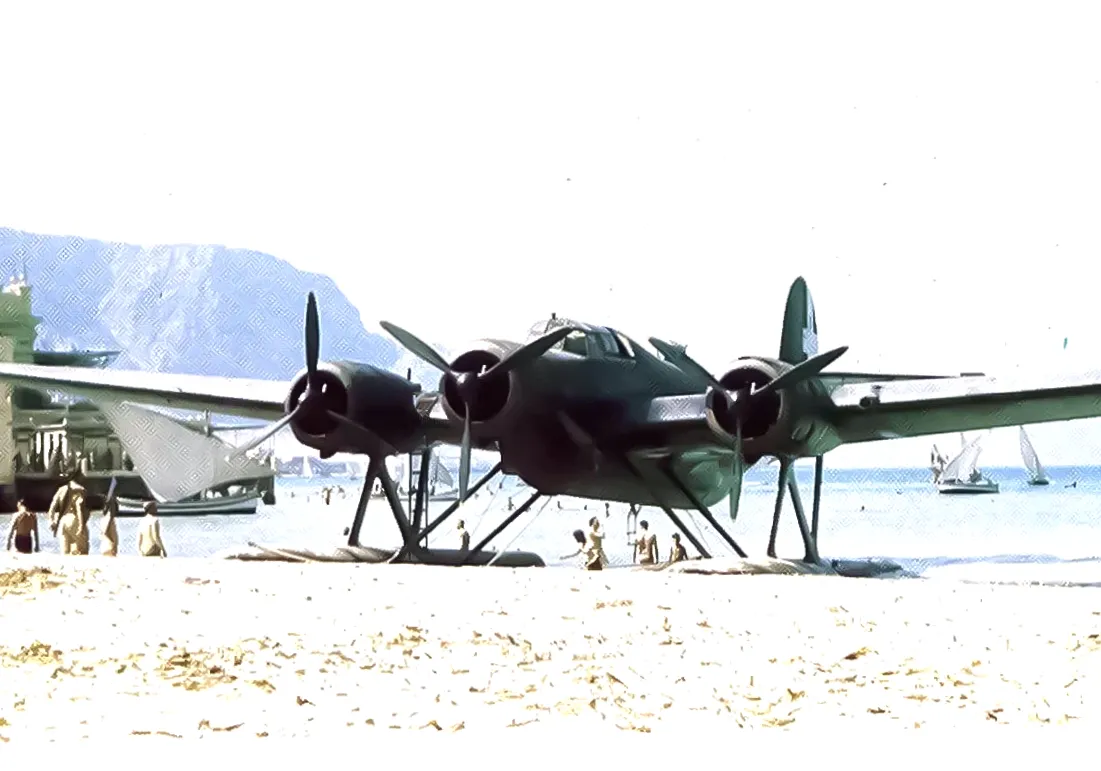
Often overlooked and underestimated by both their adversaries and allies, Italian armed forces during World War II have not received the historical recognition they deserve. The Regia Aeronautica entered the conflict after a highly successful campaign in the Spanish Civil War, where Italian planes demonstrated world-class performance. While Italian aircraft designs were often innovative, their impact was limited by the country's industrial constraints. Here is a subjective ranking of ten notable Italian aircraft from that era.
10: Fiat G.50 Freccia ('Arrow')
Designed by Giuseppe Gabrielli, the Fiat G.50 was Italy's first monoplane fighter, featuring a retractable undercarriage and an enclosed cockpit. The canopy was soon removed, not due to pilot conservatism, but because it was difficult to open in emergencies. Interestingly, the G.50 achieved a remarkable 33-to-1 kill-to-loss ratio in Finnish service, where 33 aircraft shot down 99 Soviet planes while losing only three. Despite this success, Finnish pilots favored other aircraft because the open cockpit was harsh in cold weather.
9: Savoia-Marchetti SM.79 Sparviero ('Sparrowhawk')
First flown in 1934, the SM.79 became one of Italy's most enduring aircraft. Known as a trimotor bomber, it later served as a powerful torpedo bomber. Its strength lay in reliability and sturdy construction rather than speed. During the Spanish Civil War, it proved nearly invulnerable to interception. In World War II, SM.79s sank significant Allied shipping, including damaging the battleship HMS Nelson, and 1941 was the peak year for torpedo attacks.
8: Fiat CR.42 Falco ('Falcon')
The CR.42 was a biplane that, despite seeming outdated, excelled in the environments it operated in. Over North Africa and Malta, it matched the Hurricane in dogfights and achieved notable success during the invasion of Greece. With over 1,800 units built, it was the most produced Italian fighter biplane and proved surprisingly effective, destroying 162 enemy aircraft for the loss of 29 of its own.
7: Macchi MC.200 Saetta ('Lightning')
Inspired by fast seaplane racers, the MC.200 was powered by a reliable Fiat A74 radial engine. Initially fitted with an enclosed cockpit, it was soon removed. Entering service in 1939, the Saetta excelled in North Africa, outperforming the P-40 and Hurricane in maneuverability. Its armed versions sank the British destroyer HMS Sikh, and on the Eastern Front it claimed 88 Soviet aircraft for 15 losses.
6: CANT Z.506B Airone ('Heron')
This trimotor seaplane, also adaptable as a landplane, served in reconnaissance, maritime patrol, and transport roles. Known for robustness and versatility, the Z.506B carried out long-range missions and coastal attacks. Notably, it was the only Western aircraft successfully hijacked by prisoners of war, who flew rescued British airmen to Malta in 1942.
5: Macchi MC.205V Veltro ('Greyhound')
The Veltro represented the peak of Macchi fighter design, combining the Fiat-built DB.605 engine with the excellent handling of the MC.202 Folgore. Armed with two 20-mm cannons and two 12.7-mm machine guns, it was a highly capable aircraft. Top pilots like Luigi Gorrini and Adriano Visconti achieved significant kills in the MC.205, and it was praised by British test pilots as comparable to any Allied fighter.
4: Piaggio P.108
Italy produced few heavy bombers, but the Piaggio P.108 was an exception. First flown in 1939, it offered performance comparable to Allied heavy bombers with a speed just under 300 mph, a substantial bomb load, and advanced defensive armament including remote-controlled turrets. Its strong airframe gave crews confidence despite its relatively low production numbers.
3: Reggiane Re.2005 Sagittario ('Archer')
The Re.2005 combined the Fiat-built DB.605 engine with advanced handling and impressive firepower. Industrial limitations restricted production to just 54 units of 750 ordered. Despite this, RAF pilots acknowledged its potency in combat, with early encounters indicating it could challenge Spitfires effectively. The aircraft was complicated to build, which limited its deployment.
2: Fiat G.55 Centauro ('Centaur')
The G.55 was widely regarded as Italy's finest fighter of the war, praised by German experts as one of the best Axis aircraft. Equipped with three 20-mm cannons and two 12.7-mm machine guns, it could effectively engage heavy bombers. Production constraints limited output to 274 aircraft, which served in four ANR frontline squadrons. German pilots reportedly used the type operationally as well.
1: Savoia-Marchetti SM.82 Kanguru ('Kangaroo')
The SM.82 was Italy's most valuable transport aircraft, remaining in service until the 1960s. Capable of carrying up to 4,000 kg of bombs or performing long-range transport missions, it featured a mix of steel, plywood, and fabric construction. Notable missions included supply runs to East Africa and daring bombing operations, such as the 15-hour raid on British refineries in Bahrain, showcasing its endurance and versatility.
Author: Harper Simmons
