
Top 10: Лучшие итальянские самолеты Второй мировой войны
- Last update: 2 hours ago
- 4 min read
- 867 Views
- TRAVEL
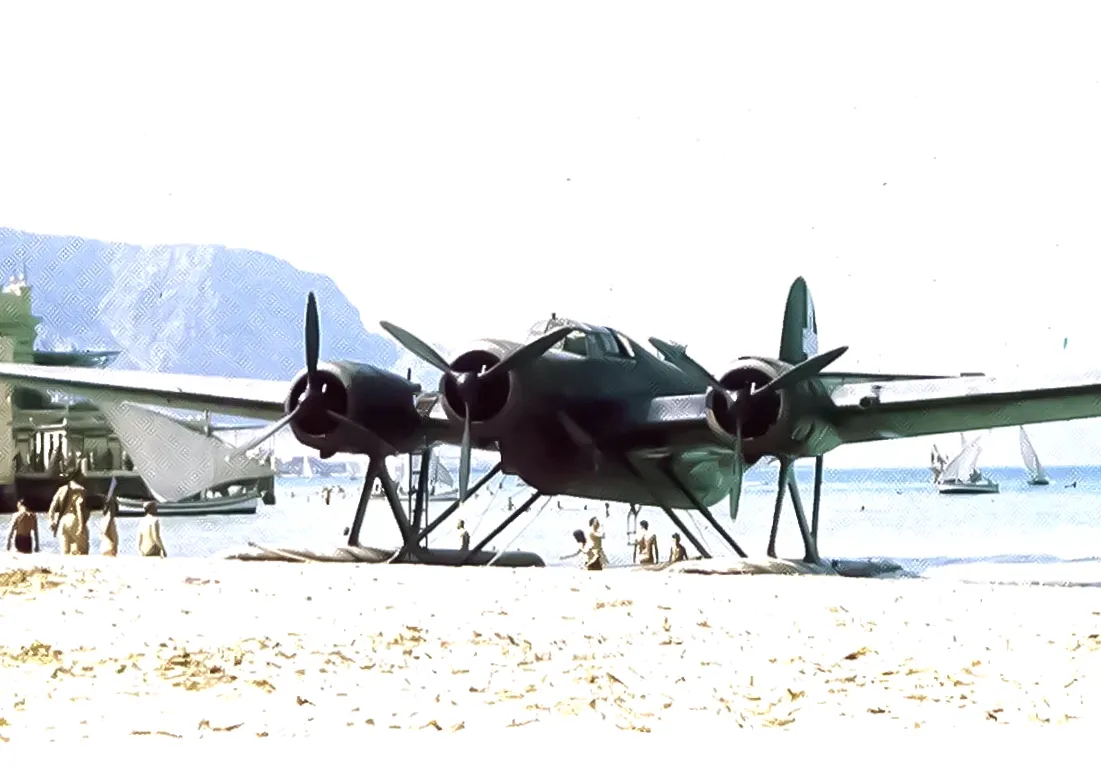
The Italian air force of the Second World War, often underestimated by both enemies and allies, has historically received less recognition than it deserves. Emerging from a highly successful campaign in the Spanish Civil War, the Regia Aeronautica showcased some of the era's most innovative aircraft. Italian designs were often advanced, yet production capabilities were limited. Below is a subjective list of ten notable Italian aircraft of the period.
10: Fiat G.50 Freccia ('Arrow')
Designed by Giuseppe Gabrielli, the Fiat G.50 was Italys first monoplane fighter featuring a retractable landing gear and an enclosed cockpit. The canopy was soon removed, not due to pilot conservatism but because it was nearly impossible to open mid-flight. Although its remarkable 33-to-1 kill-loss ratio was achieved only in Finnish service, the G.50 proved highly effective. Finnish pilots used 33 aircraft from the end of the Winter War through 1944, downing 99 Soviet planes for the loss of just three G.50s.
9: Savoia-Marchetti SM.79 Sparviero ('Sparrowhawk')
First flown in 1934, the SM.79 became a legendary bomber, initially setting records in the 1930s and performing exceptionally in the Spanish Civil War. In World War II, it excelled as a torpedo bomber, sinking multiple Allied ships, including contributing to damage on HMS Nelson. Its robust design and reliability made it a standout aircraft throughout the war.
8: Fiat CR.42 Falco ('Falcon')
The CR.42, a biplane fighter, was conceptually outdated yet highly effective. Over North Africa and Greece, it performed well against enemy aircraft, officially destroying 162 planes for 29 losses. Produced in over 1,800 units, the Falco was the most numerous Italian biplane of the war and one of the best in its category.
7: Macchi MC.200 Saetta ('Lightning')
The MC.200 was a small, agile fighter powered by the Fiat A74 radial engine. Entering service in 1939, it excelled over North Africa, able to outmaneuver P-40s and Hurricanes. It also achieved notable success on the Eastern Front, with 88 Soviet aircraft downed for 15 losses.
6: CANT Z.506B Airone ('Heron')
This versatile trimotor seaplane, designed by Filippo Zappata, could operate in rough seas and later served as a landplane. It performed maritime patrols, torpedo attacks, transport, and reconnaissance. Notably, in 1942, POWs hijacked a Z.506B during a rescue mission, flying it to Malta.
5: Macchi MC.205V Veltro ('Greyhound')
A culmination of the MC.200 lineage, the Veltro combined the Fiat-built DB.605 engine with excellent handling. Armed with two 20-mm cannons and two machine guns, it was highly effective in combat. Pilots like Luigi Gorrini and Adriano Visconti achieved significant success flying the MC.205.
4: Piaggio P.108
Among Axis heavy bombers, the P.108B was a rare strategic aircraft. First flown in 1939, it was fast, carried a substantial bombload, and featured advanced defensive armament. Its robust design provided crews with confidence, though production was extremely limited.
3: Reggiane Re.2005 Sagittario ('Archer')
The Re.2005 was a highly capable fighter powered by the Fiat-built DB 605 engine. Its complex airframe limited production, but in combat, it matched or exceeded the performance of contemporary Allied fighters. It was considered very potent by RAF pilots who encountered it over Sicily.
2: Fiat G.55 Centauro ('Centaur')
The G.55 was regarded as the finest Italian fighter of the war. Equipped with three 20-mm cannons and two machine guns, it was capable of taking on heavy bombers and rivaled the best Axis fighters. Production was limited to 274 units, yet it served with distinction in four frontline Italian squadrons.
1: Savoia-Marchetti SM.82 Kanguru ('Kangaroo')
The SM.82 was the most significant Italian transport aircraft of the war. It carried up to 4,000 kg of bombs when required and was widely used for long-range missions. Its construction combined steel, metal, wood, and fabric. SM.82s undertook daring operations, including supplying North African forces and bombing missions such as the strike on Bahrain, lasting over 15 hours.
Author: Olivia Parker
Share
Edinburgh tourist tax to support construction of nearly 500 affordable homes
10 minutes ago 2 min read TRAVEL
Top 10: Лучшие итальянские самолеты Второй мировой войны
53 minutes ago 5 min read TRAVEL
Aerial Photos Capture Breathtaking Views of Rome’s Colosseum and Ancient Forum
59 minutes ago 1 min read TRAVEL
Over 100 Passengers and Crew Members Fall Ill with Norovirus During 133-Day World Cruise
1 hours ago 2 min read TRAVEL
Liverpool Street retains title as UK's busiest station
1 hours ago 2 min read TRAVEL

U.S. Transportation Department Requests Travelers to Dress Respectfully—Not Everyone Agrees
2 hours ago 3 min read TRAVEL
Top 10: Лучшие итальянские самолеты Второй мировой войны
2 hours ago 4 min read TRAVEL
Top 10: Highest Ranked Italian Aircraft During World War 2
3 hours ago 4 min read TRAVEL
Venezuela's near isolation as new flight suspensions take effect
4 hours ago 3 min read TRAVEL
India’s largest airline cancels numerous flights, causing chaos for holiday travelers
8 hours ago 1 min read TRAVEL