

Trump reasserts dominance in the Western Hemisphere: Monroe Doctrine updated for the 21st century
- Last update: 1 hours ago
- 5 min read
- 846 Views
- POLITICS
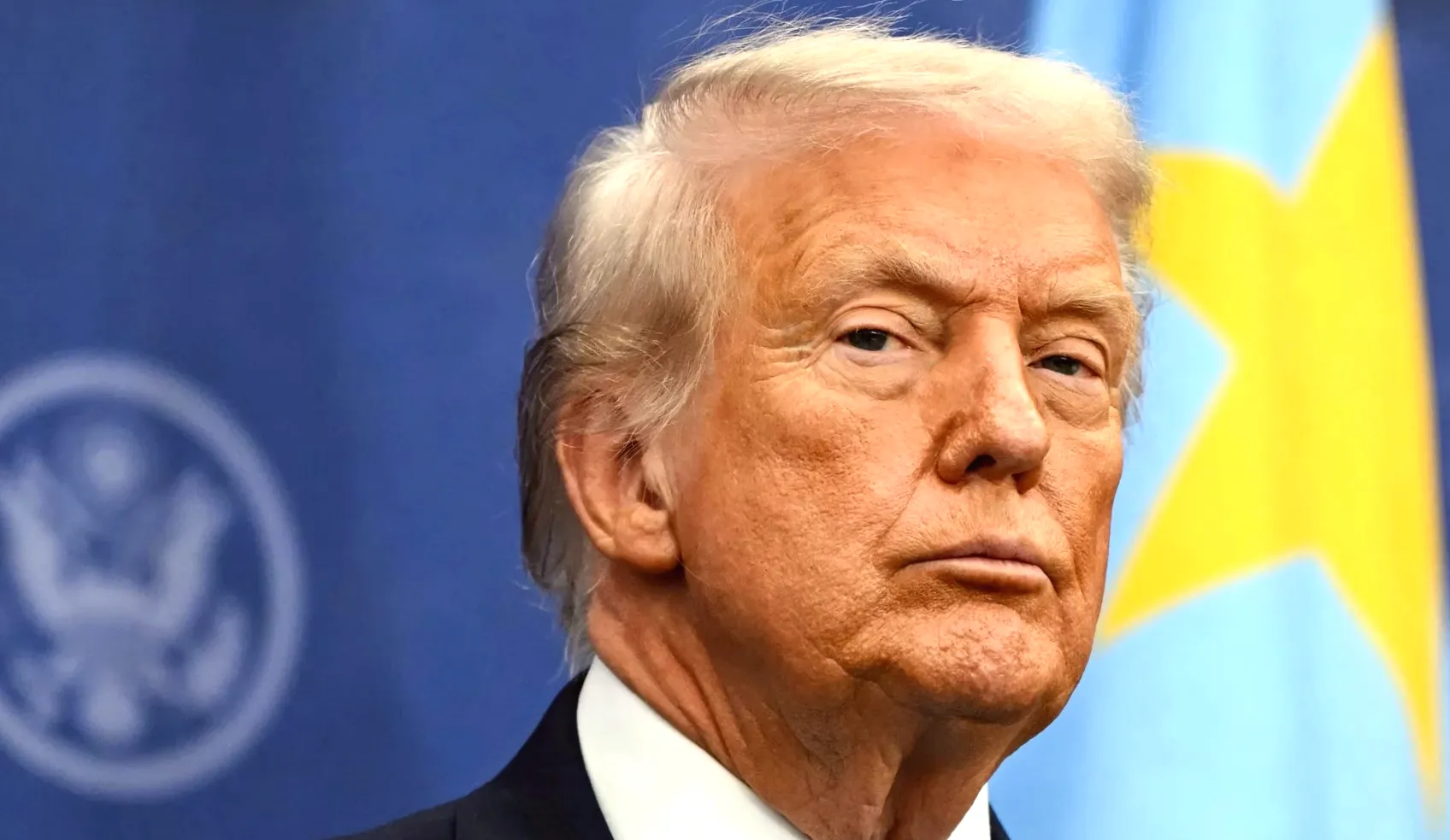
President Donald Trumps latest National Security Strategy introduces a "Trump Corollary" to the Monroe Doctrine, asserting U.S. dominance over the Western Hemisphere. The document lays out plans to enforce this updated version of the historic doctrine, signaling a more aggressive stance on regional leadership.
What is the Monroe Doctrine?
The Monroe Doctrine, first declared in 1823 by President James Monroe, primarily aimed at keeping European powers out of the Americas. It was a response to the post-War of 1812 environment, where the U.S. was concerned about potential European colonial re-expansion in the Western Hemisphere.
Monroes declaration, co-authored with Secretary of State John Quincy Adams, insisted that European nations should not interfere with the newly independent republics in the Americas. In exchange, the U.S. would avoid interfering in European affairs. Historian Alan McPherson notes, "It was a declaration of mutual non-interference."
Context of the Doctrines Creation
Coming out of the War of 1812, which had pitted the U.S. against Britain, the Monroe Doctrine was shaped by the desire to prevent European intervention in Latin America, where countries were gaining independence from Spain. It also served as a cautionary note about British dominance of Latin American trade.
The British controlled Latin American commerce and would continue to do so through much of the 19th century, said historian Stephen Rabe. The Monroe Doctrine countered this, asserting that no European nation should establish colonies in the Americas.
The Monroe Doctrines Evolution
Over the years, the Monroe Doctrine was invoked by U.S. leaders to justify intervention and territorial expansion. The first significant use came in the 1840s when President James K. Polk used it to assert American control over the Oregon Territory, embodying the idea of Manifest Destiny.
Later, President Theodore Roosevelt expanded on the Doctrine with his "Roosevelt Corollary" in 1904, allowing the U.S. to intervene in Latin American countries to maintain order and prevent European powers from gaining influence. By then, the U.S. had become a growing global military power, and Roosevelt's corollary marked a shift toward imperialism in the hemisphere.
Cold War and Beyond
In the 20th century, the Monroe Doctrine was often referenced in U.S. foreign policy during the Cold War, especially as tensions with the Soviet Union escalated. In 1962, President John F. Kennedy invoked it to justify the naval blockade of Cuba during the Cuban Missile Crisis, preventing Soviet missile installations in the Western Hemisphere.
Introducing the Trump Corollary
The new National Security Strategy introduces the concept of a "Trump Corollary," which builds on the Monroe Doctrines core principles. The strategy emphasizes U.S. leadership in the Americas, focusing on preventing mass migration to the U.S. from Latin America and combating "narco-terrorism" and transnational crime.
"The Trump Corollary aims to reaffirm U.S. dominance in Latin America, said historian Stephen Rabe. The strategy lays out the intention for the U.S. to be the most powerful influence in the region.
Geopolitical Ramifications
Experts remain uncertain about the practical implications of the Trump Corollary. Some see it as a symbolic declaration, a strategic posture to assert American hegemony. "Its a lot of bluster," said historian Jay Sexton. However, there is concern that the strategy could signal a shift toward more aggressive foreign policy actions in the region.
Implications for U.S.-Latin American Relations
The "our hemisphere" rhetoric used in the strategy is likely to be met with resistance from many Latin American nations, who historically view the Monroe Doctrine as a symbol of U.S. imperialism. Latin American leaders may see the declaration as an overreach, potentially undermining regional sovereignty.
Chinas Growing Influence
While the original Monroe Doctrine focused on Europe, the Trump Corollary may be aimed at countering China's increasing influence in Latin America. Chinas significant investments in the region, particularly in raw materials, have raised concerns in the U.S., which now explicitly calls out Chinese economic presence in its new strategy.
"The strategy directly addresses Chinas growing foothold in Latin America, particularly with regards to military and strategic interests," said Evan Ellis, a researcher at the U.S. Army War College.
Reactions and Criticism
The Trump administrations invocation of the Monroe Doctrine has drawn criticism from some analysts. "The Monroe Doctrine has always been a toxic symbol in Latin America," said Sexton. Latin American nations generally rejected the doctrines principles in the 20th century, and this modern adaptation could similarly face strong opposition.
The U.S. Militarys Dominance in the Western Hemisphere
The U.S. remains the preeminent military power in the Western Hemisphere, far surpassing the capabilities of any regional competitor. This military dominance is reflected in the new strategy, which emphasizes U.S. control over the region's security.
The Trump Administrations Foreign Policy Approach
For many, the Trump Corollary represents an assertive foreign policy aimed at ensuring U.S. leadership in the Western Hemisphere, regardless of how it is perceived in Latin America or by global powers like China or Russia.
Conclusion
As the U.S. continues to face global geopolitical challenges, the new National Security Strategy introduces a modernized version of the Monroe Doctrine. While it seeks to assert U.S. dominance in the Americas, the effectiveness and reception of this updated policy remain to be seen.
Author: Sophia Brooks
Share
Trump Administration Raises Concerns About Decreasing White Population in Europe
1 hours ago 2 min read POLITICS
Europe's Future Unrecognizable in 20 Years Due to Immigration, According to White House Strategy Document
1 hours ago 5 min read POLITICS
Trump targets Europe in new security strategy
3 hours ago 2 min read POLITICS

5 important points from Trump's latest national security strategy
4 hours ago 3 min read POLITICS
Trump criticizes European allies in national security strategy
10 hours ago 2 min read POLITICS

White House warns Europe of "civilizational erasure" within 20 years
10 hours ago 3 min read POLITICS

Trump's national security strategy emphasizes 'fostering opposition' in Europe and reshaping US' role in the Western Hemisphere.
10 hours ago 3 min read POLITICS
Trump criticizes European allies and emphasizes US influence in Western Hemisphere
12 hours ago 2 min read POLITICS
Trump administration warns Europe of 'civilizational erasure'
13 hours ago 3 min read WORLD
New Trump approach promises transition from global position to regional
14 hours ago 3 min read POLITICS