

These voters supported Trump in 2024 and Democrats in 2025. What's next in 2026?
- Last update: 2 hours ago
- 6 min read
- 284 Views
- POLITICS
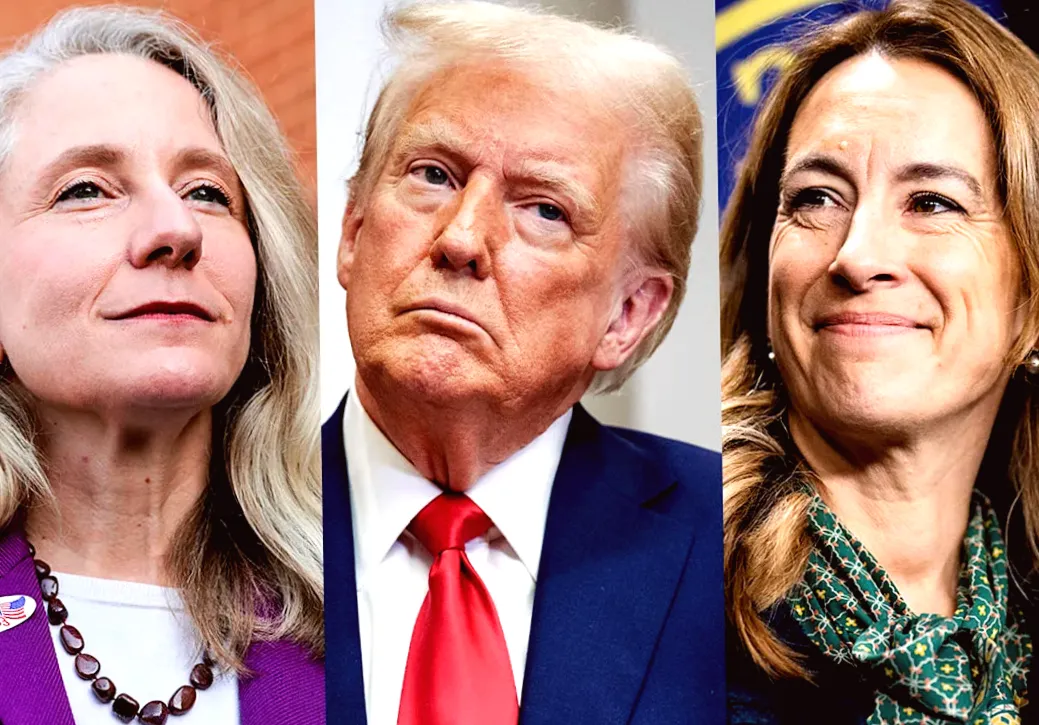
Voters who supported Democratic governors in New Jersey and Virginia in 2025, after backing President Donald Trump in 2024, have shared a key message for both political parties: distance yourselves from extreme positions and focus on more than just Trump in your campaigns. In recent focus groups, 14 swing voters from both states expressed strong dissatisfaction with both parties, and with politicians in general. They noted that they were drawn to Governor-elect Mikie Sherrill and Abigail Spanberger, who presented themselves as moderates and successfully moved beyond the troubled Democratic Party image.
Despite 10 of these voters disapproving of Trump's performance and raising concerns over high prices, a majority stated that their votes for governor were not a protest against Trump. This suggests that an anti-Trump message may not be enough to sway these voters and similar ones in the upcoming midterm elections.
Instead, their repeated message is crucial for Republicans and Democrats looking to win over swing voters in key races next year: the quality of candidates is paramount. This encompasses their stance on issues, their personality, and their professional backgrounds. Cynthia G., a 52-year-old New Jersey resident, expressed her preference for Sherrill, saying, If a Democrat checks all the boxes for me, Ill go with my gut. She described Sherrill as a proven leader a naval officer, former federal prosecutor, and a mother of four emphasizing her ability to get things done with a calm yet effective approach.
Exit polling from the New Jersey and Virginia gubernatorial races revealed that both Sherrill and Spanberger, another former House member, managed to win support from some Trump voters, with each securing 7% of Trump supporters from 2024. Unlike polling, which reflects broader trends, focus groups provide deeper insights into individual voters thought processes, revealing nuanced views on Trump and why they voted Democrat despite negative perceptions of the party.
Rich Thau, president of Engagious, said, The key lesson for both parties in 2026 is to avoid running flawed candidates. Voters care about affordability, political moderation, and Trumps job performance, but what ultimately mattered most to these swing voters was the quality of the candidates.
The 14 participants in the focus groups, consisting of 12 independents, one Republican, and one Democrat, shared that they had voted for Trump in 2024 due to their optimism about his handling of the economy and their skepticism about then-Vice President Kamala Harriss qualifications. While critical of both parties, they were particularly harsh on the Democratic Party, labeling it as dishonest, weak, unfocused, self-serving, wishy-washy, and ineffective.
However, Sherrill and Spanberger won them over by presenting themselves as pragmatic, moderate leaders, with strong national security backgrounds. Bruce L., a 40-year-old from Richmond, described Spanberger as the closest thing to a moderate, and Michael C., a 60-year-old from Brick, NJ, praised Sherrills military background, saying, In the military, you get the job done no matter what. Voters also described both women as sensible, pragmatic, and down-to-earth. Notably, no one said their vote for the Democrats was solely about opposing Trump.
Margaret Talev, director of Syracuse Universitys Institute for Democracy, Journalism & Citizenship, noted, These swing voters revealed that the Democratic wins in Virginia and New Jersey werent a simple referendum on Trump. What they want is moderation, competency, and personal appeal in candidates.
Some voters were repelled by GOP candidates embrace of Trump, even though they had voted for him in 2024. For instance, Trump endorsed Jack Ciattarelli, a former state legislator, against Sherrill in New Jersey. But some voters, like Robert L., a 54-year-old from Springfield, Virginia, described Ciattarelli as a phony who used Trumps name for political gain.
In New Jersey, all but one of the focus group participants said the state was headed in the wrong direction after two terms under Democratic Gov. Phil Murphy. Yet, they still supported Sherrill, seeing her as someone who could bring change, especially with her proposals to lower rising utility bills. Despite disapproving of Trumps performance, 9 of the 14 participants did not consider their vote for Sherrill as a protest against him.
While the five voters who did view their vote as a protest against Trump had diverse concerns about his administration, ranging from unfulfilled promises to general disillusionment, most cited the economy as a significant factor in their shifting views. Rebecca H., a 52-year-old from Falls Church, Virginia, summed it up by saying, Trump made a lot of promises, but most of them could not be delivered. Christian G., a 25-year-old from Clifton, NJ, echoed that sentiment, saying he felt let down by Trump, whom he had supported in 2024.
Criticisms of Trumps economic policies, especially his handling of tariffs, were prevalent. Some voters, like Cynthia G., felt the economy was heading in the right direction, citing lower prices for certain goods like eggs, though most participants noted overall price increases. Others were frustrated with the economic toll of Trumps tariffs, which they believed had contributed to inflation. Robert L., a 54-year-old from Virginia, criticized Trumps approach, saying, Hes a bull in a china shop and greatly impacted the economy and inflation. Presidents can affect inflation for the worse much more easily than for the better.
Some voters expressed frustration with what they saw as a betrayal of Trumps campaign promise to support everyday Americans. Justin K., a 39-year-old independent from Arlington, Virginia, felt Trump had favored big business over the average citizen, citing the influence of large tech companies in his decision-making.
In terms of immigration, the focus group was largely critical of Trumps policies, with just two of the 14 participants approving of the administrations approach overall. Some voiced support for stronger border control measures but expressed disapproval of mass deportations and the actions of Immigration and Customs Enforcement (ICE), which they described as kidnapping individuals. Rebecca H. noted, I approve of tightening border control, but I dont like how ICE is kidnapping people.
Regarding Trumps military strikes on suspected drug traffickers, most participants disagreed with the decision, with only one voter supporting the use of military force. Similarly, Trumps labeling of Democratic lawmakers actions as seditious behavior was universally condemned by the group as inappropriate, with many believing that such extreme rhetoric was harmful to political discourse.
Author: Lucas Grant
Share

What swing voters expect from their candidates: Insights from the Politics Desk
1 hours ago 4 min read POLITICS

Kentucky Governor Andy Beshear's Strategy for Democrats to Win Rural America
5 hours ago 4 min read POLITICS

Republicans are starting to rebel against Mike Johnson as he struggles
9 hours ago 2 min read POLITICS

How Mike Lindell from MyPillow could impact the Minnesota governor's race
13 hours ago 3 min read POLITICS

Democrats trial affordability message in wealthy district
13 hours ago 3 min read POLITICS

Speaker Johnson's Increasing Challenges: From the Politics Desk
18 hours ago 3 min read POLITICS
Issa announces re-election bid in California, not Texas: Campaign Round-Up on Thursday, 12.4.25
1 days ago 2 min read POLITICS

CNN’s Harry Enten Warns GOP of Troubling Sign in Tennessee: 'The Blue Wave is Gaining Momentum!'
2 days ago 2 min read POLITICS

Despite defeat, Democrats exceeded expectations in heavily Republican Tennessee House race
2 days ago 3 min read POLITICS

Tennessee's Special Election Sparks Anxiety for Republicans and Excitement for Democrats
3 days ago 2 min read POLITICS