

Raoul Peck Explains That His Timely George Orwell Documentary Goes Beyond Trump’s ‘Stupidities and Absurdities’
- Last update: 2 days ago
- 4 min read
- 840 Views
- POLITICS
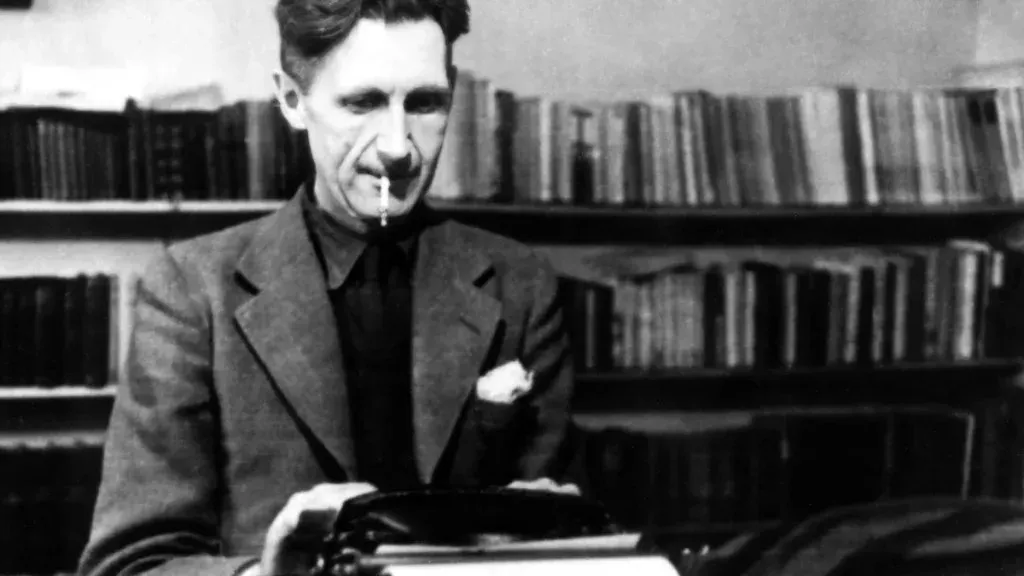
Works rooted in the past can often reveal uncomfortable truths about the present. This idea sits at the heart of Raoul Pecks documentary Orwell: 2+2=5, a film centered on the final period of George Orwells life and the dangerous mechanisms of authoritarian control that still echo today.
The documentary focuses on the years between 1948 and 1950, when Orwell, isolated in a medical facility on a remote Scottish island, worked urgently to complete his iconic novel Nineteen Eighty-Four. Using this intense period as a narrative backbone, Peck examines how manipulative political tactics, language distortion, and state control have been repeatedly used by regimes across the world for the last century.
Orwells words are brought to life through narration performed by actor Damian Lewis. Through these carefully selected passages, the film uncovers with eerie accuracy how oppression often begins subtly, through the erosion of language, truth, and independent thought.
Unlike what some may assume, Peck intentionally avoided turning the film into a direct attack on any single modern political figure. In fact, he actively minimized specific references to contemporary administrations. His purpose was not to document a moment in time, but to expose a system a recurring pattern seen in democracies, dictatorships, and authoritarian states alike.
According to Peck, the concept of a great leader someone elevated to near-mythic status is a key instrument in controlling the public. Regardless of ideology, the cult of personality remains one of the most effective tools of mass manipulation. Eventually, however, that illusion tends to break, revealing the leaders humanity and vulnerability, often in an unexpected or even absurd moment.
When approached by executive producer Alex Gibney with the idea of creating a film related to Orwell, Peck agreed immediately but only because the project would cover Orwells broader ideology and lived reality, not simply a summary of one novel. He carefully shaped the story into a dramatic arc centered on a dying writer racing against time to share a final warning with the world.
Researching Orwells writings proved to be both overwhelming and revelatory. Peck was struck by how precisely Orwells ideas match the patterns seen in modern society. The similarities were, at times, almost unbelievable in their accuracy, reinforcing the urgency of the message being delivered.
Pecks sensitivity to authoritarian warning signs is deeply personal. Having grown up during times of political unrest in both Haiti and the Congo, he recalls the fear associated with curfews, checkpoints, and military presence. These memories especially those formed as a child during tense late-night encounters influenced the emotional tone and visual language of the documentary.
Even as global political conditions shifted during the making of the film, its direction remained unchanged. Rather than update it to focus on specific individuals or governments, Peck reduced modern references even further, reinforcing the idea that the film speaks to a larger, recurring threat rather than a single moment in history.
One of Orwells most powerful themes explored in the documentary is the destruction of objective truth. The deliberate manipulation of words as illustrated through slogans such as war is peace demonstrates how language can be weaponized. In a world affected by misinformation, social media, and artificial intelligence, that warning has only grown more relevant.
Another crucial point in the film comes from Orwells belief that any hope for change lies with ordinary people. He placed his faith in the working masses not as a guarantee of success, but as a possibility. Responsibility, then, is handed over to the public. Silence, Peck reminds audiences, is itself a political position often one enabled by privilege while others suffer the consequences.
Ultimately, the documentary is not a prediction, nor a direct instruction. It is a mirror and a warning. What happens next depends entirely on what viewers choose to do after watching it.
Author: Natalie Monroe
Share

Ilhan Omar Responds to Trump's Repeated Attacks with 2 Direct Sentences
26 minutes ago 2 min read POLITICS

Opinion - A Path to Affordable Health Insurance
36 minutes ago 3 min read POLITICS

Trump Criticizes Kaitlan Collins from CNN with Harsh Name-Calling
40 minutes ago 2 min read POLITICS
Trump's policy document warns of Europe facing 'civilizational erasure' and seeks to prevent endless wars in the Middle East.
43 minutes ago 3 min read POLITICS

Trump's NASA nominee to emphasize the need for urgency in the moon race during second Senate hearing
44 minutes ago 2 min read POLITICS

Rand Paul Accuses Pete Hegseth of Either Deceiving Us or Being Incompetent
48 minutes ago 2 min read POLITICS

CNN's Jake Tapper defends Trump for potentially sleeping at cabinet meeting: 'This is not unusual' for a 79-year-old
53 minutes ago 2 min read POLITICS
NATO leader anticipates allies will contribute billions more for US weapons
55 minutes ago 2 min read POLITICS
Congress intensifies scrutiny of Pete Hegseth over boat collisions
1 hours ago 4 min read POLITICS

CNN’s Kaitlan Collins Confronts Trump Directly About New ‘Peace Prize’ — Standing Beside the Presenter
1 hours ago 3 min read POLITICS