
12 Cat Breeds That Were Fierce and Now Extinct
- Last update: 5 days ago
- 4 min read
- 13 Views
- PETS
Its easy to watch a housecat bask in sunlight and forget that all domestic cats descend from a wild, ancient lineage. While our cuddly companions are a tiny offshoot, countless other branches of the feline family tree have disappeared over millennia, leaving behind fossils, photographs, and stories of extinction. Numerous remarkable cat species no longer roam the Earth, from massive Ice Age hunters to domestic breeds lost to history. Sadly, some modern cats teeter on the edge of disappearance. Here are 12 extinct or critically endangered cats that remind us how fragile nature can be.
Saber-Tooth Cat
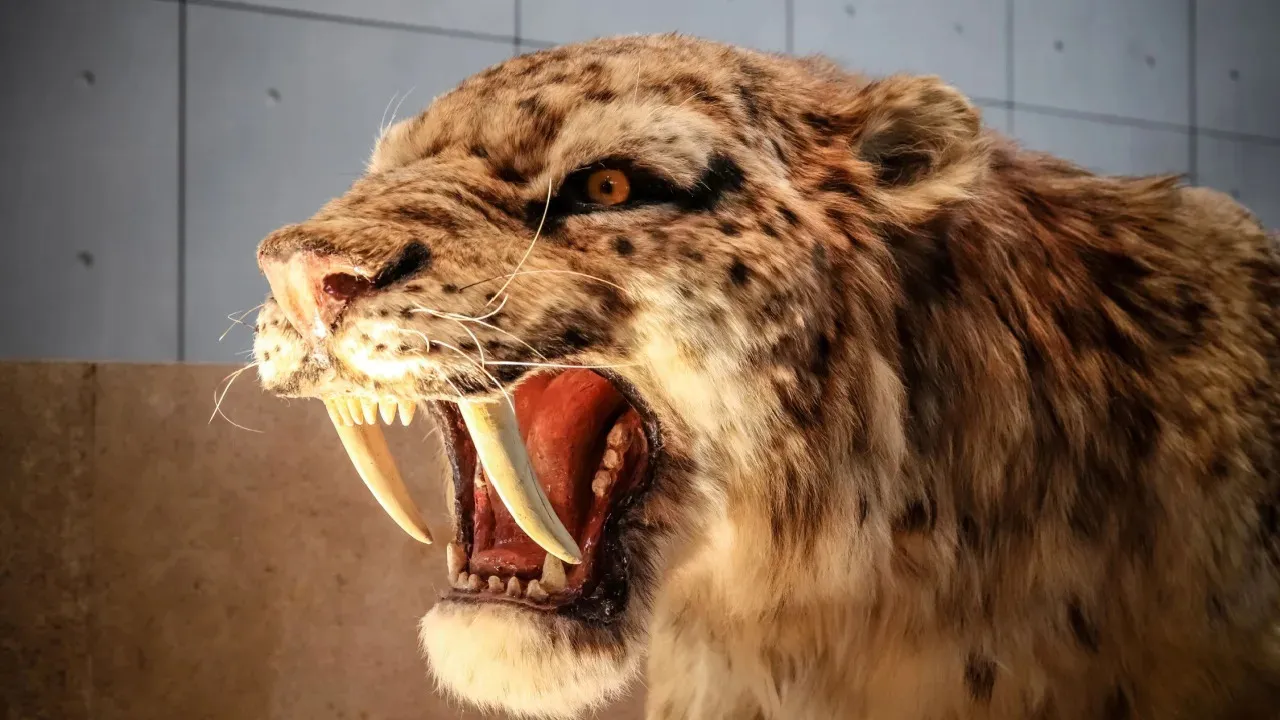
The iconic Saber-Tooth Cat, or Smilodon, is often imagined confronting woolly mammoths. This genus existed from the Eocene to the Pleistocene Epoch and is famous for its massive, curved canine teeth reaching up to 11 inches. These fragile fangs were used for precision attacks rather than crushing bone. With robust, bear-like builds and short tails, Saber-Tooths were ambush hunters. Their extinction coincided with the end of the last Ice Age around 10,000 years ago.
Bali Tiger
The Bali Tiger, the smallest tiger subspecies, lived exclusively on Bali. About the size of a leopard, it had a deep orange coat with fewer stripes. Europeans arriving on the island hunted it extensively, seeing it as a threat and trophy. The last confirmed sighting was in the late 1930s, and the species was declared extinct in 2008, highlighting how human activity can swiftly eliminate a species.
American Lion
The American Lion was roughly 25% larger than the modern African lion, dominating Pleistocene North America from Alaska to Peru. Preying on horses, bison, camels, and young mammoths, it had long legs built for speed, unlike the stocky Saber-Tooth Cat. Environmental shifts and the disappearance of prey led to its extinction.
Dinofelis
Dinofelis was a genus of saber-like cats spread across Europe, Asia, Africa, and North America from 5 to 1.2 million years ago. With powerful limbs and prominent canines, it hunted large prey and possibly early humans. As forests shrank and grasslands expanded, Dinofelis habitats declined, leaving only fossils as evidence of its hunting skill.
South China Tiger
Once roaming southern China, the South China Tiger is functionally extinct in the wild. Smaller and more ancient than other mainland tigers, it suffered from mid-20th century hunting campaigns and habitat destruction. A few survive in captivity, but low genetic diversity makes reintroduction challenging.
American Cheetah (Miracinonyx trumani)
North America hosted its own fast predator, the American Cheetah. Though unrelated to African cheetahs, it evolved similar adaptations for high-speed hunting across the plains. Environmental changes and prey loss led to its extinction.
Barbary Lion
Native to North Africa, the Barbary Lion had enormous size and dark manes. Unlike sub-Saharan lions, it lived in small groups or solitarily. Centuries of hunting for sport and display led to its disappearance, with the last confirmed wild sighting in Morocco during the mid-20th century.
Eastern Cougar
Once widespread in eastern North America, the Eastern Cougar was systematically hunted and faced deforestation and prey loss. By the early 1900s, it had vanished, and in 2011, it was officially declared extinct.
Homotherium
Known as the scimitar-toothed cat, Homotherium had long limbs and shorter saber-teeth, adapted for chasing prey in open landscapes. Fossils across Europe, Asia, and North America reveal its success as a predator, yet changing prey communities and human pressures led to its extinction.
Metailurus
Metailurus, a false saber-tooth cat, lived across Africa, Asia, and Europe 102 million years ago. Lighter and built for ambush hunting of medium-sized prey, it relied on speed and precision. Habitat shifts and changing prey contributed to its extinction.
Panthera youngi
A lesser-known extinct big cat from China, Panthera youngi was part of the early tiger lineage. With a powerful build, it dominated local prey, but shifting Pleistocene ecosystems and competition led to its disappearance, leaving only fossil evidence.
Snow Leopard
Though not extinct, the Snow Leopard faces a precarious future. Known as the ghost of the mountains, it is a keystone predator in Central and South Asia. Loss of snow leopards would disrupt ecosystems, causing overgrazing. Their camouflage, large paws, and thick tails make them superbly adapted, but conservation efforts remain critical.
These felines stories reveal adaptation, survival, and sometimes failure. Ice Age extinctions were natural, but recent declines largely stem from human actions. From the Bali Tiger to the Snow Leopard, their histories are warnings. Understanding the past helps protect todays majestic cats and prevent them from becoming history.
Author: Sophia Brooks