

Resembling Akhenaten: Egyptian influencer's pharaoh picture becomes popular on the internet
- HOME
- ENTERTAINMENT
- Resembling Akhenaten: Egyptian influencer's pharaoh picture becomes popular on the internet
- Last update: 34 minutes ago
- 3 min read
- 369 Views
- ENTERTAINMENT
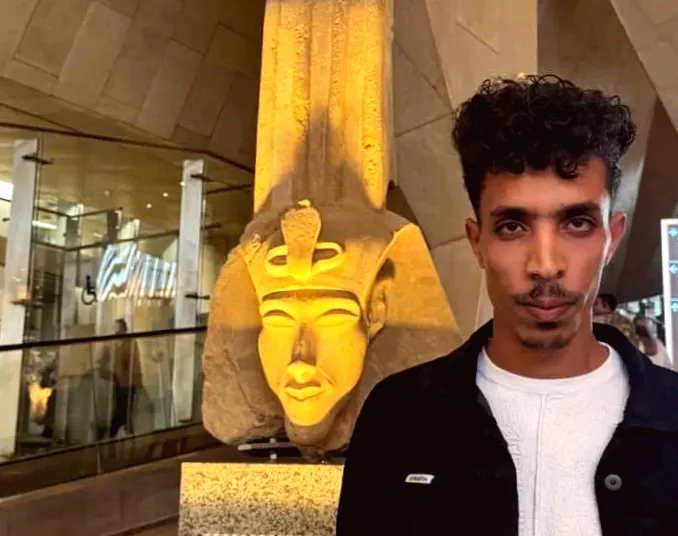
High cheekbones, a long nose, full lips, and a defined chin are hallmarks of Pharaoh Akhenaten's appearance, setting him apart in ancient Egyptian art. Whether these features reflected the actual look of Nefertiti's husband or were artistic innovations remains uncertain. However, a recent photo of Egyptian influencer Youssef Mohamed has gone viral, suggesting the famous bust may have captured a real face.
Twenty-three-year-old law student Mohamed posed next to Akhenaten's bust at the Grand Egyptian Museum, and the likeness is remarkable. His social media posts have amassed millions of views in just a few weeks.
"I didn't expect this," Mohamed told dpa. He had no idea he resembled the pharaoh before visiting the museum for content creation. Online reactions were swift and enthusiastic. "People jokingly said I must be a descendant of the pharaohsno DNA test needed," Mohamed said. The attention fills him with pride. "Being called Akhenaten's grandson makes me happy and proud."
The viral fame has also brought Mohamed extra recognition as an influencer. While standing near the bust, museum visitors often ask him for selfies.
Well-versed in Akhenaten's history, Mohamed is aware of the pharaohs attempt to promote the worship of a single sun deity and of the famous Nefertiti bust housed in Berlin. "My grandfather Akhenaten is sad his wife isnt here," he jokes with a wink.
Mohamed hopes his viral photos will inspire young people to take an interest in ancient Egyptian history and the newly opened museum. Many followers share pictures of themselves alongside the bust.
Grand Egyptian Museum Draws Global Attention
The Grand Egyptian Museum, the world's largest archaeological museum, has attracted international focus. Its collection includes treasures of Tutankhamun and the 42-meter solar boat of King Khufu. Opened on November 1 after three decades of construction, the museum welcomed global leaders and media in a grand ceremony.
According to a spokesperson, the museum now sees around 19,000 visitors daily. Local crowds are abundant, with many Egyptians expressing renewed interest in their heritage, as reported by al-Masry al-Youm. If the current trend continues, the museum is poised to become one of the most visited worldwide, only behind the Louvre in Paris and Beijings National Museum.
Due to overwhelming attendance, the museum has introduced new measures: tickets must now be purchased online prior to visits, effective from December. Initially scheduled to open in 2012, the museum faced repeated delays from the Arab Spring and the pandemic. After roughly 30 years and $1 billion in construction costs, the museum finally opened its doors to the public.
Author: Jackson Miller
Share
Actor Shortlist for Brainiac Revealed as James Gunn Confirms One Character We Won't Be Seeing: Man of Tomorrow
1 minutes ago 2 min read ENTERTAINMENT

The End of Monoculture Marks the Permanent Demise of Celebrity
1 minutes ago 3 min read ENTERTAINMENT

Jack Whitehall, Robbie Amell, Lizze Broadway, Elizabeth Mitchell & Randall Park to star alongside Lana Condor in Rom-Com ‘Whodunnit’
3 minutes ago 2 min read ENTERTAINMENT

Netflix finally speaks out and delivers a strong message to its customers.
4 minutes ago 2 min read ENTERTAINMENT

Dua Lipa Showcased Local Music in Every City on Tour—Check Out the Hits
4 minutes ago 4 min read ENTERTAINMENT

The various ways Israel is facing cancellation
6 minutes ago 3 min read ENTERTAINMENT

Variety's Hitmakers Parade: Sabrina Carpenter, Chappell Roan and More; Will Warner Bros. Discovery Attempt a Third Round of Bids?
8 minutes ago 1 min read ENTERTAINMENT

Netflix Orders Las Vegas Casino Drama Series From Martin Scorsese & ‘Billions’ Co-Creators Brian Koppelman & David Levien
9 minutes ago 3 min read ENTERTAINMENT

Caribbean Boat Collisions and the Proper Use of Special Forces
9 minutes ago 4 min read ENTERTAINMENT

Lily Collins goes on a Roman adventure in 'Emily in Paris' season 5 official trailer
11 minutes ago 2 min read ENTERTAINMENT