

Deepa Mehta Discusses Career, 'Water' Controversy, and Maintaining Independence at Singapore Film Festival
- HOME
- ENTERTAINMENT
- Deepa Mehta Discusses Career, 'Water' Controversy, and Maintaining Independence at Singapore Film Festival
- Last update: 49 minutes ago
- 3 min read
- 181 Views
- ENTERTAINMENT
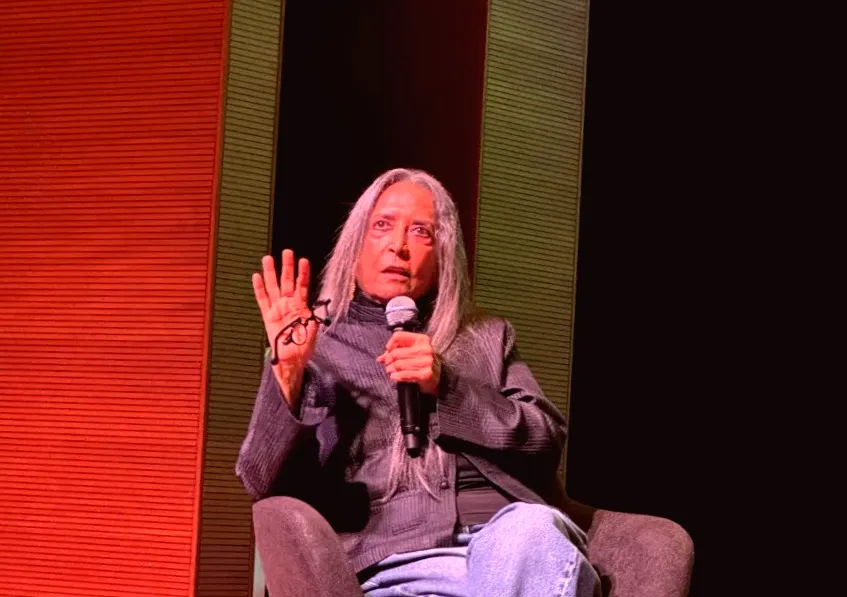
At the Singapore International Film Festival, renowned director Deepa Mehta shared insights from her long and impactful career, addressing both the controversies surrounding her most famous films and her steadfast dedication to independent filmmaking. She spoke with Hussain Amarshi, head of Mongrel Media and a longtime partner in distributing her work. The festival honored Mehta with a lifetime achievement award, recognizing her influential Elements trilogy and a year of retrospectives celebrating her contributions to cinema.
For the first time, I find myself enjoying my work rather than constantly critiquing it, Mehta told the audience. Its not about pride, but a genuine appreciation. She reflected on advice from her father, a film distributor in India: Life has two uncertainties. One, you dont know when it will end. Two, you dont know how a film will be received.
After relocating to Canada, Mehtas debut feature in 1991, Sam & Me, co-written with Ranjit Chowdhry, explored her immigrant experience. Its success at Cannes opened international doors, including an invitation from George Lucas to direct an India-set episode of The Young Indiana Jones Chronicles. Despite offers from Hollywood, including working with Jessica Tandy on Camilla, she chose to retain creative independence, reinforced by Martin Scorseses advice to never get tempted, do your own work.
In 1996, Mehta directed Fire, one of the first Indian films to depict a lesbian relationship within a traditional household. The film sparked nationwide protests, including attacks on theaters in Delhi. However, counter-protests, particularly by women identifying as lesbians, left a lasting impression on her. Seeing women carry signs saying We are lesbians and we are Indians was truly inspiring, she recalled.
Following Fire and Earth (1998), Indias Oscar submission, Mehta embarked on Water in 2000, exploring the lives of widows in 1930s India. Initial filming in Varanasi met violent opposition, forcing the production to shut down amid death threats and attacks on sets. The experience reshaped her connection to India. Five years later, she successfully remade Water in Sri Lanka, which premiered at the 2005 Toronto International Film Festival and became Canadas Oscar entry, earning an Academy Award nomination.
Mehta highlighted her methodical approach to filmmaking, noting that every script she has written has been produced, a rare feat in the industry. She emphasizes extensive pre-shoot workshopping to refine performances, inspired by the ancient Indian Natya Shastra.
Her next project, Forgiveness, is adapted from Mark Sakamotos book about Japanese-Canadian internment during World War II and examines themes of reconciliation and the challenge of forgiveness.
Discussing contemporary cinema, Mehta expressed concern about political pressures in Hollywood and Bollywood but remains optimistic about independent filmmaking. She advised emerging filmmakers to focus on small, self-directed projects, emphasizing independence and practical storytelling within a feasible budget.
Influences she cited include Satyajit Ray, Akira Kurosawa, Masaki Kobayashis Harakiri (1962), and Vinod Kapris Pyre. On being labeled controversial, Mehta reflected, I dont see it that way; its a label I have to live with. Guided by her fathers wisdom, she continues to focus on creating work without concern for reception.
Regarding personal identity, Mehta shared, If I belong anywhere, its to myself. That is my home.
Author: Olivia Parker
Share

Red Sea Film Festival: Kriti Sanon Excited to Portray Complex Character in 'Tere Ishk Mein' and Happy for Return of Love Stories
13 hours ago 2 min read ENTERTAINMENT

Jessica Alba explains her desire to produce and shares her opinions on 'Fantastic Four' movies.
16 hours ago 3 min read ENTERTAINMENT

Feminist Supernatural Drama 'The Difficult Bride' Reveals Cast as Rubaiyat Hossain Finishes Principal Photography (EXCLUSIVE)
1 days ago 3 min read ENTERTAINMENT

Kirsten Dunst Talks about Progress of MeToo Movement at Saudi Arabia’s Red Sea Film Festival: 'I Believe We Have Held Many Accountable'
1 days ago 1 min read ENTERTAINMENT

'Only Thirty-Five' Sequel in Development at Mediacorp, Linmon Media
3 days ago 2 min read BUSINESS

'Peepli Live' Director Anusha Rizvi Makes a Comeback with Family Comedy ‘The Great Shamsuddin Family’ for JioHotstar (EXCLUSIVE)
4 days ago 2 min read MOVIES

Exploring Indonesia’s Future: The Upcoming Films of 2026 Ready to Make an Impact Locally and Globally
4 days ago 4 min read MOVIES

Unveiling of 'Queen of Malacca' Cast at JAFF Market as Angga Dwimas Sasongko Presents High-Concept Action Vision
4 days ago 3 min read MOVIES

JAFF Collaborates with Asian Film Awards Academy for Hong Kong Cinema Showcase
4 days ago 3 min read MOVIES

JAFF Organizers on Constructing Indonesia’s Inaugural Film Market: ‘A Desire for Networking, Partnership, and Emerging Artists’
6 days ago 3 min read MOVIES