
What is the reason behind Trump's threat to Maduro in Venezuela?
- Last update: 1 hours ago
- 3 min read
- 825 Views
- WORLD
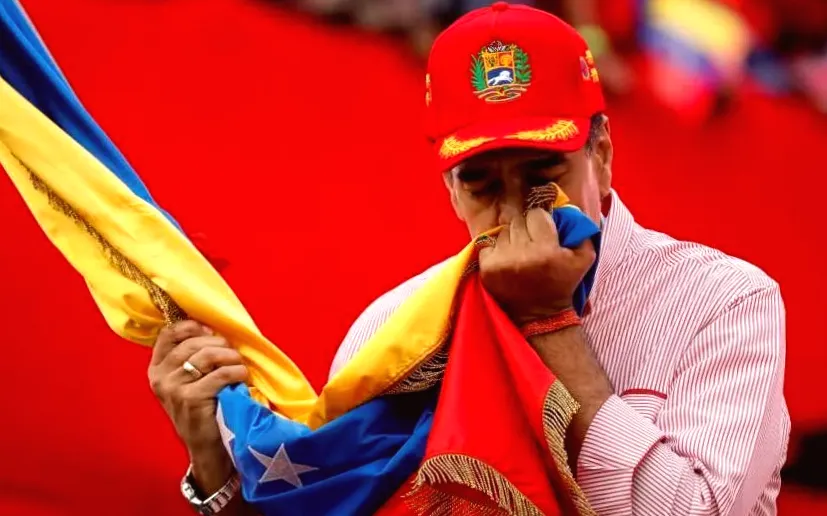
US President Donald Trump has intensified his stance against Venezuela's leader, Nicols Maduro. The administration has doubled the reward for information leading to Maduro's capture, and American warships are stationed close to Venezuelan waters. Recent attacks on vessels allegedly carrying drugs from Venezuela have resulted in dozens of deaths. On 21 November, Trump reportedly gave Maduro a direct ultimatum to leave the country during a phone call.
Who is Nicols Maduro?
Nicols Maduro rose through the ranks under leftist President Hugo Chvez and the United Socialist Party of Venezuela (PSUV). Formerly a bus driver and union activist, he became president in 2013 after Chvez's death. Over the past 26 years, their party has consolidated power over key institutions, including the National Assembly, the judiciary, and the electoral council. Despite opposition claims that Edmundo Gonzlez won the 2024 presidential election, Maduro was declared the winner by the electoral council. The US and several other countries have deemed the election illegitimate, recognizing Gonzlez as "president-elect." Nevertheless, Maduro remains in control of Venezuela's military, police, and legislative bodies, while Gonzlez has fled abroad.
Trump's Focus on Venezuela
During his second term, Trump has prioritized halting immigration, attributing the influx of Venezuelan migrants to Maduro's policies. Since 2013, approximately eight million Venezuelans have fled economic hardship and political repression, many reaching Latin America and hundreds of thousands arriving in the US. Trump has claimed, without evidence, that Maduro has "emptied prisons and asylums," forcing people to migrate.
Additionally, Trump has targeted the flow of drugs, particularly fentanyl and cocaine. Two Venezuelan criminal groupsTren de Aragua and Cartel de los Soleshave been labeled as Foreign Terrorist Organizations, with Maduro alleged to lead the latter. Maduro denies these claims, accusing the US of using drug enforcement as a pretext to seize Venezuela's oil resources. Experts note that the Cartel de los Soles is not a hierarchical organization but rather a term for corrupt officials facilitating drug transit.
US Military Presence in the Caribbean
The US has deployed 15,000 troops, aircraft carriers, guided-missile destroyers, and amphibious ships to the Caribbeanthe largest deployment since the Panama invasion in 1989. The official goal is to curb fentanyl and cocaine trafficking. Since September, US forces have struck over 20 boats in international waters allegedly carrying drugs, killing more than 80 people. The administration classifies this as a non-international armed conflict with "narco terrorists," though legal experts question the strikes' legality. The White House defends the action as protecting Americans from cartels.
Venezuela's Role in Drug Trafficking
Counternarcotics authorities note that Venezuela is a minor player in global drug trafficking, primarily serving as a transit route. Colombia is the main cocaine producer, and most shipments to the US bypass Venezuela, traveling instead via the Pacific. While Trump claims targeted boats carry fentanyl, the drug is mainly produced in Mexico and enters the US overland.
Potential Escalation
Trump confirmed speaking with Maduro on 21 November, reportedly giving him and his family a one-week exit ultimatum, which Maduro ignored. Following the deadline, Trump declared Venezuelan airspace closed. While he has threatened action against drug traffickers "by land," specific plans have not been revealed. US officials have not ruled out deploying troops on Venezuelan soil, and analysts suggest the military presence in the Caribbean exceeds what is needed for counternarcotics operations.
Author: Olivia Parker
Share

When to observe the peak of the strongest meteor shower of the year along with a cold supermoon in KS
1 minutes ago 2 min read WORLD
German lorry robbed of large quantities of ammunition
3 minutes ago 2 min read WORLD
Tourist captures rare photo of 'white ghost' animal experts believed extinct: 'I couldn't believe my eyes'
9 minutes ago 2 min read WORLD

Can technology help Japan overcome its dementia crisis?
38 minutes ago 3 min read WORLD
Muslim burial space shortage reaches critical level
45 minutes ago 2 min read WORLD

California health officials issue urgent warning to mushroom hunters after deadly poisoning outbreak
46 minutes ago 2 min read WORLD
Some Ukrainians fleeing war-torn Donbas suggest it is time for a deal
51 minutes ago 3 min read WORLD
Researchers develop plastic that can self-destruct when instructed: Introducing 'Built-in end-of-life' technology.
53 minutes ago 2 min read WORLD
Debunked: AI Videos Of Iranian Bases Hit By Israeli Missiles Are NOT Real CCTV Footage
56 minutes ago 2 min read WORLD
What is the reason behind Trump's threat to Maduro in Venezuela?
1 hours ago 3 min read WORLD