

Watching the Geminids meteor shower and December supermoon in Florida: A guide
- Last update: 3 days ago
- 3 min read
- 39 Views
- WORLD
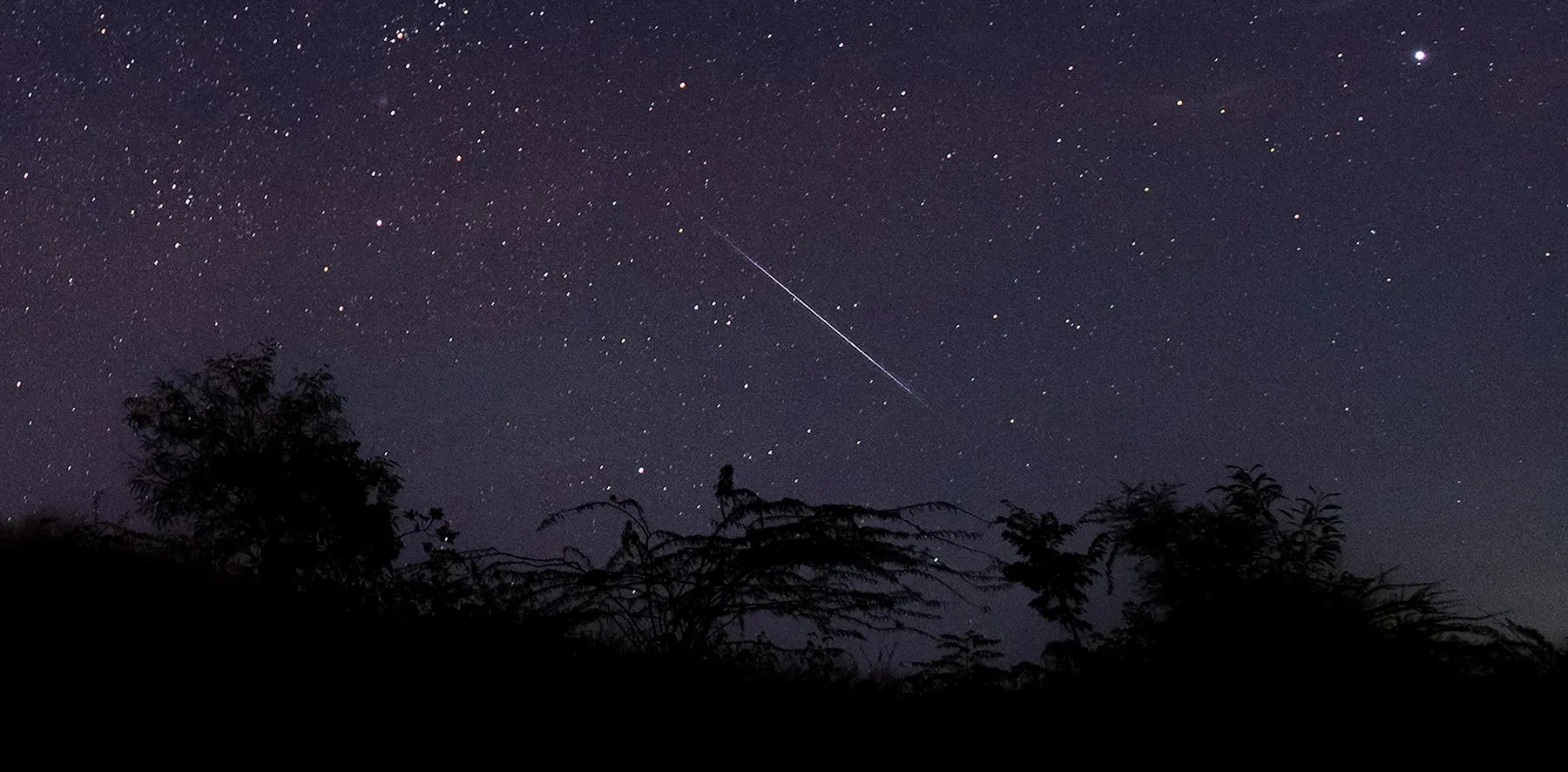
The year 2025 is ending with remarkable astronomical events. December will feature a full moon that also qualifies as a supermoon, followed closely by the annual Geminids meteor shower. The Geminids, peaking every mid-December, are among the brightest meteor showers observed annually. December's full moon, known as the Cold Moon, will reach its peak as a supermoon shortly before the Geminids, giving stargazers a favorable view of the meteors. The month will conclude with the winter solstice and the Ursid meteor shower.
When Will December's Supermoon Occur?
The full moon will peak on the night of December 4-5. This Cold Moon will appear slightly larger and brighter than usual due to its proximity to Earth. While the moon's average distance is about 238,855 miles, this event brings it roughly 17,000 miles closer. The full moon will officially peak at 6:14 p.m. ET, marking the end of a series of three supermoons visible in 2025. Its closest approach, or perigee, will continue through the full moon on January 3, 2026.
The term "Cold Moon" originates from the Mohawk people, reflecting the start of winter in December. Moon phases such as perigee and apogeethe closest and farthest points from Earth, respectivelyaffect how large the moon appears. A supermoon occurs when a full moon coincides with its perigee, producing a noticeably brighter and bigger appearance in the sky.
Geminids Meteor Shower Peak
The Geminids will peak on the night of December 13-14, 2025. Considered one of the most reliable annual meteor showers, it can produce 40 to 50 meteors per hour under normal conditions, and up to 120 meteors per hour in ideal circumstances. Originating in the mid-1800s, the Geminids were initially less prominent, with only 10 to 20 meteors per hour. The meteors often streak quickly across the sky, frequently appearing yellow.
Best Viewing Times in Florida
In Florida, Geminids will start appearing around 9-10 p.m. ET, with optimal viewing between 10 p.m. and 2 a.m. local time. Observers are advised to bring blankets, chairs, or sleeping bags and allow 30 minutes for eyes to adjust to the darkness for the best experience.
Winter Solstice and Ursid Meteor Shower
The astronomical winter in the Northern Hemisphere begins on December 21 at 10:03 a.m. ET, marking the shortest day and longest night of the year. In Florida, daylight will last between 10 hours 10 minutes and 10 hours 36 minutes, depending on location. The Ursid meteor shower will follow, peaking around 10 meteors per hour. Although less impressive than the Geminids, the Ursids offer a final chance to enjoy meteor showers before the next one in April 2026. The Quadrantids in January will coincide with the full moon, making them more difficult to observe.
Author: Sophia Brooks
Share

Exclusive aerial footage reveals Ukrainian town surrounded by Russian forces
4 seconds ago 3 min read WORLD

IAEA calls for significant renovation of Chernobyl shelter following drone strike
1 minutes ago 2 min read WORLD

Four civilians and a soldier die in clash on Afghan-Pakistan border
1 minutes ago 3 min read WORLD
Human Rights Watch condemns FIFA's Peace Prize
3 minutes ago 2 min read WORLD

At least 11 people dead in South Africa mass shooting
4 minutes ago 1 min read WORLD

5 dead and 8 wounded in overnight clash at Afghan-Pakistan border, officials confirm
5 minutes ago 2 min read WORLD

Schools rename Christmas jumper day to 'Winter' jumper day
8 minutes ago 2 min read WORLD

Mother grieves for 8-year-old daughter killed in birthday party mass shooting, lamenting that she 'should have had a long life'
9 minutes ago 2 min read WORLD

Suspect accused in murder of AFP's Gambia correspondent
12 minutes ago 3 min read WORLD

Man released on bail after assaulting one victim, rapes another
16 minutes ago 1 min read WORLD