

Tracking Near-Earth Asteroids: Our Methods
- Last update: 1 hours ago
- 4 min read
- 561 Views
- WORLD
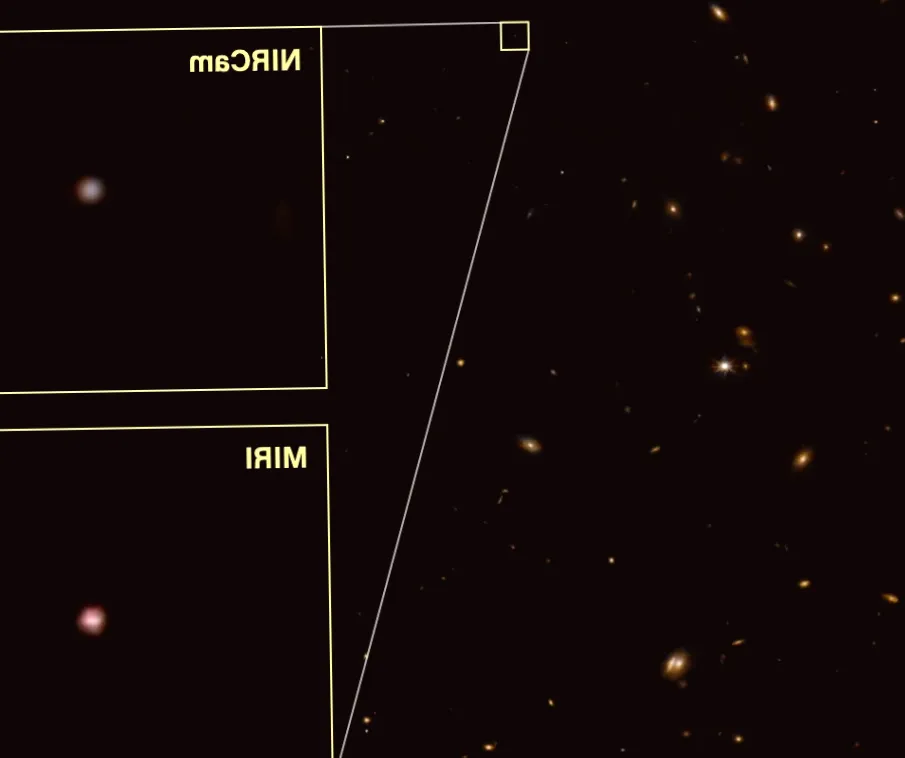
Earlier this year, an unexpected asteroid captured global attention when the International Asteroid Warning Network issued its highest alert since 2013. The object, designated 2024 YR4, initially showed a rising probability of collision with Earth, with early estimates suggesting a 1-in-33 chance of impact within eight years. Its orbit, spanning four years, meant it would remain undetectable until 2028, limiting potential mitigation options. Fortunately, extended observations revealed that while YR4 would bypass Earth, it still carried a 1-in-25 chance of striking the Moon in 2032.
This incident underscores that while catastrophic asteroid impacts are rare, they are inevitable. Earth has endured collisions with space rocks for billions of years, some causing profound planetary changes. Today, however, humanity possesses the technology to detect these threats in advance. Telescopes and observatories worldwide form a planetary defense network, scanning the sky for near-Earth objects (NEOs) capable of causing local or global devastation.
Mapping the Threats
NEOs include asteroids or comets with a closest approach to the Sun of 1.3 astronomical units (AU) or less, with 1 AU representing the average Earth-Sun distance of 93 million miles (150 million km). Within this category, potentially hazardous asteroids (PHAs) are those larger than 460 feet (140 meters) that come within 0.05 AU of Earth. Scientists classify NEOs by orbital characteristics such as perihelion, aphelion, and semi-major axis, with each subgroup named after its first discovered member.
The modern planetary defense initiative gained momentum after Comet Shoemaker-Levy 9 collided with Jupiter in 1994, highlighting the destructive potential of celestial impacts. Congress and NASA responded by launching programs to systematically identify asteroids capable of global catastrophe, focusing initially on those larger than one kilometer (0.6 mile). Technological advances have since expanded detection capabilities from a few telescopes to an international network.
Global Survey Efforts
Dedicated survey programs now operate around the clock. The Catalina Sky Survey in Arizona, Pan-STARRS in Hawaii, and ATLAS observatories in multiple locations actively search for NEOs. Soon, the Vera C. Rubin Observatory in Chile and NASAs space-based NEO Surveyor will augment these efforts. NEO Surveyor, in particular, will detect asteroids closer to the Sun using infrared sensors, independent of sunlight reflection.
Human expertise remains critical in asteroid detection. Operators like Greg Leonard of the Catalina Sky Survey visually inspect telescope imagery for moving objects. Sophisticated software assists, but human judgment ensures accurate identification of potential threats. Confirmed discoveries are reported to the Minor Planet Center and shared globally to enable rapid follow-up observations.
Crowdsourcing Discovery
The Catalina Sky Survey engages citizen scientists through platforms like Zooniverse, allowing the public to review images and identify possible asteroids. Since its launch in 2023, over 7,000 participants have discovered thousands of previously uncharted NEOs, including three new objects. The upcoming Rubin Observatory is expected to further accelerate NEO detection and refine the planetary defense system.
Assessing Risk
Asteroid threats are ranked on the Torino Impact Hazard Scale, ranging from 0 (no risk) to 10 (extinction-level threat). YR4, at its peak, reached a level 3 rating and has since been downgraded to zero. As of August 2025, nearly 39,000 NEAs are cataloged, with 2,500 considered potentially hazardous. Despite these numbers, only about 45% of asteroids larger than 460 feet have been discovered, with smaller objects numbering in the hundreds of thousands to over a billion.
Deflection Strategies
NASAs Double Asteroid Redirection Test (DART) demonstrated humanitys ability to alter an asteroids trajectory. In 2022, DART impacted Dimorphos, shortening its orbital period and providing valuable data on kinetic deflection. Larger asteroids would require significantly more intervention, and debris from such impacts remains a concern, as tracked by Hubble and upcoming ESA missions like Hera.
Preparing for Close Encounters
Earth continues to face occasional impacts, such as the 2013 Chelyabinsk meteor. Upcoming events include the 2029 close flyby of asteroid 99942 Apophis, which will pass within 20,000 miles (32,000 km) of Earth, closer than many satellites. NASAs OSIRIS-APEX and ESAs Ramses missions will observe Apophis, offering insights into planetary tidal effects on incoming space objects. Together with surveys and dedicated astronomers, these efforts enhance our ability to predict, track, and potentially prevent future catastrophic impacts.
Author: Jackson Miller
Share

Ukraine demonstrates to the UK that traditional 'tactically safe' methods for clearing trenches are ineffective in chaotic, booby-trapped environments
1 minutes ago 3 min read WORLD

Opinion - The Collapse of the Latin American Left Continues, with Maduro on the Horizon
2 minutes ago 3 min read WORLD

Iran seeks to purchase water from nearby nations
3 minutes ago 2 min read WORLD

OBE awarded to man who set up Sikh soldier memorial
10 minutes ago 2 min read WORLD

Council delays implementation of Sunday car park charges
16 minutes ago 2 min read WORLD

Trump's intended enforcement actions on Somali communities in Minnesota: What information we have
16 minutes ago 4 min read WORLD

Gene therapy by Vertex demonstrates potential in treating blood disorders in children
18 minutes ago 2 min read WORLD

Putin sends Trump's envoys packing, aiming for a geopolitical victory
19 minutes ago 3 min read WORLD
Europe deploys new ballistic missile shield proven in combat against Iranian threats
19 minutes ago 2 min read WORLD

Famous people support 'Free Marwan' initiative for Palestinian leader
21 minutes ago 2 min read WORLD