

The Risk of Japan and China's Growing Dispute
- Last update: 6 days ago
- 2 min read
- 19 Views
- WORLD
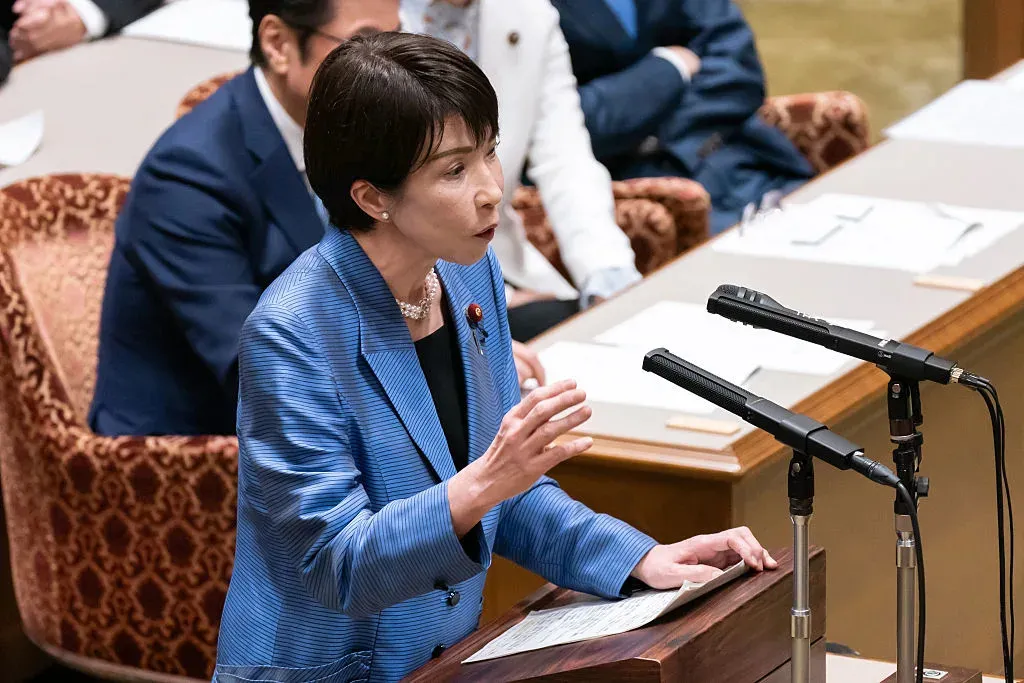
Japanese Prime Minister Sanae Takaichi made headlines during a recent debate in the upper house of the Diet in Tokyo on November 26, 2025. Her statements regarding Japans stance on Taiwan have drawn increasing criticism from China.
In a discussion about potential emergencies in Taiwan, Takaichi warned that if the situation involved warships and the use of force, it could pose a threat to Japans survival, suggesting that a worst case scenario must be considered. These remarks came shortly after Takaichi met with Chinese President Xi Jinping in South Korea, prompting swift reactions from Beijing.
The Chinese Consul-General in Osaka, Xue Jian, responded sharply on social media, while Foreign Minister Wang Yi issued a formal rebuttal. The exchange highlights the persistent tensions between the two nations, despite extensive economic ties.
Historical Context
Japan and China share a fraught history. Japans invasion of Manchuria in 1931 evolved into the Second Sino-Japanese War (19371945), causing millions of deaths. While the events are largely beyond living memory, the legacy continues to influence bilateral relations. Chinese resentment contrasts with Japans perceived historical amnesia, contributing to ongoing mistrust.
Economic interdependence is significant. In 2024, bilateral trade exceeded $300 billion, making China Japans second-largest export partner after the United States. Nonetheless, tensions flare easily: past incidents include sports victories sparking riots, disputes over fishing rights causing export embargoes, and controversial visits to the Yasukuni Shrine.
Security and Strategy
Japans postwar pacifism, enshrined in its constitution, coexists with a growingly capable Self-Defense Force. Amid unpredictability from the U.S., Japan is increasingly adopting a more self-reliant stance on defense. Takaichis statements reflect this shift and the mounting pressure on Japans pacifist policies.
While Japan and China have engaged in numerous verbal confrontations since 1945, they have avoided direct military conflict. However, aggressive rhetoric on Taiwan risks escalation, particularly given Chinas historically hardline position toward Japan. Any misstep could trigger wider regional or global consequences.
Global Implications
Experts warn that conflict over Taiwan could escalate quickly beyond the immediate region, drawing in the U.S., Japan, and other global powers. The potential consequences of such a worst case scenario are severe, threatening international cooperation and stability.
Even leaders such as former U.S. President Donald Trump have reportedly cautioned Takaichi against escalating tensions. Observers suggest that maintaining the fragile but pragmatic Japan-China relationship is essential to avoiding catastrophic outcomes.
Author: Sophia Brooks
Share
Suspected Ukrainian strike leaves sanctioned oil tanker stranded off Bulgaria's Black Sea coast
1 hours ago 2 min read WORLD

How would Canada, US and Mexico perform in their World Cup groups?
1 hours ago 3 min read WORLD

Bethlehem Christmas tree shines bright for the first time since the beginning of the Gaza war
1 hours ago 3 min read WORLD

Expert: Prince William Quietly Transforming Monarchy's Traditions
1 hours ago 2 min read WORLD

Achieving lasting peace in Ukraine could depend on the presence of independent monitors - however, Trump's 28-point plan barely acknowledges their importance.
1 hours ago 3 min read WORLD

Russia extends US citizen Gilman's jail sentence by 2 years, state media report
1 hours ago 1 min read WORLD

Nature retracts German study on worldwide expenses of climate change
1 hours ago 2 min read WORLD

Machado, the winner of the Peace Prize, is 'doing everything' to attend the ceremony
1 hours ago 2 min read WORLD
Ukrainian strike leaves sanctioned oil tanker stranded off Bulgaria's Black Sea coast
1 hours ago 2 min read WORLD

'We must stay united': Top EU diplomat supports partnership with US
1 hours ago 2 min read WORLD