

Taiwan reveals $40 billion defense budget to address China's military threat in the next ten years
- Last update: 11 hours ago
- 2 min read
- 692 Views
- WORLD
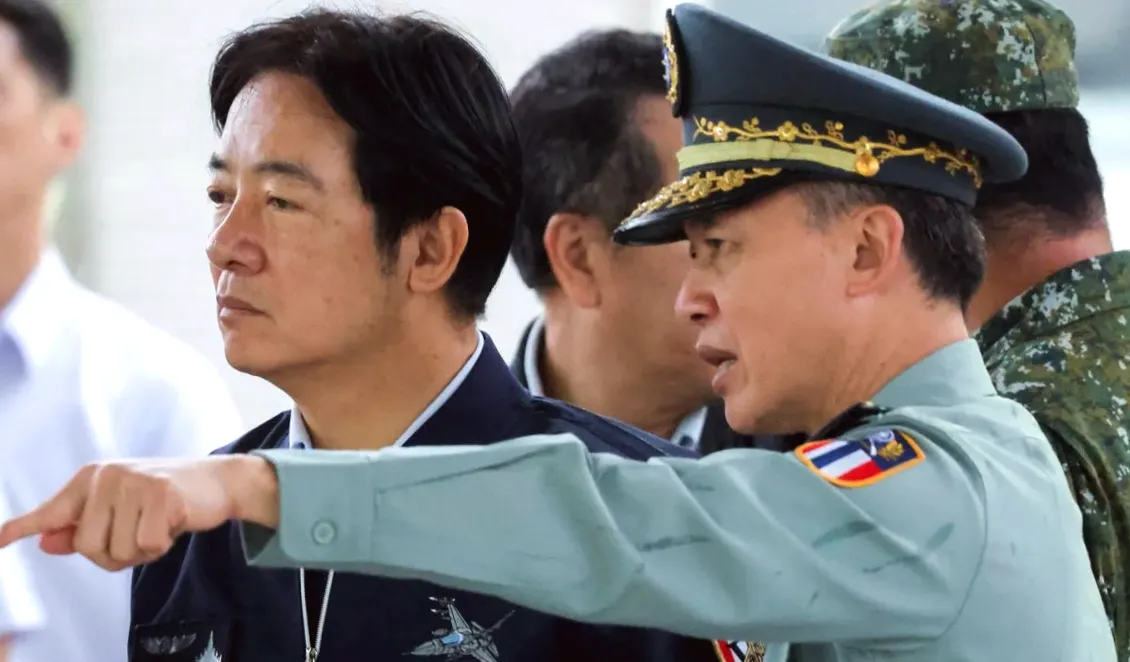
KAOHSIUNG: Taiwans President William Lai recently revealed a $40 billion supplemental defense plan aimed at strengthening the islands security against increasing military pressure from China. The plan highlights Taiwans determination to protect its independence in the face of Beijings claims over the territory.
A spokesperson from the U.S. State Department expressed strong support, stating that the United States welcomes Taiwans new defense budget and continues to uphold commitments under the Taiwan Relations Act. The spokesperson also noted appreciation for Taiwans pledge to raise defense spending to at least 3% of GDP by 2026 and 5% by 2030, reinforcing its dedication to self-defense.
The American Institute in Taiwan (AIT) responded positively to Lais announcement. Political columnist Courtney Donovan Smith described the endorsement as a public affirmation of U.S. support. Following the announcement, Taiwans Defense Minister Wellington Koo confirmed that preliminary discussions with the U.S. on potential arms acquisitions under this budget, covering 2026 to 2033, have already begun, though specific details await congressional notification.
Some Taiwanese citizens expressed concern that the administrations messaging lacked urgency and senior-level emphasis. Observers noted the timing could be sensitive, coinciding with recent U.S.-China trade discussions and a phone call between Chinese leader Xi Jinping and former President Trump. Despite this, analysts emphasize that U.S. backing for Taiwans defense purchases remains consistent.
Japans new Prime Minister, Sanae Takaichi, has also drawn attention by addressing Taiwan in a strategic context. Takaichi indicated that a Chinese military attack on Taiwan could be considered a threat to Japans survival, marking a departure from Japans traditional ambiguity on the matter. China reacted strongly, denouncing her statements and issuing warnings through diplomatic channels.
Experts warn that U.S. officials need to clearly counter Chinas threats toward Japan and Taiwan to reassure regional allies, highlighting the historical concerns of perceived U.S. hesitancy under previous administrations.
Domestically, President Lai faces challenges in passing the defense plan. His Democratic Progressive Party lacks a legislative majority, and the opposition Kuomintang (KMT) criticizes the high spending and advocates closer engagement with Beijing under the "1992 Consensus." Analysts note that bipartisan support is crucial, but the proposal also focuses on boosting Taiwans own defense manufacturing, including anti-missile systems, rather than relying solely on foreign arms purchases.
While the plan demonstrates Taiwans resolve to strengthen its security, its passage and implementation will depend on navigating a complex domestic political landscape and potential retaliatory actions from China.
Author: Chloe Ramirez
Share

This Day in History: Japan's Attack on Pearl Harbor
50 seconds ago 3 min read WORLD
Taliban rulers of Afghanistan conduct public execution at sports stadium in eastern city
2 minutes ago 2 min read WORLD

Christmas festivities come back to Bethlehem following 2 years of conflict in Gaza
3 minutes ago 3 min read WORLD
Ukraine launches unprecedented attacks on Russian energy facilities
4 minutes ago 1 min read WORLD

Expansion of Fáilte Ireland presents a 'fantastic opportunity' for Northern Ireland
7 minutes ago 3 min read WORLD

Homeless people 'would starve' without charity
10 minutes ago 3 min read WORLD

Having a mentor helps me stay away from trouble.
12 minutes ago 2 min read WORLD

Van Dwellers Say There's Nowhere for Them to Go
13 minutes ago 2 min read WORLD

Significant increase in vacant homes is deemed 'a disaster'
13 minutes ago 2 min read WORLD

'I fled Syria like a fugitive, and returned as a hero'
13 minutes ago 3 min read WORLD