

Scientists Discover 520-Million-Year-Old Fossil with Preserved Brains and Guts
- Last update: 3 days ago
- 2 min read
- 23 Views
- WORLD
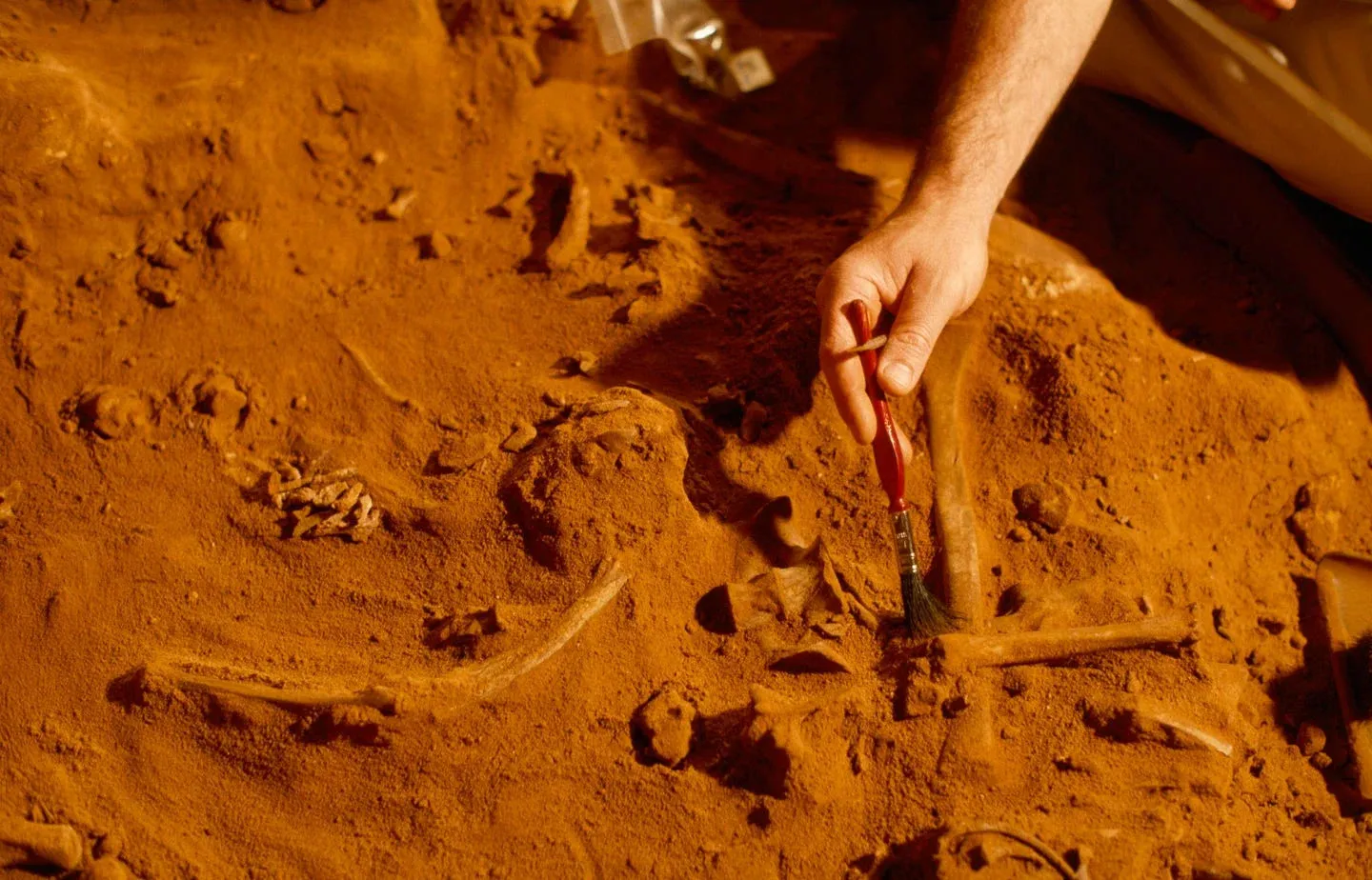
Scientists have uncovered a fossilized larva that astonishingly preserves both its brain and internal organs. This creature represents one of the earliest members of the arthropod family, which today includes insects, crabs, and lobsters. The discovery provides a rare glimpse into the evolutionary links between ancient arthropods and their modern descendants.
While most fossils consist of hardened bones or mere imprints of creatures, soft tissues usually decay over time. Exceptional preservation is extremely rare, but a team recently discovered a 520-million-year-old worm larva where even delicate organs remained intact.
Its always fascinating to explore the interior of a specimen using 3D imaging, said Katherine Dobson, a co-author of the study. But in this tiny larva, fossilization has achieved near-perfect preservation.
The detailed preservation made the fossil exceptionally valuable for evolutionary biologists. Using 3D images created through synchrotron X-ray tomography, researchers identified structures such as the brain, digestive glands, a primitive circulatory system, and even nerves connected to the larvas simple legs and eyes.
This level of detail revealed that early arthropods were far more complex than previously thought. The findings also helped scientists trace evolutionary connections between ancient species and present-day arthropods, such as crabs, lobsters, insects, and millipedes. For instance, a portion of the larvas brain called the protocerebrum was preserved, showing how it evolved into the head structures that enabled arthropods to thrive in diverse environments across the planet, including Antarctica.
Martin Smith, the lead researcher, explained, When I imagined the fossil I most wanted to find, it was an arthropod larva because their development holds so many clues about evolution. Larvae are extremely small and fragile, so I thought finding one fossilized was nearly impossible. Seeing the intricate internal structures preserved after half a billion years was simply astonishing.
Scientists consider themselves fortunate that the larva survived fossilization, offering an extraordinary window into life during the Cambrian period and enhancing our understanding of the origins and complexity of arthropods.
Author: Sophia Brooks
Share

The deadly flooding across Asia unleashed by a mix of rogue storms and climate chaos
50 minutes ago 5 min read WORLD

The final full moon of 2025 will shine tonight, marking one of the last supermoons for some time.
2 hours ago 2 min read WORLD

Michael Bublé considers meeting Pope Leo as 'one of the greatest moments'
2 hours ago 2 min read WORLD

Prince George is receiving instruction on his future duties as king — Source
2 hours ago 3 min read WORLD

Video of Nigerian customs officer justifying feeding bandits is outdated
2 hours ago 3 min read WORLD

Have We Finally Moved Beyond the "Jaws Effect?"
2 hours ago 2 min read WORLD

The Royal Family's Best Photos from the German State Banquet at Windsor Castle
2 hours ago 2 min read WORLD

Tragic Accident: 6-Year-Old Boy Fatally Struck by School Bus During Drop Off, Leaving Community Devastated
2 hours ago 2 min read WORLD

Prince George remains unfazed by his future responsibilities as a future king — Source
2 hours ago 2 min read WORLD

Flavio Bolsonaro announces candidacy for Brazil’s 2026 presidential election endorsed by his father
2 hours ago 4 min read WORLD