

Researchers amazed by the "Fire Amoeba" withstanding extreme temperatures
- Last update: 5 hours ago
- 3 min read
- 730 Views
- WORLD
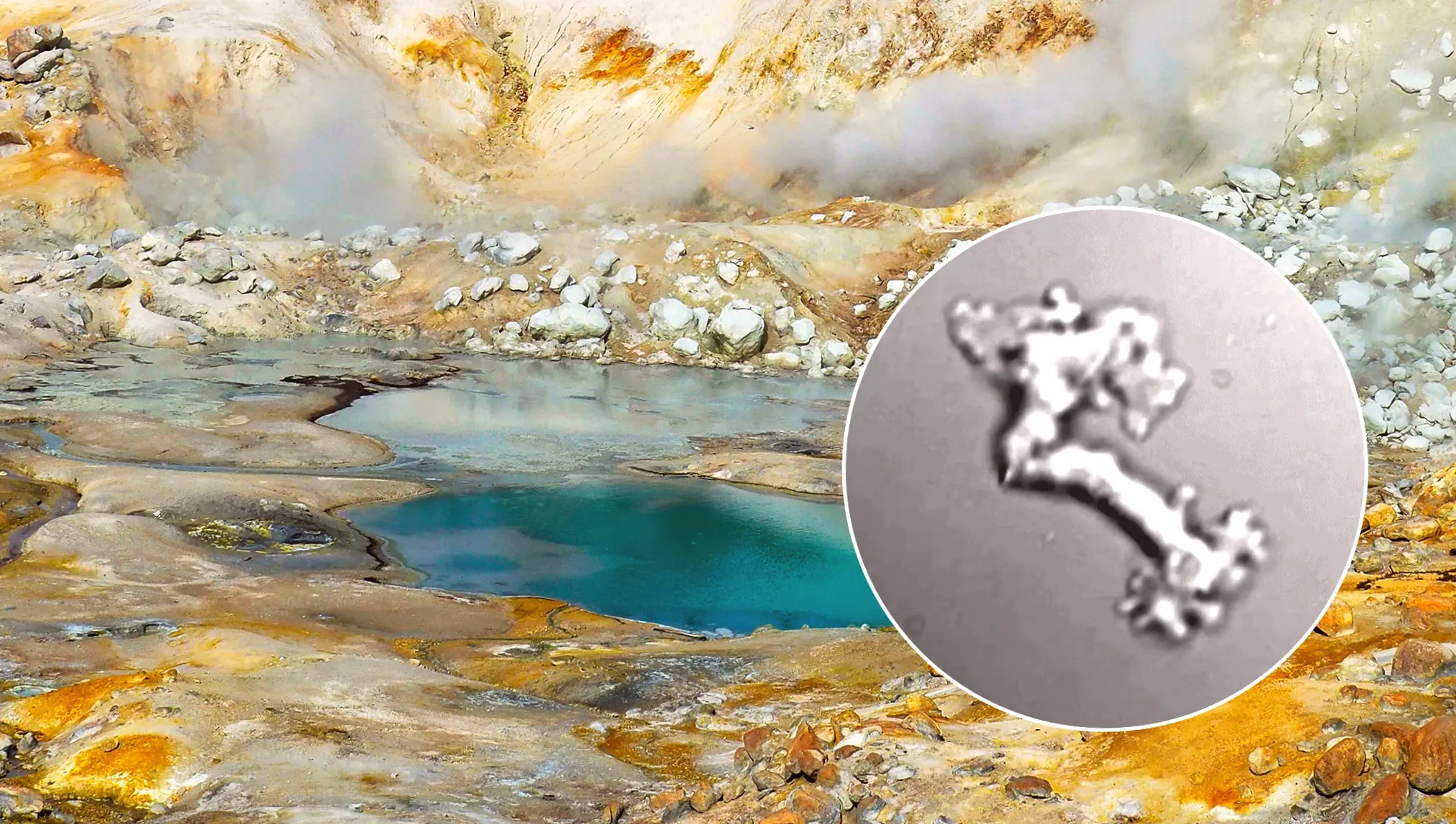
In Californias Cascade Range, parts of Lassen Volcanic National Park look like a scene from another world, with steaming pools and bubbling mud where the heat reaches a staggering 464F. While such conditions are deadly to humans, scientists from the U.S. and Europe have discovered a remarkable microorganism that not only survives but flourishes in this extreme environment: a tiny single-celled fire amoeba.
This gelatinous microorganism, under a microscope, has shattered previous records for heat tolerance among complex life forms. Researchers reported that it can reproduce at 145.4F, a feat previously unseen in eukaryotic organisms, according to findings published last week in a preliminary study.
Named Incendiamoeba cascadensis, or fire amoeba from the Cascades, the discovery challenges the long-held belief that only prokaryotesorganisms like bacteria without a defined nucleuscan endure extreme heat. While prokaryotes can survive between 149 and 221F, and theoretically up to 392F, the fire amoeba demonstrates that complex cells can also thrive under intense thermal conditions.
Unlike prokaryotes, which include archaeans capable of living in volcanic hot springs and compost piles, eukaryotes have cells with a nucleus and organelles. Mammals, including humans, typically cannot survive above 109.4F, and the previous heat record for hardy eukaryotes, such as fungi and red algae, was thought to be 131140F. The fire amoeba now extends that limit significantly.
The organism was discovered in a neutral pH hot spring stream, a seemingly ordinary location in Lassen. Initial microscopic examination revealed no life, but when scientists added nutrients and heated the water to 134.6F, they observed the amoeba moving and dividing. Remarkably, it continued to reproduce at 145.4F and remained active even slightly above that, only entering a protective dormant state at 158F. In this state, known as encystment, the amoeba forms a tough shell to survive harsh conditions, resuming normal activity when cooled.
Genomic analysis revealed that the fire amoeba possesses genes associated with protein stability, genome maintenance, and environmental sensing, shedding light on the mechanisms that allow it to withstand extreme temperatures.
Scientists believe this discovery could pave the way for identifying other high-temperature-tolerant eukaryotes, previously overlooked in favor of thermophilic prokaryotes. Additionally, studying the amoeba may help understand how eukaryotic cells preserve functionality under extreme heat, with potential applications in biotechnology through thermostable proteins.
Beyond Earth, the discovery raises intriguing possibilities for life in extreme environments, such as ancient Martian lakebeds or ice-covered regions, suggesting that even in seemingly inhospitable conditions, life may find a way.
Author: Logan Reeves
Share

Researchers make a surprising find in hot waters of a national park
6 hours ago 2 min read TRAVEL

Extremophile ‘Fire Amoeba’ Expands the Limits of Complex Life
1 days ago 2 min read ENTERTAINMENT
Recently Found 'Heat-Resistant Amoeba' Can Thrive in Extreme Heat
3 days ago 2 min read ENTERTAINMENT

Small Creature Living in Volcano Sets New Heat Record
4 days ago 2 min read SCIENCE

Record-breaking Heat-resistant 'Fire Amoeba'
5 days ago 2 min read SCIENCE