

New research challenges traditional beliefs about brain aging
- Last update: 1 hours ago
- 2 min read
- 305 Views
- WORLD
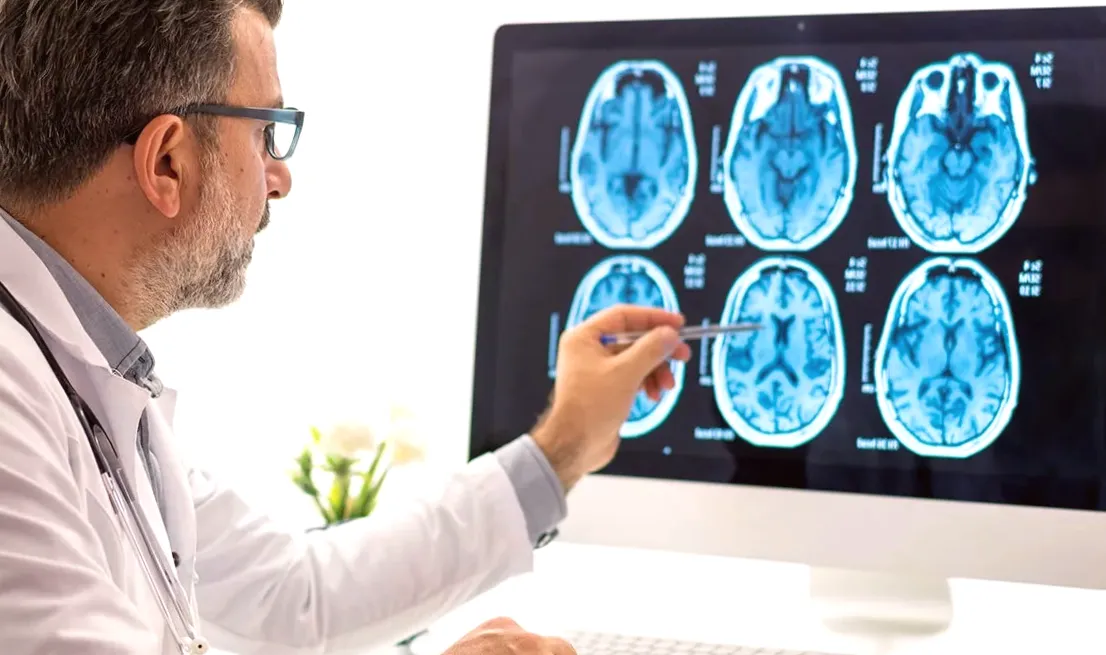
New findings indicate that the brain continues to evolve long after early adulthood. Researchers at the University of Cambridge have outlined five key stages of structural development, noting that throughout life the brain reorganizes its networks to support changing cognitive demands.
The study, published in Nature Communications, analyzed MRI scans from 3,802 individuals from birth to age 90. By tracking the movement of water molecules in brain tissue, scientists identified four major turning points in neural wiring.
Childhood
From birth to around age 9, the brain experiences rapid expansion of both grey and white matter along with consolidation of communication networks. During this stage, synapses are overproduced and then reduced to maintain only the most active connections.
Adolescence
This era continues into the early thirties. White matter growth progresses while neural pathways become more efficient. Around age 32, the brain undergoes its strongest shift in organization, marking the end of adolescent developmental patterns at the structural level.
Adulthood
This is the longest phase and spans more than three decades. Brain architecture stabilizes and intelligence and personality reach a plateau. Although dramatic shifts are not detected during this time, communication pathways become more compartmentalized.
Around age 66, subtle but meaningful alterations appear in neural networks. These are linked to general aging, reduced connectivity and deterioration of white matter.
Late life
Near age 83, researchers observed a sharper decline in network communication along with increased dependence on specific regions. Data for this stage remains limited, though the patterns point to a narrowing of brain activity.
Experts note that understanding distinct stages of development may clarify why certain cognitive conditions emerge at particular ages and how neural wiring becomes vulnerable to disruption. Factors such as language learning, reading, mathematics, musical training, balanced diet, moderate alcohol intake and avoiding isolation can support long term brain function.
Author: Zoe Harrison
Share

Former Pakistani leader Imran Khan's sister confirms he is in good health, dispelling rumors
8 minutes ago 2 min read WORLD

Ex-EU diplomat held in fraud probe
10 minutes ago 2 min read WORLD

Putin declares Russia prepared for conflict with Europe
11 minutes ago 1 min read WORLD

Fatal explosion at nightclub in India claims lives of tourists
11 minutes ago 2 min read WORLD

Men with beer bellies are at higher risk of heart problems
12 minutes ago 2 min read WORLD

Understanding Trump's asylum 'pause' - and what it doesn't
13 minutes ago 3 min read WORLD

Plaid Cymru confirms discussions with Welsh Labour on budget
17 minutes ago 2 min read WORLD

Town Youth Hub Opening Date Revealed
17 minutes ago 2 min read WORLD

Israel receives information from Gaza, according to Netanyahu's office.
19 minutes ago 1 min read WORLD

Protesters assemble at High Court in response to council's choice to raise Palestine flag
20 minutes ago 2 min read WORLD