

Congress Proposes Establishment of New Space Agency: The National Institute For Space Research
- Last update: 1 hours ago
- 2 min read
- 100 Views
- WORLD
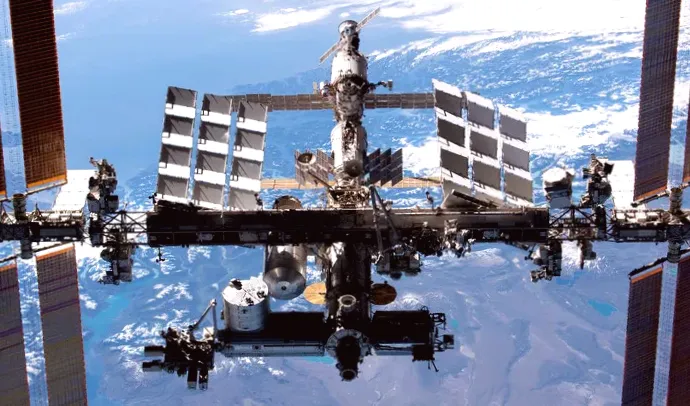
Congress has unveiled a bill aiming to secure the United States leadership in space research by creating a new agency named the National Institute for Space Research (NISP). The initiative is spearheaded by a bipartisan group of five senators, including Sen. John Cornyn (R-TX) and former astronaut Sen. Mark Kelly (D-AZ). Its primary objective is to ensure the U.S. remains at the forefront of future space exploration and scientific endeavors.
The legislation, known as the Space Research and Continuing Exploration Act (Space RACE), outlines several provisions, with the creation of NISP at its core. Unlike NASA, which conducts missions and research directly, NISP is intended to operate as a federally managed but independently run coordinating body. It will focus on organizing and facilitating space science projects, particularly in preparation for the retirement of the International Space Station (ISS) in 2030.
With private companies expected to operate successor stations, NISP would serve as a central hub for researchers seeking opportunities to carry out experiments in orbit. The bill also emphasizes the promotion of public-private partnerships and economic growth in the space sector.
Another key goal of the Space RACE Act is to enhance Americas strategic influence and leadership in the global space economy. Senators highlighted concerns over international competition, noting that China has been actively recruiting scientists for research aboard its Tiangong space station. Without a strong U.S. alternative, American and allied researchers might increasingly rely on foreign stations.
The push for NISP comes amid ongoing debates about federal funding for space programs. Despite proposed budget reductions in past administrations, Congress has maintained funding near 2024 levels. Nonetheless, NASA has faced employee buyouts, layoffs, and research center closures, creating a gap in U.S. space research capabilities. Advocates see the new agency as a critical step to fill this gap and position the U.S. for future space achievements.
Author: Benjamin Carter
Share
Sudanese paramilitary drone strike results in deaths of 50 people, including 33 children in Kordofan, according to doctor group
4 minutes ago 2 min read WORLD

Significant advancements in borough's revitalization efforts
8 minutes ago 2 min read WORLD

'Collective punishment': West Bank suspect's family home demolished
17 minutes ago 3 min read WORLD

Hong Kong leader emphasizes the importance of discovering the truth following fatal apartment fire, urges building reform.
19 minutes ago 2 min read WORLD

Chair with reputed 'healing powers' granted protected status
19 minutes ago 3 min read WORLD

Council temporarily halts dry recycling service
19 minutes ago 1 min read WORLD

Democrats release never-before-seen photos of Jeffrey Epstein's island
21 minutes ago 2 min read WORLD

Cincinnati Children's to Introduce Helicopter Service for Ill Children
21 minutes ago 2 min read WORLD

'Oh, my Goodness': 88-year-old Michigan grocery cashier gets unexpected $1.7 million
23 minutes ago 2 min read WORLD

Charles Shay, the teen medic who saved lives on D-Day, passes away at the age of 101
26 minutes ago 3 min read WORLD