

Physicists Discover the Presence of a Ghost in the World’s Most Famous Particle Accelerator
- Last update: 4 hours ago
- 2 min read
- 322 Views
- TRAVEL
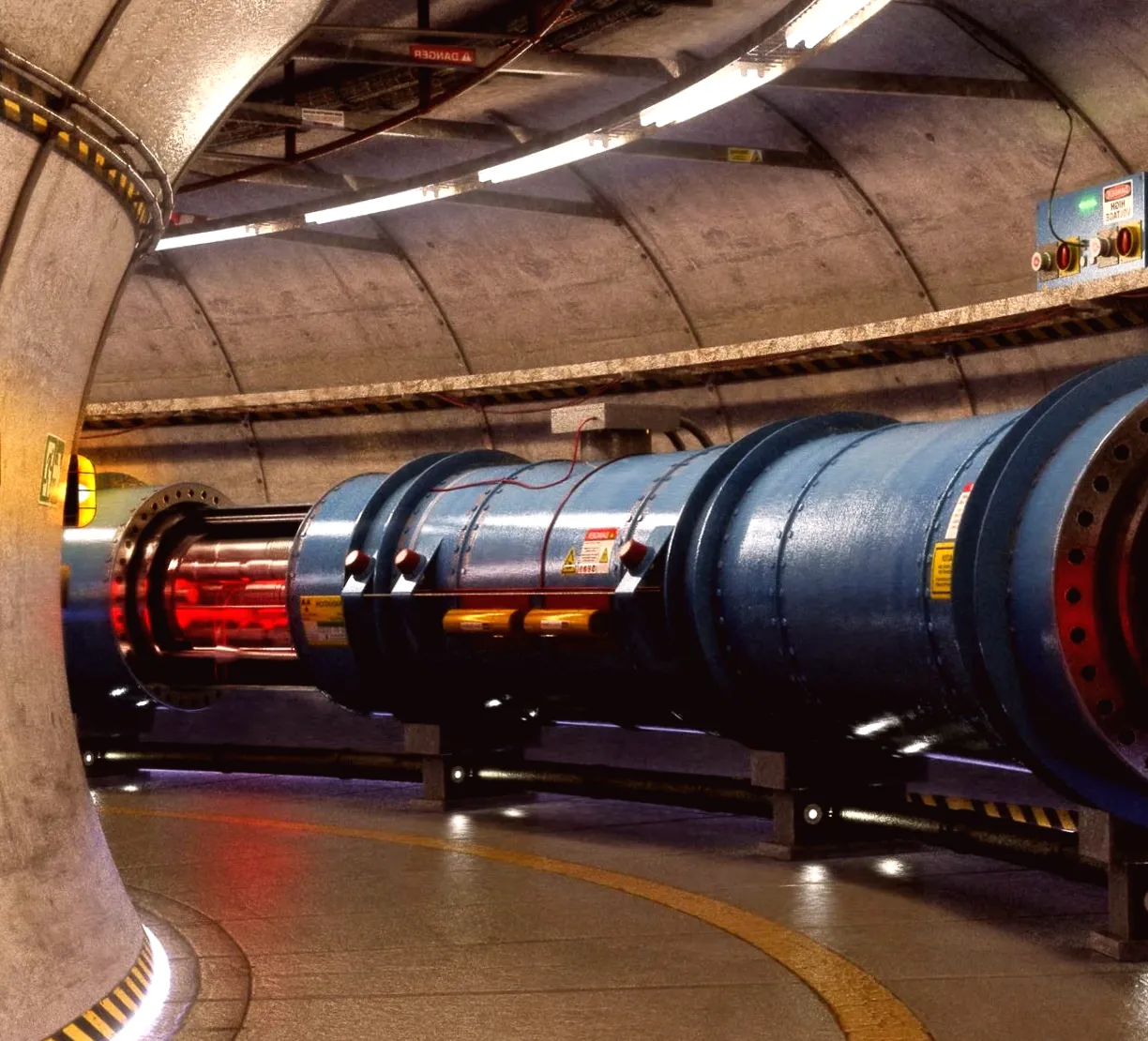
Scientists at CERN in Switzerland, collaborating with Goethe University Frankfurt, have uncovered a subtle resonant effect inside the Super Proton Synchrotron (SPS), a particle accelerator that will celebrate its 50th anniversary in 2026. This phenomenon, described as a ghost, influences particle behavior within the SPS.
The effect manifests as a three-dimensional structure that evolves over time, requiring a four-dimensional mathematical framework for accurate modeling. The researchers drew parallels to everyday examples, such as waves in a cup of coffee spilling or one person amplifying another's bounce on a trampoline, to illustrate how energy can resonate and amplify under certain conditions.
The SPS, a nearly four-mile-wide ring dating from the 1970s, continues to play a critical role at CERN. Upgrades, including a new beam dump installed in 2019, help manage high-energy beams. Detecting and understanding this resonant ghost is essential to maintaining beam stability and preventing energy loss.
Resonances occur when waves interact and concentrate energy at specific points. In particle accelerators, this can lead to beam degradation, a major concern as proton beams reach higher energies. Harmonic interference is also a challenge in other research areas, such as nuclear fusion, where energy losses can hinder efficiency.
In the SPS, particles have two degrees of freedom, allowing them to follow an overall path while also bouncing within the beams finite width. Imperfections in magnets and minor fluctuations in magnetic fields can introduce resonances. To study this, researchers measured the SPS ring and created a mathematical model using a Poincar section, mapping intersections of the system over time to form a dynamic surface analogous to a four-dimensional MRI.
By analyzing these fixed harmonic lines, scientists can predict particle concentration and develop strategies to reduce their disruptive effects. The findings also provide guidance for designing future accelerators to avoid similar resonant ghosts, improving beam quality and reducing operational costs.
Author: Aiden Foster
Share

Coventry Airport set to shut down in 2026
47 minutes ago 1 min read TRAVEL

Free event offering advice on healthier living
1 hours ago 2 min read TRAVEL

Swan halts Japanese high-speed train
2 hours ago 1 min read TRAVEL
The Five Men Who Surveyed Mount Everest
3 hours ago 4 min read TRAVEL

Wolves at Yellowstone National Park Enjoy a Cozy Nap in the Snow
4 hours ago 2 min read TRAVEL
Specialist hired to safeguard famous US tourist spot: 'He clearly had a plan'
4 hours ago 2 min read TRAVEL
Physicists Discover the Presence of a Ghost in the World’s Most Famous Particle Accelerator
4 hours ago 2 min read TRAVEL

Unusual Name and History of Small South Carolina Community Near Myrtle Beach
5 hours ago 3 min read TRAVEL

Researchers make a surprising find in hot waters of a national park
5 hours ago 2 min read TRAVEL

169 Passengers Evacuate Plane in Panic Due to Airport Fire Filling Cabin with Smoke
5 hours ago 2 min read TRAVEL