

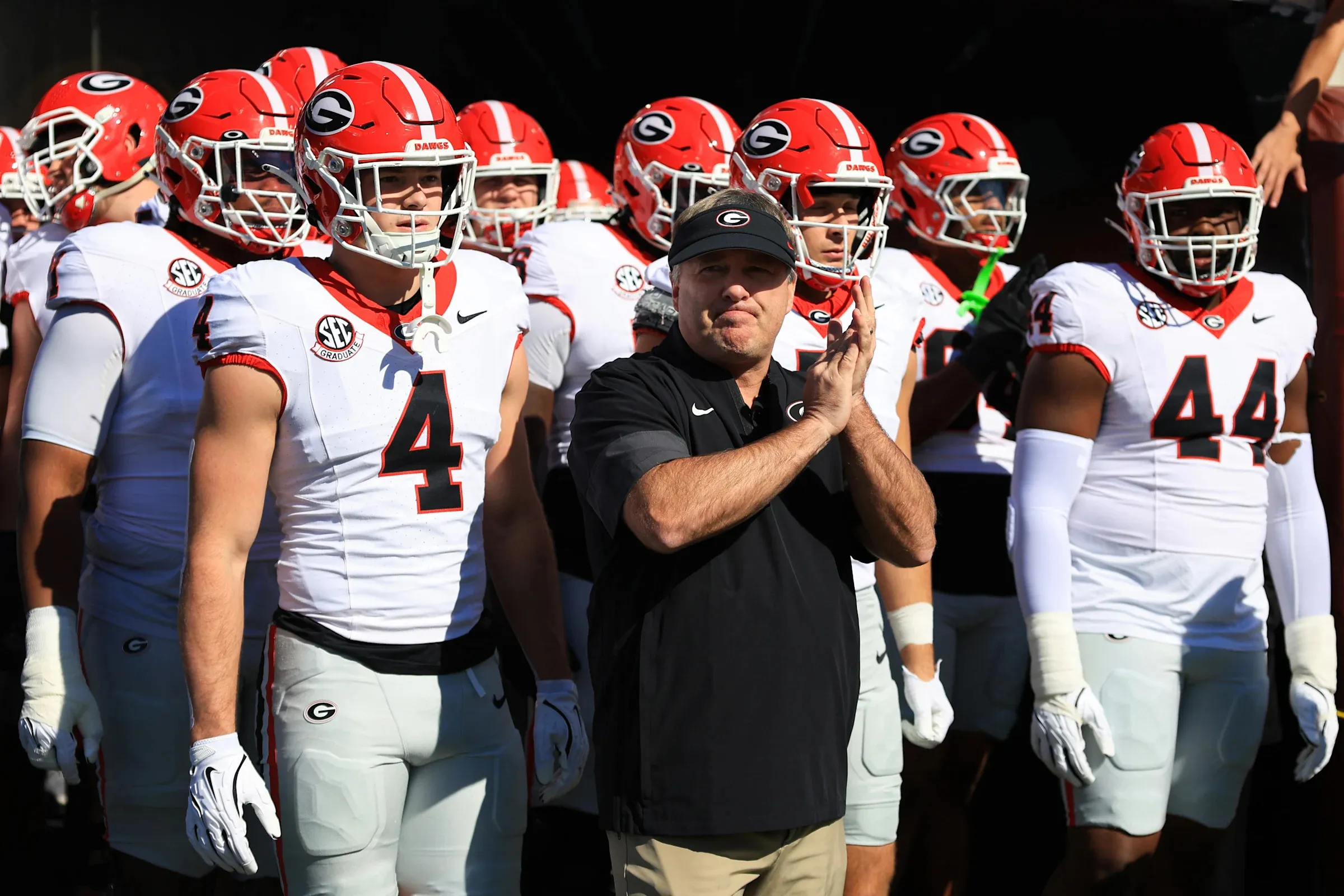
Walking through downtown Atlanta this weekend, you would never guess that the SEC championship game much like other conference title showdowns has lost much of its former importance. Fans in Georgia red and Alabama crimson will pack hotels, crowd bars, and fill Mercedes-Benz Stadium with one of the liveliest atmospheres of the year. The winner will celebrate as if claiming the sports top prize.
Georgia head coach Kirby Smart remains one of the few passionate defenders of what this game once represented. He was a teenager in 1992 when the SEC first staged its championship matchup, altering the landscape of college football by pairing Alabama and Florida at Legion Field in Birmingham. As Smart moved through his playing days at Georgia and coaching stints at LSU and Alabama, the SEC title game grew into a national focal point, often serving as a de facto championship.
Yet with the College Football Playoff expanding to twelve teams and likely even more down the road voices like Smarts are becoming increasingly rare. While the SEC championship still brings in revenue and draws fans, the central issue is clear: Alabama and Georgia already played earlier this season, with the Crimson Tide winning 24-21 in Athens. Short of something disastrous for ninth-ranked Alabama, both teams are expected to reach the CFP, with the possibility of meeting a third time.
What was once a critical, must-win clash in the BCS and early CFP eras has become something closer to an exhibition in terms of national stakes. In many ways, both programs take on more risk than reward. Last season, Georgia quarterback Carson Beck suffered a season-ending injury in a win over Texas. And if Alabama were to lose badly on Saturday, the selection committee might hesitate to include a three-loss team coming off a blowout.
Smart insists the SEC title should still matter, calling it a mark of toughness and survival in a league known for its demanding schedule. But across college football, that sentiment is losing traction. Even a rare No. 1 vs No. 2 showdown in Indianapolis this weekend is being met with little enthusiasm, widely viewed as a precursor to Ohio State and Indianas larger postseason ambitions.
For better or worse, the sport has shifted toward a three-month race to qualify for the playoff. The benefit is obvious: more weekly games carry real postseason implications. The drawback is just as clear: conference championships now feel like filler rather than climactic moments.
Many administrators foresee the CFP expanding to sixteen teams, a move that would further weaken the case for keeping conference title games. Without them, the regular season could roll directly into the first playoff round the weekend after Thanksgiving, creating a cleaner calendar that avoids deeper competition with the NFL in January. This structure might also lessen the impact of coaching changes and reduce the controversies that the selection committee is routinely forced to navigate.
The current system introduces inequities that are increasingly hard to justify. Some playoff contenders must play a thirteenth game against a high-level opponent, while others sit idle. Judging twelve-game teams against thirteen-game teams only adds to the complexity, especially given the uneven scheduling across conferences.
Evidence of waning interest is already visible. Last year in Atlanta, Texas vs Georgia drew unusually large pockets of empty seats as fans saved their money for CFP travel. And as conferences grow larger and more unwieldy, winning a league championship simply does not reflect the same accomplishment it once did. In the ACC, for example, top-ranked Miami will miss the title game entirely while 7-5 Duke earned its spot through a convoluted tiebreaker and still would not be guaranteed a playoff berth even with a win.
Conference title games were built for an earlier era, when smaller leagues and limited postseason access made them essential. Today, they function mostly as extra games with diminishing relevance, supported primarily by tradition and financial incentive. Even the SEC, which stages the most celebrated championship of them all, cannot hold back long-term trends. Interest is steadily declining, and the direction of that trend is unlikely to change.