

Urban environment is influencing raccoons' behavior, potentially leading to domestication
- Last update: 5 days ago
- 3 min read
- 39 Views
- SCIENCE
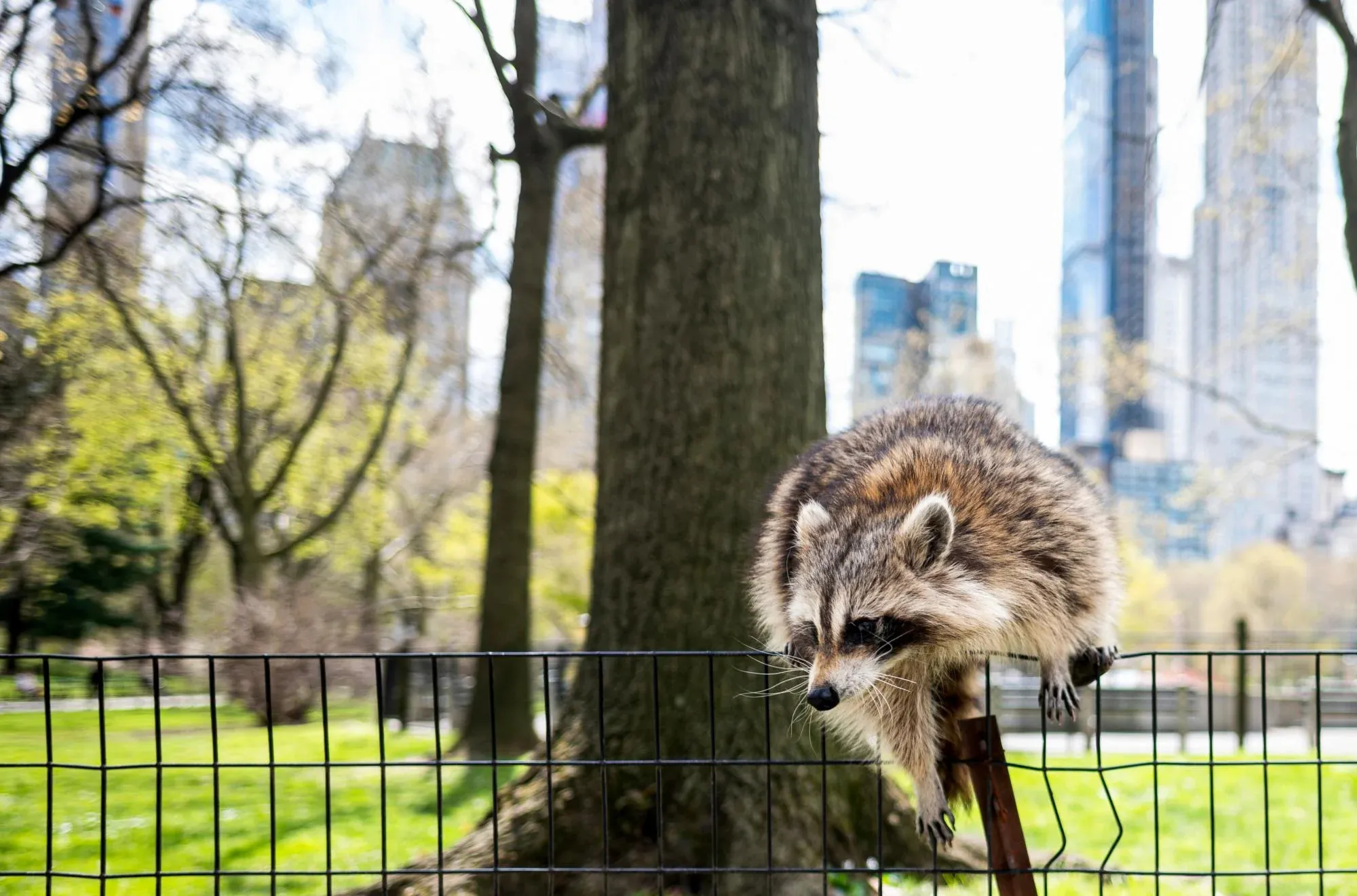
Raccoons living in American cities are beginning to display physical traits that hint at early domestication, according to recent research. Scientists from the University of Arkansas at Little Rock discovered that urban raccoons have shorter snouts compared to their rural counterparts. The study was published in Frontiers in Zoology.
Shorter snouts are one of several traits seen in domesticated animals, which often also include smaller teeth, curlier tails, smaller brains, and softer ears. I wanted to see if city living could trigger domestication in species that arent traditionally domesticated, explained Dr. Raffaela Lesch, assistant professor of biology at the University of Arkansas at Little Rock. Could raccoons start down the path to domestication just by living close to humans?
To investigate, Lesch and her team examined nearly 20,000 raccoon photos uploaded across the U.S. on the community science platform iNaturalist. They found that raccoons in densely populated urban areas had snouts reduced by an average of 3.56% compared to rural raccoons.
The study suggests that domestication begins when a subgroup of animals adapts to a new human-influenced environment. The presence of abundant food waste and a lack of large predators create a favorable niche. Lesch noted, Trash is really the kickstarter. Wherever humans go, theres food waste. Animals can thrive as long as they tolerate humans and arent aggressive.
This explains why urban raccoons are often nicknamed trash pandas. Lesch added that for these animals to thrive in cities, they need to be bold enough to access resources but not aggressive enough to be removed from the population. This dynamic creates selection pressure favoring calmer, more approachable individuals.
Research indicates that raccoons with reduced flight-or-fight responses and lower aggression are more likely to succeed in urban areas. These pressures may affect neural crest cells, which shape the skull and facial features, producing both physical and behavioral changes. Lesch said this supports the Neural Crest Domestication Syndrome hypothesis, which links selection for tameness to early embryonic development, explaining traits like shorter snouts.
The study also drew parallels with red foxes in the UK, where urban foxes in London developed shorter, wider muzzles than rural foxes. This adaptation helps animals exploit concentrated food resources in cities.
Experts have praised the study. Stanley D. Gehrt, a wildlife ecology professor at Ohio State University, described it as very interesting and consistent with research showing urbanization influences behavior, body traits, and population dynamics. Further studies will clarify whether this could lead to true domestication, he noted.
Arina Hinzen, founder of the Urban Wildlife Alliance, called the research a clever use of citizen science and emphasized that city life is altering both raccoon behavior and their physical traits. She added that urban raccoons in New York City often display high tolerance to humans, feed in trash, navigate buildings and streets, and react calmly to people and dogs, unlike truly wild raccoons.
Author: Sophia Brooks
Share

Elon Musk predicts AI will render most skills irrelevant, but assures his children can still pursue higher education if they choose to
3 days ago 2 min read SCIENCE

What is the current status of SOCOM's AI targeting tests?
3 days ago 3 min read SCIENCE
Scientists uncover unsettling findings about wildfire smoke: 'Unnoticed chemical reactions'
3 days ago 2 min read SCIENCE
Tesla observers verify sightings of long-awaited new model on streets: 'It's an attractive car'
3 days ago 2 min read SCIENCE

Report suggests that the ship fire was probably caused by a battery
3 days ago 2 min read SCIENCE
Researchers discover remarkable effects of structures constructed by wild animals: 'Balancing costs and advantages'
3 days ago 3 min read SCIENCE

Curiosity Uncovered a Big Surprise Inside a Rock on Mars
3 days ago 3 min read SCIENCE

NASA Makes Significant Progress Towards Artemis II's Moon Mission
3 days ago 2 min read SCIENCE
NASA warns scientists about rapid acceleration of ocean changes: 'Speeding up'
3 days ago 2 min read SCIENCE
Surprising find in wetlands a decade after reintroducing extinct beavers: 'Has the potential to change local ecosystems'
3 days ago 2 min read SCIENCE