
Top 10: The Top Vertical Take-off Military Aircraft
- HOME
- ENTERTAINMENT
- Top 10: The Top Vertical Take-off Military Aircraft
- Last update: 1 hours ago
- 4 min read
- 828 Views
- ENTERTAINMENT
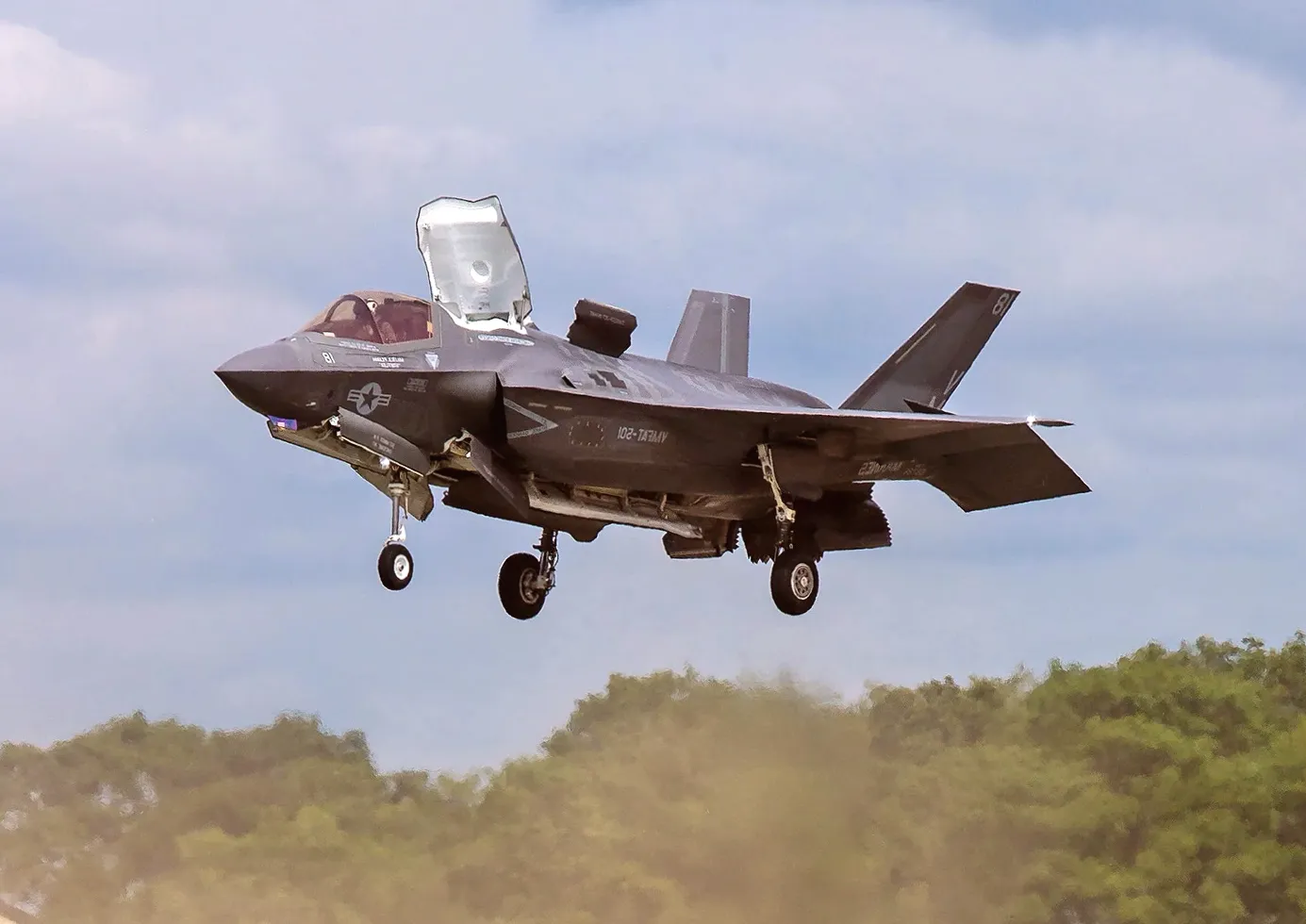
Traditional runways pose vulnerabilities for military jets, restricting their mobility and leaving them exposed. Operating from aircraft carriers adds complexity due to the limited deck space and constant motion. These challenges have driven engineers to develop vertical take-off and landing (VTOL) aircraft, blending helicopter-like capabilities with jet performance. Achieving this has proven extremely difficult, resulting in many ambitious but ultimately unrealized projects that still produced striking aircraft designs. Remarkably, only three of the aircraft on this list reached active service.
10: VFW VAK 191B
The German VFW VAK 191B was part of NATO's competition for a supersonic VTOL strike aircraft. Powered by a Rolls-Royce/MAN Turbo RB.193 engine with two additional lift jets, it featured an internal weapons bay. After NATO canceled the requirement, the VAK-191 continued in research roles under a USWest German initiative but was terminated in 1972. Its simple steerable thrust system and slender design were promising, though its low thrust-to-weight ratio and small wings limited maneuverability and operational potential.
9: Ryan X-13 Vertijet
Nicknamed the Pentagon Easychair, the X-13 was a tail-sitter VTOL aircraft powered by a Rolls-Royce Avon turbojet. Despite successfully landing at the Pentagon during a demonstration, the military concluded the capability was unnecessary at the time. The X-13 highlighted both the possibilities and limitations of tail-sitter designs.
8: Lockheed XV-4 Hummingbird
Designed for the US Army as a reconnaissance platform, the XV-4s vertical lift relied on vectored thrust through multiple nozzles. Its thrust proved insufficient, prompting the addition of four lift jets for the XV-4B. With a modest top speed and inadequate thrust-to-weight ratio, the aircraft was prone to accidents, including fatal crashes, and offered limited operational utility.
7: Yakovlev Yak-38 Forger
The Soviet Yak-38, serving from 1976 to 1991, was an interim VTOL jet comparable to the British Sea Harrier. Equipped with two lift engines and a vectoring cruise engine, it incorporated an automatic ejection system to mitigate lift-engine failures. Though limited in range and payload, it laid the groundwork for the more advanced Yak-41.
6: Ryan XV-5A Vertifan
The Ryan XV-5A explored lift-fan technology for close-support missions. Its fan-in-wing design generated significant thrust, yet proved challenging to control, particularly during transitions. Despite innovative engineering, the aircraft suffered poor low-speed handling, slow acceleration, and several fatal accidents, highlighting the difficulty of translating VTOL concepts into practical operations.
5: EWR VJ 101
Developed collaboratively by Heinkel, Messerschmitt, and Blkow, the six-engine VJ 101 achieved speeds over Mach 1.14. Its complex propulsion system allowed pitch, roll, and yaw control via differential thrust. Engine afterburners, however, caused ground erosion and ingestion problems. The aircraft demonstrated technical promise but faced operational challenges, ultimately being superseded by more conventional designs.
4: Dornier Do 31
The Dornier Do 31 was a large VTOL transport designed to support forward air operations. While technically successful, it was rendered unnecessary as other aircraft like the Fiat G.222 offered simpler short take-off and landing solutions. The Do 31 represents an ambitious attempt to combine VTOL capability with logistical support, but at high cost and complexity.
3: Yakovlev Yak-141 Series
The Yak-141 featured a swiveling thrust-vector nozzle and reached speeds of Mach 1.4, surpassing the Harrier. Afterburning for vertical flight caused noise, ground erosion, and intake risks. Development ceased in 1991, but the Yak-141 demonstrated advanced VTOL engineering and served as a precursor to the planned Yak-43 and a stealthy Yak-201 variant.
2: Lockheed Martin F-35B Lightning II
The F-35B is the first supersonic VTOL fighter to enter service. Its Integrated Lift Fan Propulsion System combines a shaft-driven lift fan with a swiveling duct nozzle and wing-mounted roll posts. Adopted by several nations, the F-35B offers advanced situational awareness, radar stealth, and operational versatility, though its STOVL system reduces internal fuel capacity, limiting range compared to other F-35 variants.
1: Harrier
The Harrier remains the quintessential jump jet, pioneering operational short take-off/vertical landing (STOVL) fighter design. Its simple propulsion conceptsteering engine thrust through four movable nozzleseliminated the need for lift engines or specialized landing pads. First entering service in 1969, the Harrier served with the RAF, US forces, and the Indian Navy, eventually evolving into the more advanced Harrier II used by the UK, Italy, and Spain.
Author: Chloe Ramirez
Share
The Most Frightening Military Vehicles Ever Constructed
1 days ago 4 min read WORLD
Top 10: Most significant airplanes during the Vietnam War
3 days ago 4 min read TRAVEL
Top 10: Key aircraft during the Vietnam War
3 days ago 5 min read TRAVEL
Top 10: The Vietnam War's Most Significant Aircraft
3 days ago 4 min read TRAVEL
Top 10: The most significant planes during the Vietnam War
3 days ago 5 min read TRAVEL
Top 10: Key aircraft during the Vietnam War
4 days ago 4 min read TRAVEL
Top 10: Key airplanes during the Vietnam War
4 days ago 4 min read TRAVEL
Top 10: Key aircraft during the Vietnam War
4 days ago 4 min read TRAVEL
Top 10: Insane World War 2 Altered Warplanes
6 days ago 4 min read WORLD
5 Fighter Jet Engines That Are Among the Most Powerful Ever Created
6 days ago 3 min read SCIENCE