
Top 10: The Top Vertical Take-off Military Aircraft
- HOME
- ENTERTAINMENT
- Top 10: The Top Vertical Take-off Military Aircraft
- Last update: 44 minutes ago
- 3 min read
- 563 Views
- ENTERTAINMENT
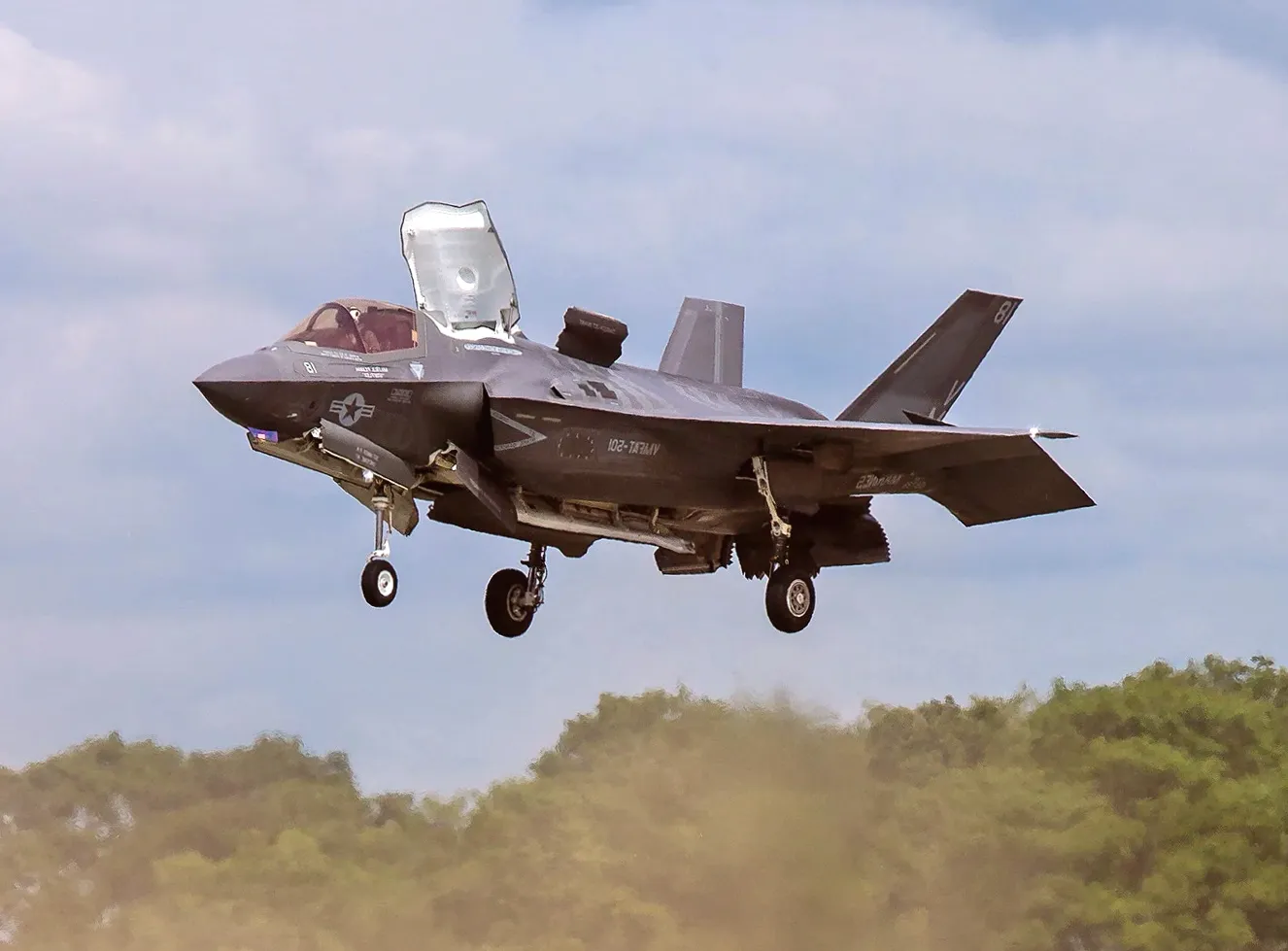
Traditional runways pose a strategic limitation for combat aircraft, tying them to concrete strips and making them vulnerable. Operating jets from aircraft carriers is equally challenging due to restricted deck space and constant motion. This has driven engineers to pursue vertical take-off and landing (VTOL) designs, aiming for the versatility of helicopters. However, developing such aircraft is extremely complex. Many ambitious VTOL projects never reached operational status, yet they introduced some of the most intriguing designs in aviation history. Notably, only three of the ten aircraft on this list entered active service.
10: VFW VAK 191B
The VFW VAK 191B was Germanys contender in NATOs supersonic VTOL strike competition. Powered by a Rolls-Royce/MAN Turbo RB.193 engine alongside two lift jets, it featured an internal weapons bay. Despite technically winning the NATO contest, the requirement was canceled in favor of the Hawker P.1154. The VAK-191 continued as a research aircraft until its cancellation in 1972. Its simple propulsion system was its highlight, but a low thrust-to-weight ratio and small wings limited maneuverability and operational potential.
9: Ryan X-13 Vertijet
Nicknamed "The Pentagon Easychair," the X-13 Vertijet explored the tail-sitter concept. It utilized a Rolls-Royce Avon turbojet engine and even demonstrated its capabilities by landing at the Pentagon. Despite successful flights, the military saw no immediate need for this VTOL approach.
8: Lockheed XV-4 Hummingbird
Designed for the US Army as a reconnaissance and target-spotting platform, the XV-4 relied on vectored thrust through multiple nozzles. Its ejector-augmentor system was a pioneering attempt at enhancing lift but delivered insufficient thrust. Both prototypes crashed during testing, and the aircraft never reached operational use.
7: Yakovlev Yak-38 Forger
The Yak-38 served as the Soviet counterpart to the British Sea Harrier, entering service with the Soviet Navy from 1976 to 1991. Using two lift engines and a thrust-vectoring cruise engine, it was an early VTOL combat jet. While it suffered from limited range and payload, it paved the way for the more advanced Yak-41.
6: Ryan XV-5A Vertifan
The XV-5A explored lift-fan technology for vertical flight. Its fan-in-wing system could move large volumes of air efficiently, but the complex mechanism made the aircraft hard to control. Multiple test crashes marred its development, limiting its operational viability compared to simpler helicopters like the UH-1 Huey.
5: EWR VJ 101
Developed by Heinkel, Messerschmitt, and Blkow, the six-engine VJ 101 used a complex thrust modulation system for VTOL flight, achieving Mach 1.14. Despite successful tests, the aircraft faced engine reliability issues and evolving military requirements, ultimately preventing adoption.
4: Dornier Do 31
The Do 31 was a large VTOL transport designed to support forward-operating fast jets. Although it achieved flight, simpler aircraft like the Fiat G.222 proved more practical for tactical logistics. The Do 31 showcased ambitious engineering but never entered service.
3: Yakovlev Yak-141 Series
The Yak-141 featured a swiveling rear thrust nozzle and could reach Mach 1.4. Economic difficulties halted its development in 1991, yet it represented a major step forward in supersonic VTOL design. Plans for its successor, the Yak-43, promised even higher performance, comparable to the MiG-29.
2: Lockheed Martin F-35B Lightning II
The F-35B is a supersonic STOVL stealth fighter. Its Rolls-Royce LiftFan system and swiveling nozzle enable vertical flight. Adopted by multiple nations, the F-35B combines VTOL capability with advanced avionics, radar stealth, and situational awareness, though its STOVL configuration reduces internal fuel and range compared to conventional variants.
1: Harrier
The Harrier was the first operational jump jet and the pioneer of the VTOL strike fighter concept. Its straightforward propulsion system with four vectored nozzles allowed vertical take-off without additional lift engines. Initially entering service in 1969, the Harrier remained in use until 2016, later succeeded by the improved Harrier II in several countries.
Author: Aiden Foster
Share
The Most Frightening Military Vehicles Ever Constructed
1 days ago 4 min read WORLD
Top 10: Most significant airplanes during the Vietnam War
3 days ago 4 min read TRAVEL
Top 10: Key aircraft during the Vietnam War
3 days ago 5 min read TRAVEL
Top 10: The Vietnam War's Most Significant Aircraft
3 days ago 4 min read TRAVEL
Top 10: The most significant planes during the Vietnam War
3 days ago 5 min read TRAVEL
Top 10: Key aircraft during the Vietnam War
3 days ago 4 min read TRAVEL
Top 10: Key airplanes during the Vietnam War
3 days ago 4 min read TRAVEL
Top 10: Key aircraft during the Vietnam War
4 days ago 4 min read TRAVEL
Top 10: Insane World War 2 Altered Warplanes
6 days ago 4 min read WORLD
5 Fighter Jet Engines That Are Among the Most Powerful Ever Created
6 days ago 3 min read SCIENCE