
Top 10: The Top Vertical Take-off Military Aircraft
- HOME
- ENTERTAINMENT
- Top 10: The Top Vertical Take-off Military Aircraft
- Last update: 31 minutes ago
- 4 min read
- 666 Views
- ENTERTAINMENT
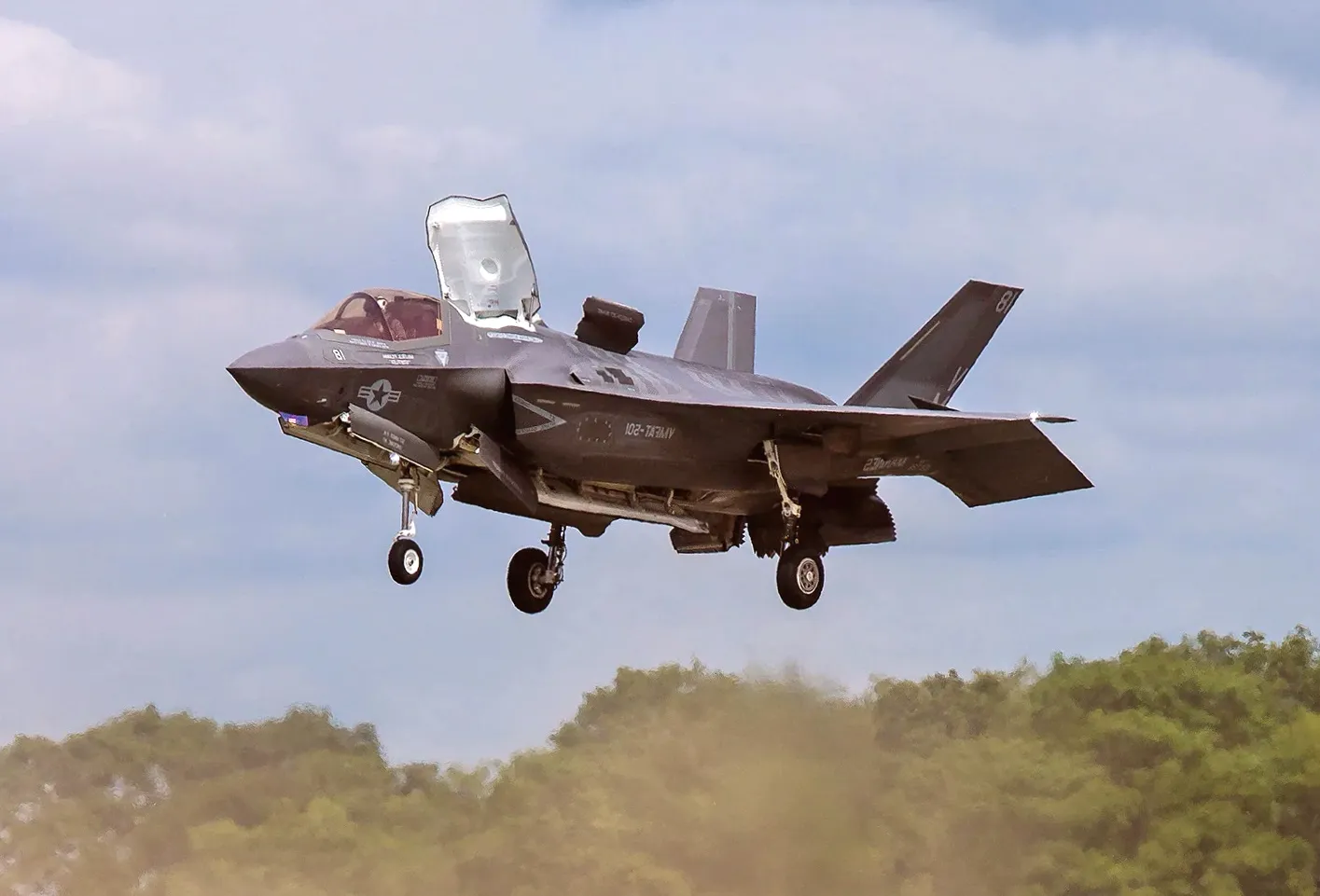
Traditional runways pose a tactical disadvantage for military aircraft, limiting mobility and exposing jets to potential threats. Operating from aircraft carriers adds another layer of complexity, as pilots must manage limited deck space on a constantly moving platform. This has driven engineers to explore vertical take-off and landing (VTOL) designs, which aim to combine the agility of helicopters with jet performance. Achieving this, however, is extremely challenging, and only a few aircraft have successfully entered service.
10: VFW VAK 191B
The VFW VAK 191B was West Germanys entry in NATOs search for a supersonic VTOL strike aircraft. Powered by a Rolls-Royce/MAN Turbo RB.193 engine and two lift jets, it featured an internal weapons bay. After NATO scrapped the requirement, the project continued as a research effort but was ultimately canceled in 1972.
Its main advantage was the simple propulsion design, combining vectored thrust with lift engines, giving it a sleeker profile than the Harrier. Drawbacks included low thrust-to-weight ratio, a small wing, poor maneuverability, and challenging wing-borne landings. Although it flew successfully, further development would have been required for operational use.
9: Ryan X-13 Vertijet
The Ryan X-13, nicknamed The Pentagon Easychair, experimented with the tail-sitter concept. Equipped with a Rolls-Royce Avon turbojet, it demonstrated vertical take-off by resting on its tail. Despite a notable flight to the Pentagon, the aircraft was never adopted, as the military saw limited need for its capabilities.
8: Lockheed XV-4 Hummingbird
Designed for the US Army as a target-spotting VTOL, the XV-4 Hummingbird used vectored thrust through multiple nozzles. Its ejector-augmentor system aimed to boost lift but failed to provide sufficient thrust. The prototypes were prone to crashes, and the design offered little practical payload or operational use. The XV-4B attempted improvements with additional lift jets, but the concept remained largely unsuccessful.
7: Yakovlev Yak-38 Forger
The Soviet Yak-38 served as an interim VTOL strike aircraft. Entering service from 1976 to 1991, it saw combat in the SovietAfghan War. Using two lift engines and a vectored-thrust cruise engine, the Yak-38 featured an automatic ejection seat for safety during lift-engine failures. Despite limitations in range and payload, it was one of only three VTOL jets to reach operational status.
6: Ryan XV-5A Vertifan
The Ryan XV-5A explored lift-fan technology for vertical flight. Its innovative fan-in-wing system generated significant lift but proved complex to control, particularly during transitions. Low-speed handling and acceleration were problematic, and multiple crashes during testing highlighted its risks. While the concept influenced modern designs like the F-35B, the aircraft itself was operationally impractical.
5: EWR VJ 101
Developed collaboratively by Heinkel, Messerschmitt, and Blkow, the six-engine VJ 101 employed tip-mounted and nose-mounted lift engines for VTOL control. Despite reaching Mach 1.14 and demonstrating an advanced thrust-control system, issues with afterburners causing ground erosion and ingestion problems limited its potential. The project remained experimental and never entered service.
4: Dornier Do 31
The Do 31 was Germanys large VTOL transport, intended to support forward-operating bases. While technically impressive, it was unnecessary operationally, as simpler short-takeoff aircraft like the Fiat G.222 could fulfill the same role more efficiently. The Do 31 highlighted the gap between ambitious engineering and practical military needs.
3: Yakovlev Yak-141 Series
The Yak-141 featured a swiveling rear nozzle for thrust vectoring and reached speeds of Mach 1.4. It required afterburners for vertical take-off, generating extreme noise and risks of hot air ingestion. The program ended in 1991 due to economic constraints, but it represented a significant step toward advanced VTOL fighters, serving as a precursor to potential stealth variants like the Yak-201.
2: Lockheed Martin F-35B Lightning II
The F-35B is the STOVL variant of the F-35 family and the first supersonic VTOL jet to enter service. Its Rolls-Royce Integrated Lift Fan Propulsion System combines a shaft-driven lift fan with a swiveling nozzle, enabling vertical take-off and landing. Adopted by the US Marine Corps, UK, Italy, and others, the F-35B offers advanced stealth, sensors, and pilot interface technology, though with a reduced internal fuel capacity compared to conventional F-35 variants.
1: Harrier
The Harrier was the pioneering operational VTOL strike fighter, earning the nickname jump jet. Its success relied on a simple propulsion system with four vectoring nozzles, avoiding the need for additional lift engines or specialized pads. Entering RAF service in 1969, the Harrier proved versatile and low-risk, later giving way to the improved Harrier II in the 1980s, which continues to serve in multiple nations today.
Author: Logan Reeves
Share
The Most Frightening Military Vehicles Ever Constructed
1 days ago 4 min read WORLD
Top 10: Most significant airplanes during the Vietnam War
3 days ago 4 min read TRAVEL
Top 10: Key aircraft during the Vietnam War
3 days ago 5 min read TRAVEL
Top 10: The Vietnam War's Most Significant Aircraft
3 days ago 4 min read TRAVEL
Top 10: The most significant planes during the Vietnam War
3 days ago 5 min read TRAVEL
Top 10: Key aircraft during the Vietnam War
3 days ago 4 min read TRAVEL
Top 10: Key airplanes during the Vietnam War
3 days ago 4 min read TRAVEL
Top 10: Key aircraft during the Vietnam War
3 days ago 4 min read TRAVEL
Top 10: Insane World War 2 Altered Warplanes
6 days ago 4 min read WORLD
5 Fighter Jet Engines That Are Among the Most Powerful Ever Created
6 days ago 3 min read SCIENCE