

NASA's discovery on asteroid Bennu brings new perspective to long-standing scientific inquiry
- HOME
- ENTERTAINMENT
- NASA's discovery on asteroid Bennu brings new perspective to long-standing scientific inquiry
- Last update: 6 hours ago
- 3 min read
- 682 Views
- ENTERTAINMENT
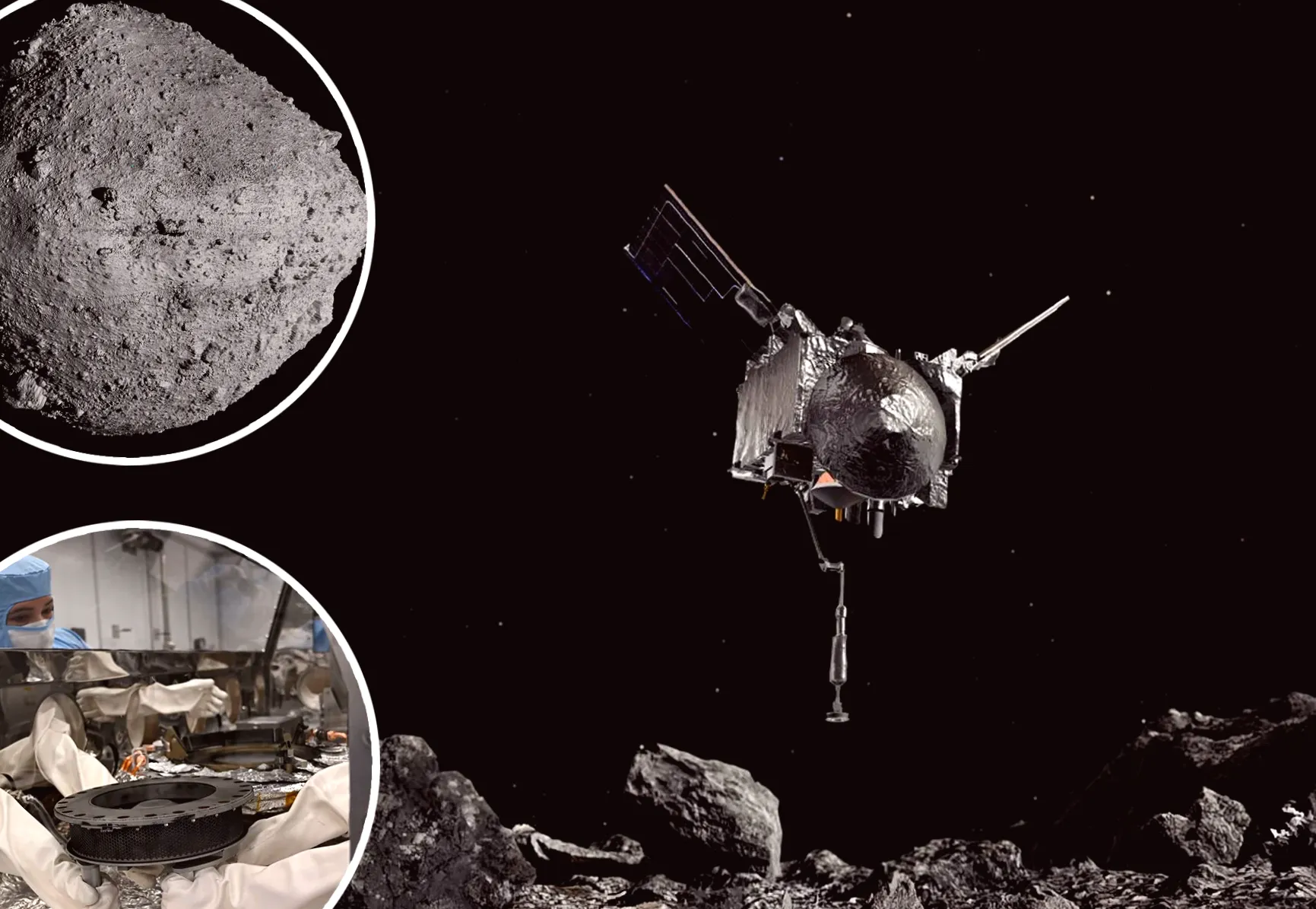
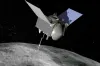
NASA has taken a major step toward unraveling one of the universes oldest mysteries: the beginnings of life on Earth. The space agency has discovered crucial sugars on asteroid Bennu, a 500-meter-wide space rock orbiting roughly 200 million miles from our planet. The asteroid appears to contain a combination of sugars and an unusual space gum, predating Earths earliest life forms.
Researchers identified ribose, a five-carbon sugar essential for RNA, and glucose, a six-carbon energy source vital to life. While ribose had been detected in meteorites before, this marks the first confirmation of it in a sample directly retrieved from an asteroid. These sugars are not evidence of alien life, but they are fundamental ingredients for life as we know it.
Yoshihiro Furukawa of Tohoku University, who led the study, explained that Bennus samples already contained all five nucleobases used in DNA and RNA, along with phosphates. With ribose now added to the list, the asteroid has all the components necessary to form RNA molecules, which may have been crucial in early Earth biology.
RNA is thought to have played a pivotal role in primitive life, acting both as a carrier of genetic information and as a catalyst for essential reactions. Bennus sugary content could provide insight into how life emerged from simpler chemical systems.
In addition to sugars, scientists discovered a previously unseen space gum in Bennus material. This nitrogen- and oxygen-rich polymer likely formed when Bennus parent body experienced heat in the early solar system, allowing complex molecular chains to develop. The substance could represent one of the earliest chemical transformations in the solar system.
Scott Sandford of NASAs Ames Research Center noted that this sticky material may be the asteroids oldest chemical alteration, offering a rare glimpse into the solar systems formative years. Bennus samples also contain six times more supernova dust than other known asteroids, indicating that its parent body formed in a region rich with the remnants of exploded stars.
Formed around 4.6 billion years ago, Bennu approaches Earth every six years, passing closer than the Moon. NASAs OSIRIS-REx mission collected samples during a 2020 flyby, returning them to Earth in September 2023 for laboratory analysis. These findings support the RNA world hypothesis, suggesting RNA preceded DNA in early life, and demonstrate that glucose and other essential molecules were present in the early solar system.
While Bennu offers crucial scientific insights, it also poses a future risk: researchers estimate a one-in-2,700 chance that the asteroid could impact Earth in 2182.
Author: Logan Reeves
Share
NASA reveals discovery of "Space gum" in samples from asteroid Bennu
5 hours ago 3 min read WORLD

Is there sugar in space? Unusual find on asteroid sheds light on the origin of life
20 hours ago 2 min read ENTERTAINMENT
Discovering the Surprising Finds of 'Space Gum' from New Analysis of Bennu Asteroid
1 days ago 3 min read WORLD

Mark Kelly Raises Questions About Life Beyond Earth with Exciting Scientific Find
1 days ago 2 min read WORLD
NASA says sugars crucial for life found in sample from Bennu, dubbed 'Space gum'
1 days ago 2 min read WORLD
Is there life beyond Earth? NASA discovers crucial sugars on prehistoric asteroid comparable to the Empire State Building
2 days ago 2 min read WORLD