

Oops, Scientists Might Have Misjudged Our Global Warming Schedule
- Last update: 8 hours ago
- 2 min read
- 892 Views
- CLIMATE
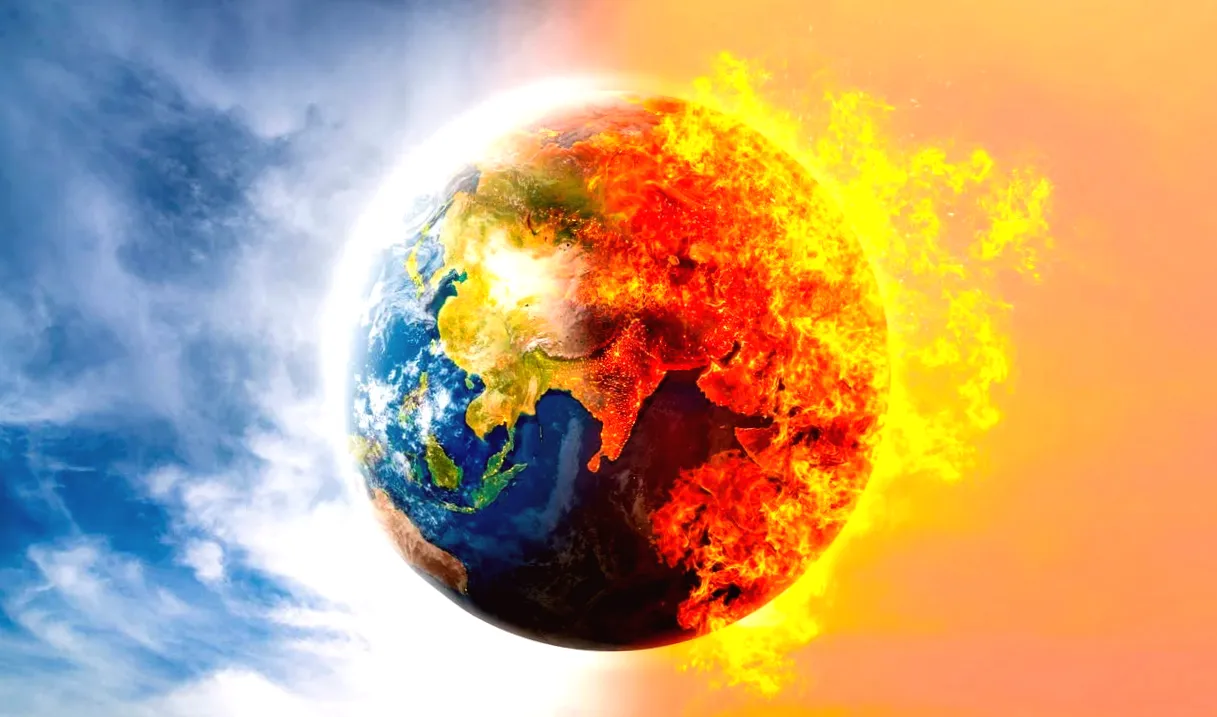
The Paris Climate Agreement of 2015 aimed to limit global temperature increases to 1.5 degrees Celsius above pre-industrial levels. However, a recent study indicates that this threshold may have already been exceeded several years ago.
Researchers at the University of Western Australia Oceans Institute analyzed Caribbean sclerospongesslow-growing sea sponges that preserve environmental data in their limestone skeletons. By examining strontium-to-calcium ratios, they reconstructed ocean temperatures dating back to the 1700s. Their findings suggest that global temperatures surpassed the 1.5-degree mark in 2020.
While the study highlights a potentially alarming acceleration in global warming, some scientists caution that data from a single region may not fully reflect global ocean temperature patterns. The long-term instrumental record, starting around 1850, remains a key reference for climate models.
Lead author Malcolm McCulloch stated that these findings imply that the timeline for reducing emissions to avoid severe climate impacts has moved forward by at least a decade. According to the study, warming may have begun roughly 80 years earlier than previously estimated, and temperatures could have reached 1.7 degrees Celsius above pre-industrial levels by 2020.
Critics argue that relying on sponges from one region cannot definitively challenge global temperature estimates used by the Intergovernmental Panel on Climate Change (IPCC), which currently reports a global increase of approximately 1.2 degrees Celsius. Nevertheless, recent records indicate that January 2025 reached 1.7 degrees above pre-industrial temperatures, signaling that the 1.5-degree threshold is nearing or already being crossed in real time.
Regardless of specific numbers, the consensus remains clear: climate change is an urgent global crisis, and immediate action to reduce emissions is essential to protect the planet.
Author: Ethan Caldwell
Share

Contributor: The left's anxiety about climate change is finally decreasing
12 hours ago 3 min read BUSINESS

IPCC chief urges UN scientists to be 'clear' on human impact to combat climate denial
13 hours ago 2 min read WORLD

A Glimmer of Hope During the Climate Information Conflict
15 hours ago 2 min read ENTERTAINMENT

German government postpones presentation of climate plans
1 days ago 2 min read WORLD

German government to postpone announcement of climate strategies
1 days ago 2 min read WORLD
Government warns of imminent ocean danger: 'No time to waste'
2 days ago 2 min read WORLD
NASA warns scientists about rapid acceleration of ocean changes: 'Speeding up'
3 days ago 2 min read SCIENCE

Study predicts Europe could have 42 more days of summer by 2100.
3 days ago 1 min read WORLD
Scientists warn of impending crisis leading to mass displacement: 'Worst-case scenarios unfolding'
4 days ago 3 min read WORLD
Researchers uncover unexpected findings during investigation of powerful ocean event: 'Shocking revelation'
4 days ago 2 min read SCIENCE