

Opinion - China's Desire for AI-Powered Military Using Nvidia Chips Raises Concerns
- Last update: 1 hours ago
- 3 min read
- 296 Views
- BUSINESS
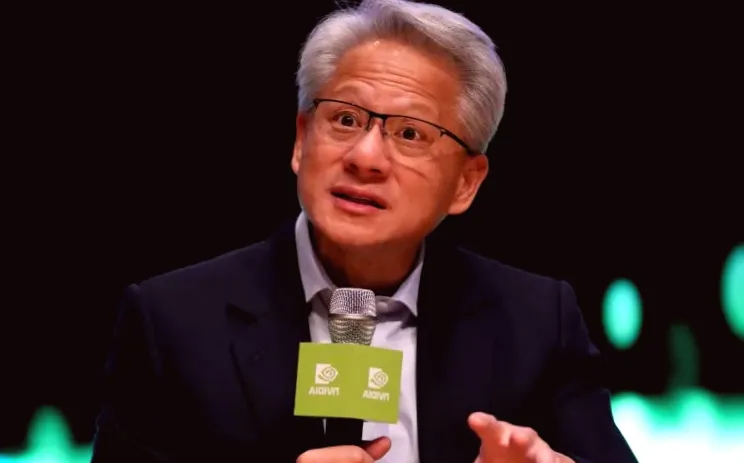
Despite speculation, former President Trump did not authorize China to access advanced AI semiconductors during his recent meeting with Xi Jinping at the Asia-Pacific Economic Cooperation summit. While Trump initially resisted in Seoul, reports suggest he is now considering permitting the sale of high-end chips to Beijing. Expanding access to these strategically vital U.S. technologies could be risky, especially in light of new evidence showing Chinas military intentions to leverage advanced chips for battlefield superiority.
Nvidia CEO Jensen Huang has been influential in convincing Trumps team that the U.S. should maintain its AI leadership by exporting increasingly sophisticated semiconductors. He argues that restrictions on chip exports only accelerate Chinas domestic semiconductor progress and downplays the military risks, claiming Chinese firms are mere nanoseconds behind U.S. competitors and that U.S. chips will not significantly aid Chinas military modernization. Analysis of Chinese military documents, however, indicates otherwise.
Procurement records from the Peoples Liberation Army (PLA) show direct efforts to acquire and deploy U.S. chips, including Nvidia designs, for AI-enabled military applications. These documents reveal the PLA is integrating American hardware to train Chinese AI models aimed at achieving a battlefield advantage over the U.S.
Specific contracts highlight Nvidia chips in multiple military projects: one seeks Nvidia resources for an intelligent optoelectronic target recognition system that combines AI and sensors to detect and track key objects. Another involves a server equipped with Nvidia H100 GPUs for AI algorithm computations and large language model operations. Additional requests include clusters of Nvidia A800s for high-performance image-processing workstations and autonomous vehicles powered by Nvidias Jetson Orin chips for onboard visual processing.
While Nvidia hardware alone will not define Chinas military modernization, it is unrealistic to assume the PLA will not exploit the worlds most advanced AI chips. Chinese military plans indicate that AI-enabled systems are central to Beijings strategy to compete with, or surpass, U.S. capabilities. Beyond Nvidia-specific requests, PLA contracts reveal investments in AI systems capable of processing battlefield data, accelerating decision-making, and managing autonomous vehicle swarms across air, land, and sea domains.
Allowing China increased access to advanced computing hardware could accelerate the development of military AI systems with potential applications against U.S. forces. Moreover, cutting-edge chips will enable Chinese AI labs to train more sophisticated models, indirectly benefiting military operations. While some domestic chips are being deployed, frontier model training still depends heavily on Nvidia hardware, enabling companies like DeepSeek to create AI models usable by the PLA.
Relaxing export controls would grant Beijing the tools to narrow the military gap and undermine U.S. efforts to maintain AI dominance. These controls were intended to preserve U.S. advantages and give allies time to strengthen their AI capabilities. Reducing restrictions now could compromise national security and diminish American leadership in AI.
Author: Maya Henderson
Share

The closure of Zipcar may force me to purchase a car
2 minutes ago 3 min read BUSINESS

Potential metal fragment contamination affects multiple brands of shredded cheese sold at Aldi, Target, and Walmart
16 minutes ago 3 min read BUSINESS

Workers claim increase in minimum wage has both positive and negative effects
18 minutes ago 2 min read BUSINESS

Projeto Paradiso Unveils Bold 2026 Incubator Slate at Ventana Sur (EXCLUSIVE)
20 minutes ago 3 min read BUSINESS

Jordyn Woods Talks about Ideal Gifts for Boyfriends, Latest NBA Merch Collection at Amazon, and Launch of Her Own Clothing Label: ‘I’ve Been Anticipating This Opportunity’
20 minutes ago 2 min read BUSINESS

Scott Mills Steps Down as CEO of BET
21 minutes ago 2 min read BUSINESS

Bridge to be closed for investigation work on vehicles
22 minutes ago 1 min read BUSINESS

Succession of Lifeboats and Disordered Bath Market
23 minutes ago 2 min read BUSINESS

Closure of 'valued' path sparks petition with hundreds of signatures
33 minutes ago 2 min read BUSINESS

Elon Musk Acknowledges Difficulty in Spending Time with All His Children, Open to Welcoming More through Adoption
34 minutes ago 3 min read BUSINESS