

Is EU considering revising the 2035 combustion-engine ban?
- Last update: 50 minutes ago
- 2 min read
- 523 Views
- BUSINESS
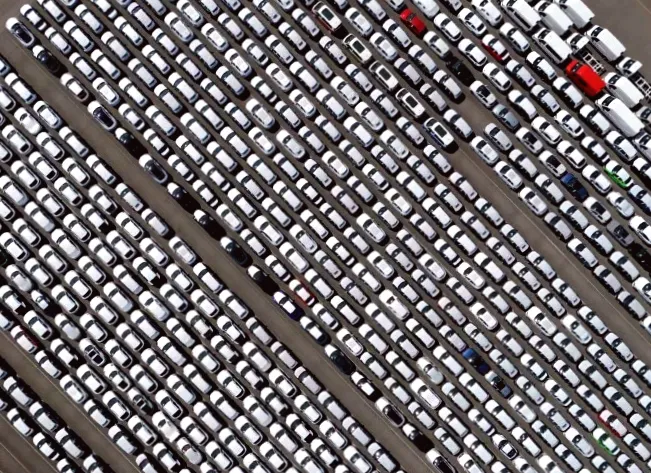
Europes struggling automotive sector and its supporters are intensifying efforts to persuade the EU to ease the planned 2035 prohibition on new petrol and diesel car sales, aiming for a resolution before the end of the year.
The European Commission is scheduled to reassess the target on December 10 as part of a broader support strategy for the industry. However, competing priorities among member states and manufacturers could delay the review.
The commitment to make all new cars fully electric by 2035 was introduced in 2023 as a central element of the EUs Green Deal and a major milestone on the path to climate neutrality by 2050. Yet, two years later, increasing voices are urging a more pragmatic approach.
The European Automobile Manufacturers Association (ACEA) argued in a recent policy document that the sector received the strictest emissions goal because it was assumed to be the easiest to decarbonize, but the transition has proven far more complex.
At the same time, an influx of competitively priced Chinese electric vehicles has raised concerns about a severe industrial downturn in Europe, with the risk of large-scale job cuts and factory shutdowns. Luc Chatel, head of Frances automotive platform, warned that the industry is being destabilized by political and ideological choices rather than technological ones.
Germany and Italy Seek Exceptions
German Chancellor Friedrich Merz has become one of the strongest advocates for easing the rules, calling on the EU to permit the continued sale of plug-in hybrids, range-extender models, and highly efficient combustion engines after 2035. Italy is pushing for vehicles powered by biofuels to remain permitted beyond the deadline.
France, by contrast, seeks to remain closely aligned with the full electrification plan in order to protect the substantial investments its automakers have already made. President Emmanuel Macron warned that abandoning the 2035 target would jeopardize the future of European battery production.
France is urging stronger EU backing for battery manufacturing and proposing that corporate fleets be required to electrify using vehicles produced in Europe, a measure aimed at countering the rise of Chinese brands. Germany opposes such mandates. BMW CEO Oliver Zipse argued in Brussels that forcing corporate fleets to go all-electric would effectively introduce the combustion-engine ban through the back door.
Lucien Mathieu of Transport & Environment cautioned that allowing exemptions for biofuels would be a grave error, pointing to their limited carbon benefits and potential environmental consequences such as deforestation.
Author: Chloe Ramirez
Share

EU launches antitrust investigation into Meta's WhatsApp AI capabilities
6 hours ago 2 min read BUSINESS
Is Fashion Ready to Fulfill Its Climate Promises as 2030 Approaches?
7 hours ago 7 min read BUSINESS

Trump reverses Biden-era fuel economy standards to make cars more affordable
7 hours ago 2 min read BUSINESS

Court rules Eurowings' advertising on carbon offsetting is misleading
13 hours ago 1 min read BUSINESS

Europe continues crackdown on Big Tech, defying Trump with X fine
16 hours ago 2 min read BUSINESS

Trump Reveals Strategy to Increase Vehicle Emissions
20 hours ago 2 min read BUSINESS

The European Union's bioeconomy plan will revolutionize packaging
1 days ago 2 min read BUSINESS

Democrats aim to establish a fresh approach towards fossil fuels.
1 days ago 2 min read POLITICS

Trump to reverse Biden's fuel efficiency standards for vehicles
1 days ago 1 min read POLITICS

German government postpones presentation of climate plans
1 days ago 2 min read WORLD