
European Christmas markets increase security measures due to terror threats, leading to significant operational adjustments.
- Last update: 30 minutes ago
- 3 min read
- 713 Views
- BUSINESS
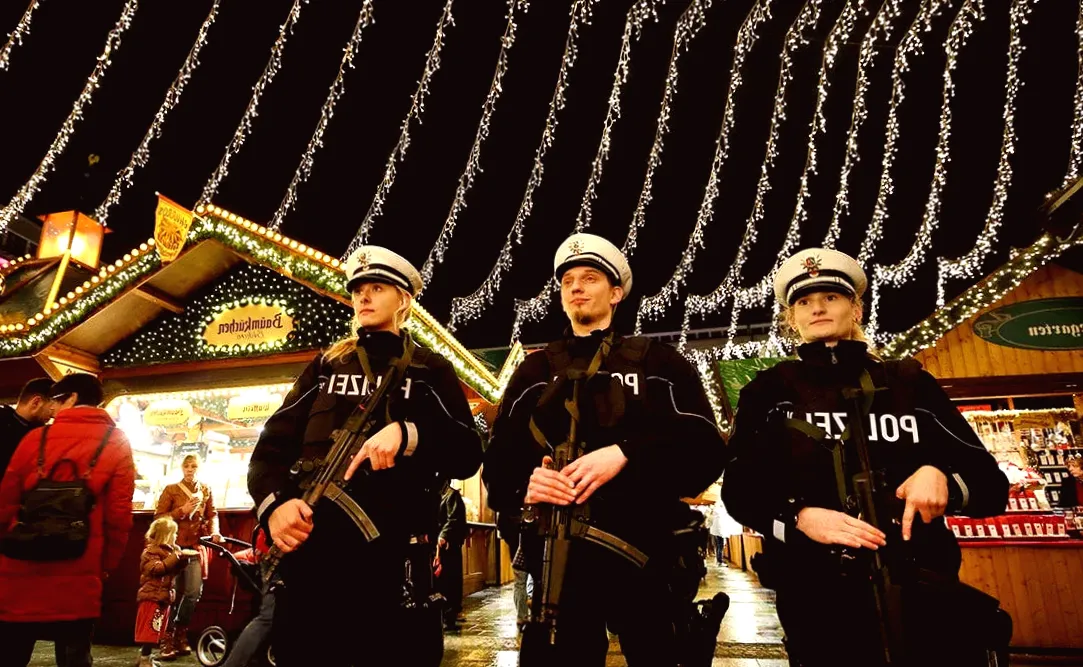
This year, Christmas markets across Europe are opening with enhanced security protocols and increased operational costs as authorities respond to elevated public safety risks. In Germany, spending on safety for public gatherings, including holiday markets, has risen by roughly 44% over the past three years, according to a survey from the Federal Association of City and Town Marketing.
Berlins main market has introduced concrete barriers, upgraded video surveillance, and additional private security personnel. Smaller municipalities warn that such requirements could force them to reduce the scale of their markets or cancel them entirely next year. David Russ, production head at Berlins Gendarmenmarkt, noted that the stricter measures provide visitors with a sense of security: "I can just let go of everything here I feel safe."
Heavily armed officers are now a common sight in cities like Essen, Germany. While larger towns receive some public funding, smaller municipalities and private organizers often bear most of the security expenses. Local officials are urging Germanys federal states to share a larger portion of the costs, arguing that counter-terrorism responsibilities exceed local capacities.
The changes follow last Decembers SUV attack at the Magdeburg Christmas market, which left six dead and over 300 injured. Since then, German cities have strengthened infrastructure, updated crowd-control plans, and increased surveillance at large seasonal events.
France has adopted similar measures. Authorities canceled the annual New Years Eve concert on the Champs-lyses due to crowd management concerns and a high terror threat rating. The Interior Ministry classified Christmas markets and winter events as high-risk, prompting extra officers, security checkpoints, and access restrictions.
Alan Mendoza, executive director of the Henry Jackson Society, emphasized the challenge of securing traditional celebrations, stating that European governments face extraordinary security demands to protect long-standing cultural events. He highlighted the need for aggressive strategies against extremists, suggesting imprisonment or deportation for non-citizens, arguing that security measures alone cannot permanently address the threat.
Other European countries are also strengthening holiday market operations. In Salzburg, Austria, a market attracting 1.5 million visitors annually now has round-the-clock private security and 33 surveillance cameras. Some markets in Austrias Styria region have been canceled due to the prohibitive cost of mandated security.
In Prague, concrete barriers protect key pedestrian areas, while police increase patrols. Budapest has deployed additional plain-clothes officers to detect suspicious behavior and improve response times.
Ben Cohen, senior analyst at the Foundation for Defense of Democracies, noted that authorities in Germany and France are treating the holiday season with heightened vigilance. Both countries have intensified crackdowns on extremist activity, considering Christian and Jewish festivals as potential soft targets.
Despite these measures, many European Christmas markets remain open and attract large crowds, though under stricter security conditions. Officials expect these measures to stay in place as long as threat levels remain high.
Author: Zoe Harrison