

Boeing versus Airbus Safety: Analysis of U.S. Accident Statistics
- Last update: 1 days ago
- 3 min read
- 691 Views
- BUSINESS
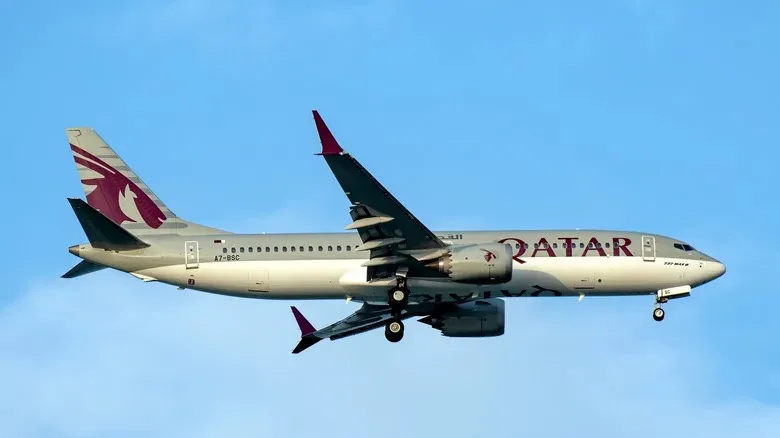
Recently, Boeing has been in the spotlight for safety concerns, especially following incidents involving the 737 MAX and Dreamliner. While public opinion has taken a hit, the actual data paints a far less alarming picture.
According to records from the U.S. National Transportation Safety Board (NTSB), both Boeing and Airbus maintain extremely low accident rates. From 2014 to 2024, mechanical failures in engines or landing gear resulted in only two to six accidents annually, despite over six million flights occurring each year in the U.S. Importantly, none of these events led to fatalities.
When accounting for flight volume, Boeing and Airbus have nearly identical safety records. Boeing may appear worse in raw counts simply because a larger share of its aircraft operates in U.S. airspaceapproximately three times more than Airbus.
Public skepticism often stems from Boeing's recent quality control issues, including loose bolts, missing fasteners, and poorly fitted components traced to factory oversight and key suppliers. However, perception is also shaped by statistical distortions. High-profile 737 MAX crashes, incomplete data sets, and the inclusion of outdated military and cargo planes in public charts have skewed comparisons, making Boeing seem less safe than Airbus.
When non-commercial and obsolete aircraft are excluded, Boeings reported incidents drop from nearly 1,000 to about 165, while Airbus falls to roughly 80. Adjusted for flight numbers, analysts see no significant difference in aircraft-related safety rates between the two manufacturers.
Examining verified U.S. data from 2005 to 2024, both companies have achieved historic lows in accident rates. Fatal hull-loss incidents averaged only one to two per year per manufacturer. Most recorded events stemmed from human or environmental factors, such as turbulence, pilot errors, or minor cabin injuries, rather than mechanical faults. True aircraft-related problems accounted for less than 20% of incidents, with manufacturing defects being extremely rare.
Filtered for maintenance-related issues, Boeing and Airbus experience approximately 0.39 and 0.38 aircraft-related incidents per million departures, respectivelyessentially approaching zero.
Modern aviation is at its safest point in history. According to the International Air Transport Association (IATA), 2023 recorded just one major accident per 1.26 million flights, a record low. Global risk studies, including MIT research, suggest the chance of dying in a plane crash is roughly one in 13.7 million boardings. As noted by aviation safety experts, the risk of an accident driving to the airport exceeds that of flying at 38,000 feet. Both Boeing and Airbus continually improve designs and procedures based on past incidents.
In conclusion, while headlines may sway perception, the underlying data shows that both Boeing and Airbus aircraft are among the safest vehicles ever built. Whether you fly on a Boeing 737 or an Airbus A320, statistics confirm an exceptionally high level of safety.
Author: Logan Reeves
Share

Lawyer alleges UPS prioritized profits over safety leading to plane crash that killed 14
2 days ago 3 min read BUSINESS

Airbus planes grounded due to faulty software, causing travel disruption for thousands
5 days ago 2 min read WORLD

Airbus to cause disruption for passengers with software updates to planes
5 days ago 3 min read WORLD

US concerns about potential concealment in Air India crash
5 days ago 2 min read WORLD